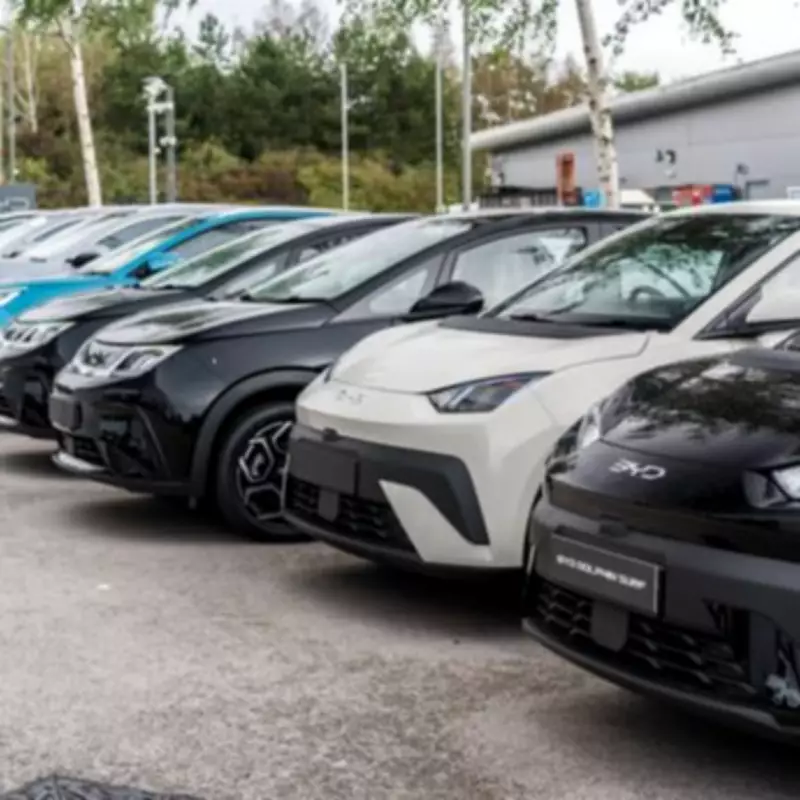
The UK government is planning a major overhaul that will affect everyone who purchases a new car. As part of the Department for Transport's Road Safety Strategy, it is considering making certain new technologies compulsory in all new vehicles. These could include automatic braking for cyclists and pedestrians, as well as systems that automatically reduce speed when the limit is exceeded.
Consultation on Safety Features
In a consultation that concluded last week, the DfT proposed that a number of systems should be active in all vehicles. These include automatic emergency braking, technology that detects whether the driver is distracted, cyclist 'blind spot' detectors and braking, drowsiness alerts, and lane-keeping corrections.
Simon Lightwood MP, Minister for Roads and Buses, stated in the plan: "While the United Kingdom has long been recognised for its strong road safety record, progress in reducing fatalities and serious injuries has slowed in recent years. With over 1,600 lives lost and 28,000 people seriously injured on our roads in 2024 alone, further action is needed."

He added: "This government is committed to making our roads safer for everyone: drivers, passengers, pedestrians, motorcyclists, cyclists and all who share our streets. Advances in vehicle safety technology offer us a significant opportunity to prevent collisions, reduce casualties and protect the most vulnerable road users."
Opt-Out Concerns Addressed
This follows a question raised by an MP regarding whether manufacturers could permit drivers to bypass certain technologies. DUP member Gregory Campbell asked Secretary of State for Transport Heidi Alexander: "Will she hold discussions with motor manufacturers regarding offering an opt in and an opt out facility for drivers with the 'lane assist' technology system in new vehicles."
In response, Mr Lightwood said: "An Emergency Lane Keeping System (ELKS) is a technology that warns the driver of unintended lane departures and corrects the vehicle's course to avoid crossing solid lane markings. As with other safety systems, it defaults to being on every time the vehicle is started."
He explained: "This ensures safety benefits are not undermined by drivers having the systems permanently switched off, either deliberately or accidentally. However, there is typically a simple method for the driver to switch it off each time, should they wish to."
The Government recently consulted on mandating ELKS in Great Britain alongside a number of other vehicle safety technologies as part of the Road Safety Strategy. This consultation closed on May 11 2026 and the Department will be setting out next steps in due course.
Safety Technologies Under Consideration
The following safety technologies are being considered for mandatory implementation:
- Advanced distraction warning: Driver assistance technology that alerts the motorist when visual distraction is detected due to fatigue or activities like smartphone use.
- Emergency braking for cyclists: Automatically applies brakes when a head-on collision with a cyclist is impending.
- Emergency braking for pedestrians: Alerts the driver and automatically applies brakes when a head-on collision with a pedestrian is impending.
- Emergency braking for vehicles: Alerts the driver and automatically applies brakes when a head-on collision with a vehicle in front is impending. Currently only mandatory for heavy duty vehicles.
- Emergency lane keeping system: Alerts drivers to unintended lane departures and steers the vehicle back on course to prevent crossing solid lane markings.
- Emergency stop signal: A light-signalling function that signals heavy braking deceleration through rapid flashing of brake lights or indicators when travelling above 50 km/h (31 mph).
- Intelligent speed assistance: Cautions the driver or reduces the vehicle's speed when the speed limit is being exceeded. Drivers can switch it off for a journey, and it can always be overridden by pressing the accelerator.
These measures are anticipated to lower the likelihood of collisions and reduce impact speeds in unavoidable collisions.