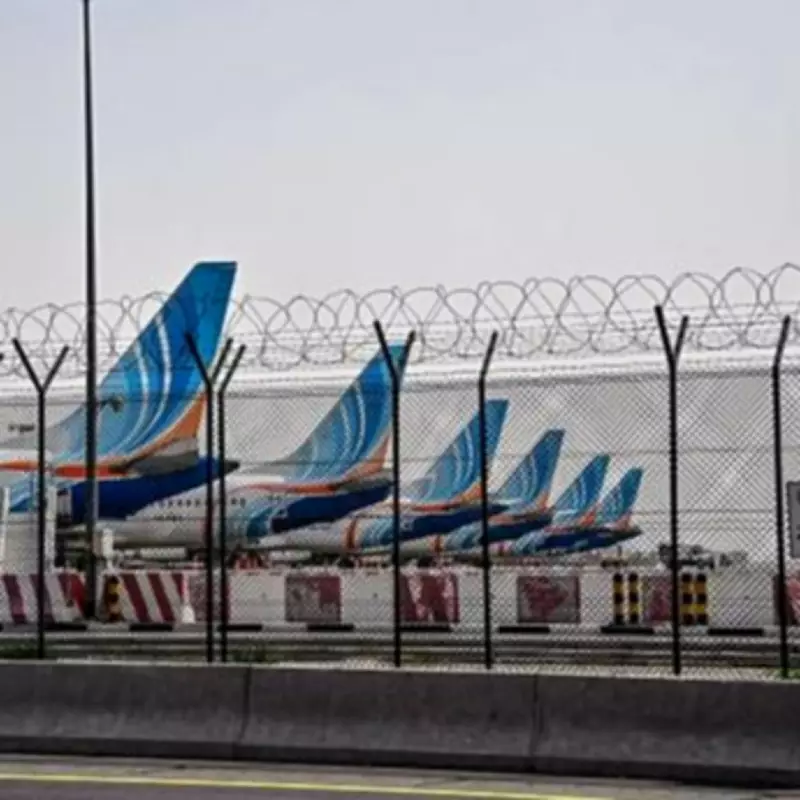
Massive Flight Cancellations Hit Middle Eastern Airports
Transport hubs across the Middle East and Gulf region are experiencing severe disruption and operational chaos as a direct consequence of the ongoing conflict between Iran and the United States. Aviation experts have issued urgent warnings for travellers, particularly those from the UK, as the situation continues to deteriorate rapidly.
Detailed Breakdown of Cancelled Services
According to real-time flight tracking data from FlightAware, a staggering total of 600 additional flights have been cancelled on Tuesday alone. The cancellations are heavily concentrated in three major transit hubs: Doha has seen 450 arrivals and departures axed, Dubai has cancelled 100 flights, and Abu Dhabi has scrapped 46 services. This represents a significant escalation in the travel chaos that has gripped the region since geopolitical tensions intensified.
Expert Analysis on Long-Term Implications
Ivaylo Danailov, Chief Executive Officer of airline compensation specialist SkyRefund, has provided exclusive insight into the potential lasting consequences of this disruption. He emphasizes that the current chaos could fundamentally alter the aviation landscape and permanently damage the reputation of major transit hubs like Dubai, Abu Dhabi, and Doha as reliable connection points for international travel.
"Dubai's position as a global aviation powerhouse isn't accidental—it's fundamentally geographical," Danailov explained. "Sitting almost perfectly between Europe, Asia, and Africa, it has historically served as the world's ideal stopover location. However, the Gulf region has now become a serious geopolitical flashpoint that is forcing airlines to reconsider their operational strategies."
Potential Shift in Global Aviation Patterns
Danailov predicts that airlines may begin to reduce their reliance on Gulf hubs in the medium term, instead exploring alternative routing options through airports in Singapore, Istanbul, Delhi, or even various European locations. This strategic shift would represent a major realignment of global aviation patterns that have been established for decades.
The financial implications are equally significant, with Danailov noting that "the cost of risk-based insurance for flights operating through this volatile region could remain elevated for an extended period, adding substantial operational expenses for carriers."
Operational Challenges and Passenger Impact
The Middle East typically functions as one of the world's busiest air corridors, but current airspace closures are forcing airlines to implement extensive detours. Aircraft are being rerouted either north through the Caucasus region or south via Egypt and Saudi Arabia, creating multiple operational challenges.
"This isn't merely a logistical inconvenience—it leads to severe air traffic congestion, extensive delays, and dramatically increased fuel consumption," Danailov added. "If this instability becomes the new normal, these temporary detours might evolve into permanent features of airline scheduling worldwide."
Consequences for Travellers
For ordinary passengers, the practical implications are substantial and potentially long-lasting:
- Extended flight durations between Europe and Asia
- Higher airfares as increased fuel consumption typically translates to elevated ticket prices
- Additional pressure on the limited flight paths that remain operational
Despite the current travel chaos dominated by safety concerns and operational disruption, Danailov maintains that "the fundamental safety of aircraft themselves remains intact." He concludes with cautious optimism: "History demonstrates that travellers are remarkably resilient. We will likely emerge with an aviation industry that is more cautious and politically aware, but the fundamental human desire to travel and connect globally isn't going to disappear."