Nissan has reportedly halted development of a fully electric version of its best-selling Qashqai model, which was slated for production at its Sunderland plant. The Japanese carmaker is grappling with significant financial losses and implementing a sweeping global restructuring plan.
Background on the Qashqai EV
Nissan pioneered the crossover segment when it introduced the Qashqai 16 years ago, leading to millions of vehicles produced. In 2022, Nissan confirmed that the Qashqai would feature its innovative e-Power technology. However, according to Reuters, the company quietly ceased work on the EV variant at its North East facility last year.
The news emerges as Nissan attempts to streamline its range and reduce costs after suffering a second consecutive year of losses, recording a net loss of approximately $3.4bn. In 2023, Nissan reaffirmed its commitment to manufacturing new electric models at Sunderland, a year after unveiling plans for the Qashqai electric variant and committing that all new cars sold in Europe would be electric by 2030.
Impact on Sunderland plant and jobs
The revelations come a month after Nissan disclosed plans to cut hundreds of positions across its European operations and merge two existing product lines at its Sunderland facility into one. The company has been grappling with difficult conditions in the global automotive industry, citing fierce competition from Chinese rivals and obstacles during the EV transition when it announced a significant global restructuring last year.
Despite these challenges, the Sunderland plant has been spared the worst of the cuts and has recently been referred to as "central" to Nissan's operations, according to Chronicle Live.
Potential Chery partnership
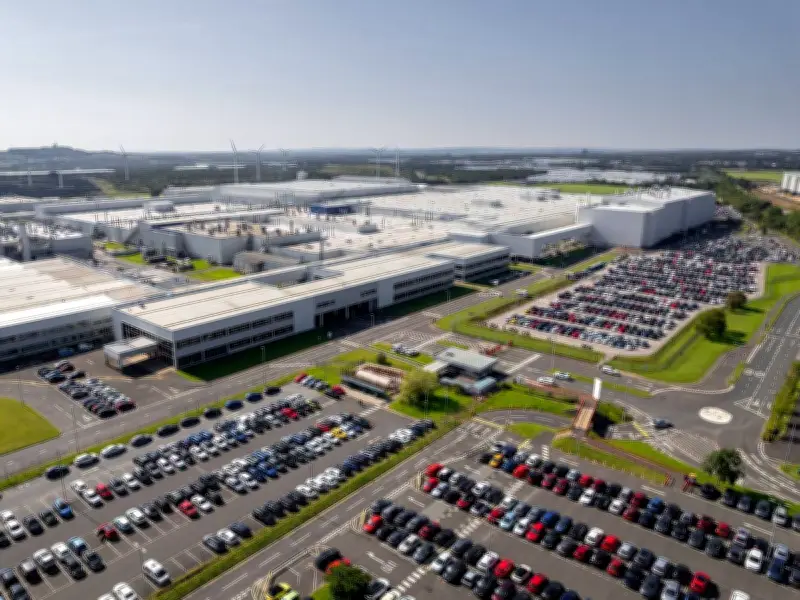
Nissan reached an agreement earlier this month with Chinese automotive manufacturer Chery, which could see Chery produce vehicles at Nissan's Sunderland facility. Chery, which owns the Omoda and Jaecoo brands, has entered into a non-binding memorandum of understanding with Nissan to assemble its vehicles at the Sunderland site.
Under the proposed arrangement, the facility would remain under Nissan's ownership, with staff continuing to be employed by Nissan, while Chery would utilise the plant's available production capacity for its passenger vehicles. If the deal proceeds, Chery vehicles could begin rolling off the Sunderland production line during the 2027 financial year.
Nissan's role in the North East
Nissan is the largest private sector employer in the North East, with a workforce of around 6,000 people, while also sustaining a supply chain that underpins tens of thousands of jobs.
In April, it emerged that the Jatco UK factory, 75% owned by Nissan, had been compelled to seek alternative work after it became clear it would no longer supply Nissan with the powertrains it was originally built to provide. The £50m plant—Nissan's fourth overseas site—had been scheduled to commence production this year, with the bulk of its output centred on a three-in-one powertrain for Nissan.
Official statements
At the time, a Nissan spokesperson said: "Under the global RE:Nissan recovery plan, Nissan, together with partners, has conducted a comprehensive review of key initiatives, introducing further measures to ensure a strong recovery. As part of this the decision has been taken not to localise production of 3-in-1 electrified powertrain to the UK."
A Nissan spokesperson added: "In recent years, the European market has experienced significant volatility in EV consumer demand, reflected in both actual and proposed adjustments to EV targets and support programmes across the UK and EU. Nissan has monitored this closely to ensure ongoing customer demand is met with a balanced electrified offering as part of its Electrification with Choice strategy."
The spokesperson continued: "Nissan has a strong EV product offensive in Europe with the recent all-EV launches of new Micra and LEAF, to be followed by an entry A-segment EV later this year and Juke EV in early 2027. This builds on an existing electrified portfolio, including Juke HEV and market leading Qashqai e POWER hybrid, providing customers with a balanced range of drivetrain options."
The spokesperson concluded: "Nissan remains committed to expanding its electrified offering—including future developments for Qashqai—to deliver genuine electrification with choice but does not have anything further to announce at this time."