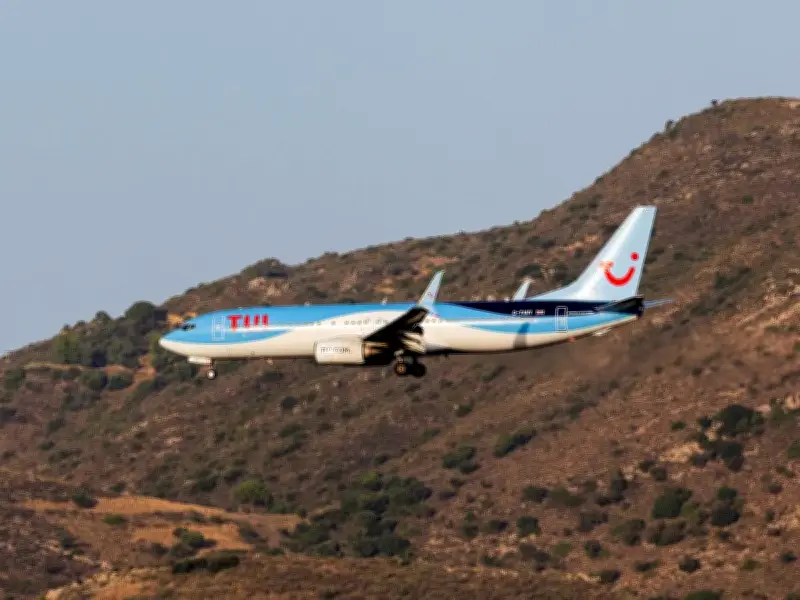
Tui, the world's largest travel and tourism company, has reported a €17m loss in its airlines division for the six months to June, reversing a €50m profit from the same period last year. The Frankfurt-listed group attributed the downturn to weaker demand from geopolitical tensions, higher fuel costs, and increased market capacity.
Revenue Falls Across Key Divisions
Airline revenue dropped eight per cent to €4.9bn, while overall group revenue declined six per cent to €5.8bn. Underlying group profit fell 27 per cent year on year to €235m, below analyst expectations of €274m, as reported by City AM.
The company said the quarter was marked by a challenging market environment, ongoing geopolitical uncertainties—particularly the war in Iran—economic weakness in Europe's core markets, and consumer caution across many sectors.
Bright Spot in Experiences Division
Despite the overall decline, Tui's 'musements' division, which offers tours and activities, recorded a nine per cent rise in underlying profit to €22.7m, providing a rare positive note.
Chief Executive Sebastian Ebel said Tui has "held its own well in a difficult global environment," citing wars, geopolitical tensions, consumer caution, economic weakness, and rising inflation as factors influencing sentiment and purchasing decisions. He noted that booking behaviour has been "picking up again" recently, but travellers are increasingly purchasing at the last minute to avoid disruption from the Iran war.
Market Reaction and Industry Impact
Shares in Tui fell three per cent to €7 in early trading, leaving the stock down 21 per cent since the start of the year. Derren Nathan, head of equity research at Hargreaves Lansdown, said investors "may feel they need a holiday" after the turbulent results, adding that the weak quarter pressures the company to achieve a clean landing in the final stretch of the year.
The travel disruption extends beyond Tui. On Tuesday, Intercontinental Hotels Group (IHG), owner of Holiday Inn, Crowne Plaza, and Vignette Collection, reported a 19 per cent year-on-year decline in revenue per available room in the Middle East for the three months to June, citing "ongoing impacts from the Middle East conflict, including some wider disruption to international travel flows."