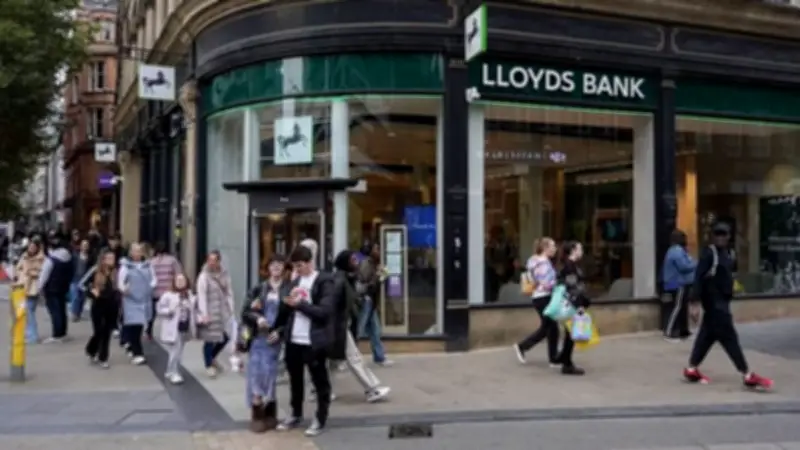
Your options for face-to-face banking are shrinking as high street banks across the UK continue to permanently shut their doors. Almost 250 traditional counters are confirmed to disappear from town centres by the end of December.
By the beginning of this month, 138 physical locations completed their final day of business. The current month marks a particularly challenging phase for counter access, with 82 closures taking effect alongside further shutdowns scheduled later this year. A complete timetable for the withdrawal of 245 High Street branches nationwide has now been formalised.
Customers of the Lloyds Banking Group are seeing the greatest disruption, with 82 branded locations already closed or facing the axe alongside 43 Halifax sites and 28 Bank of Scotland branches. This follows an earlier announcement from the group detailing plans to phase out 166 locations across its network over a two-year period.
Reasons Behind the Closures
Company bosses stated that the shift is due to a significant rise in people using smartphone apps rather than visiting a counter. Similarly, Santander is removing 54 outlets from the high street, while NatWest is withdrawing 35 of its offices.
Regional Impact
Every nation in the UK is affected by the decisions, with 31 counters stopping service in Scotland, 16 in Wales, and four in Northern Ireland. In England, the remaining losses are spread heavily across various counties.
The South East of England faces the highest volume of withdrawals with 37 sites lost, followed closely by London with 28 and the South West with 23. Local authority areas in Birmingham and Cornwall are losing six locations each, representing the sharpest local declines.
Long-Term Trends
Cornwall has experienced the most severe long-term reduction in physical banking options nationwide, losing 42 counters over the last four years. Since a voluntary industry agreement was introduced in February 2022 to evaluate local community impact, a staggering 2,167 branches have shut or detailed their final trading dates.
This represents an average of roughly 10 physical sites per week. The independent network LINK was set up to monitor these situations and protect vulnerable neighbours and small firms from being left behind as society moves towards electronic payments.
Protecting Cash Access
When a community is left entirely without a counter, new shared spaces or free cash machines are organised to support residents. LINK has recommended establishing 277 of these shared spaces to protect access.
An independent government review into the future of community banking was launched last month, led by the former head of the Financial Conduct Authority, Richard Lloyd. As part of this work, a public consultation has been launched to examine how these losses affect towns.
Currently, these checks focus only on cash access rather than full banking services, but the rules may soon change. Industry specialists suggest that expanding the criteria could significantly increase the planned total of 550 shared spaces.
Nick Quin from LINK said: “More people are choosing to bank and pay for things digitally. Many people rely entirely on their smartphones when they leave the home, and don’t carry cash or even a wallet. That means cash use is falling too, but it remains critical, and over £76bn was withdrawn from LINK cash machines last year.
“Whenever a bank branch does close, LINK will assess the impact to see if additional cash services are required. We’re committed to protecting the cash infrastructure for the millions of people who still rely on it.”