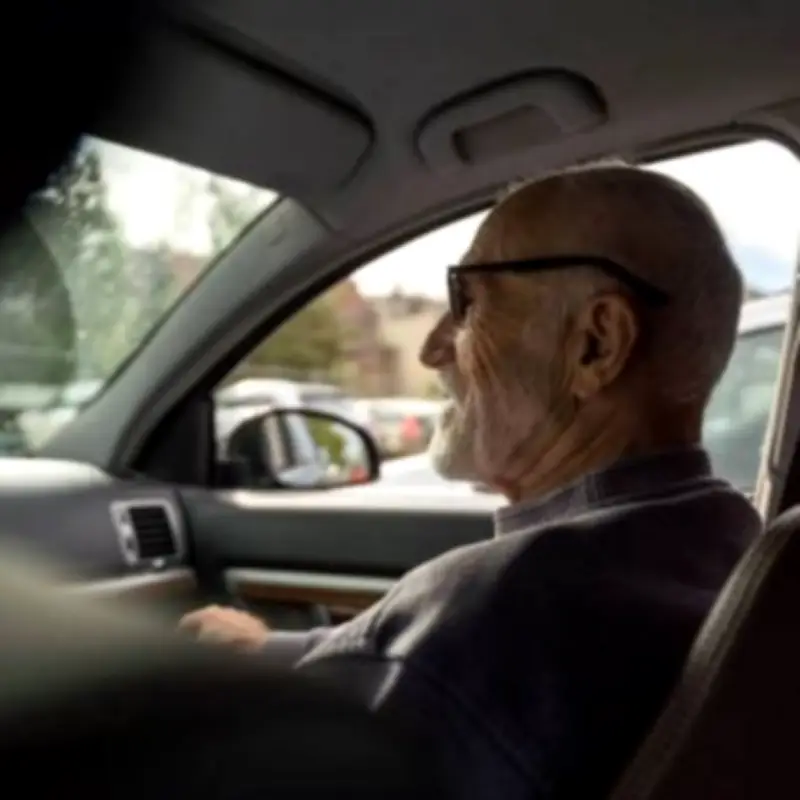
State pensioners over the age of 70 could soon be required to undergo six key checks to maintain their driving privileges in England. The Labour Party government is currently consulting on mandatory eyesight checks for older motorists as part of its Road Safety Strategy.
Six Components of a Typical Eye Test
Specsavers, a leading eyesight company with branches in Birmingham, explains that a standard eye test includes six parts:
1. Retinoscopy
This vision test assesses how well your eyes can focus, helping to determine your level of long- or short-sightedness. While you focus on a distant object, the optometrist shines a light in each eye and places different lenses in front of them to calculate your prescription. Occasionally, pupil dilating drops may be used for a clearer view.
2. Snellen Test
You will be asked to read from a Snellen chart (letter chart test). This measures your visual acuity—how well you see with and without lenses—to determine if you have 20/20 vision or need a prescription.
3. Ophthalmoscope
A specialist torch is used to examine the retina at the back of the eye, the optic nerve, and its blood vessels to ensure they are healthy.
4. Slit Lamp Test
A powerful microscope examines the front surface of the eyes (cornea, iris, and lens) for abnormalities or scratches, particularly important for contact lens wearers.
5. Visual Field Check
This test assesses your ability to detect flashes of light in your peripheral (outer) vision. It is often used to detect early stages of glaucoma or conditions associated with headaches.
6. OCT Scan
Optical Coherence Tomography is a hospital-grade eye scan that views eye structures in greater detail, helping spot signs of conditions like glaucoma and diabetic retinopathy up to four years earlier than traditional methods. The scan takes only a few seconds.
Government Context
The Department for Transport previously stated: "Eyesight often deteriorates in visual acuity or sharpness, medical conditions that affect the field of vision are more likely to develop, and the ability to recover from glare also reduces. This deterioration can occur gradually, sometimes without a person noticing. Without eyesight correction or treatment, it can increase the risk of collisions for older drivers and other road users."