This weekend marked a significant yet understated transformation for Birmingham, with two major developments reshaping the city's landscape. While daily life continues largely unchanged, the foundations have shifted in ways that will resonate for years to come.
A New Era for Regional Railways
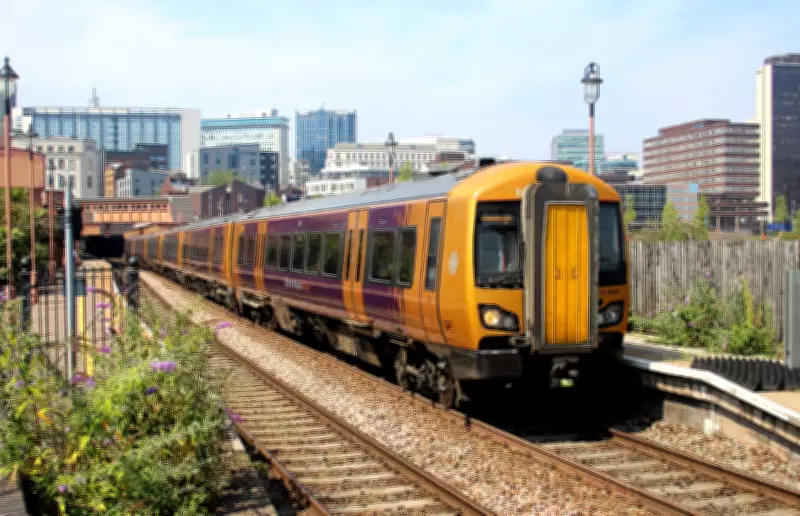
The West Midlands rail network has quietly transitioned to public ownership, ending approximately three decades of private operation. This historic change represents the eighth such nationalisation in the country's gradual return to a fully publicly owned railway system, scheduled for completion next year.
The Background to Nationalisation
Until this weekend, train services within the region and connections to London were operated by West Midlands Trains, a private company that has now been dissolved. Control has passed to Great British Railway, a new public body established by the state. This transition follows the Labour government's Passenger Railway Services (Public Ownership) Act, passed about two years ago, which set a 2027 deadline for bringing the entire national network under public control.

The move comes after several poorly performing rail companies were already nationalised under previous Conservative administrations. Government ministers argue that public ownership will enhance reliability and reduce the frustrating delays that have plagued train travel in recent years.
What Passengers Can Expect
For now, commuters should not anticipate immediate changes to their daily journeys. Timetables, staff, and train services will remain largely familiar, with improvements expected to materialise gradually over coming years. The transformation from overcrowded carriages, regular cancellations, and potential industrial action will be a slow process rather than an overnight revolution.
Interestingly, while train operations have been nationalised, the physical trains themselves—known as rolling stock—remain in private hands. The government continues to lease these from private companies, arguing this approach keeps costs lower than purchasing trains outright. However, data shows that between 2013 and 2024, rolling stock leases grew by 11% as a proportion of railway spending, indicating that leasing arrangements are not inexpensive either.
Public Support and Financial Implications
Westminster appears to have regional voters on its side regarding this policy shift. Recent polling indicates that approximately 60% of Midlands residents support bringing train operating companies back into public ownership. Financially, the government spent £11.9 billion on the rail sector between 2024 and 2025, nearly £3 billion more than the year preceding the COVID-19 pandemic, highlighting the substantial investment involved in railway operations.
This nationalisation represents just one part of broader public transport changes in the region. While trains are the first to transition, buses—the West Midlands' most popular form of public transport—are scheduled to come under public control in 2027.
End of an Era for Birmingham's Welsh Community
Meanwhile, another chapter closed in Birmingham's cultural history as the modernist Bethel Presbyterian Church held its final service after 58 years of serving the city's Welsh-speaking community. The distinctive building on Holloway Head, designed by mid-century architect James Roberts (who also created Birmingham's iconic Rotunda), opened in 1968 to accommodate Welsh-speaking worshippers.
A Congregation's Journey
In its early days, the church welcomed congregations of up to 250 people, with hymns sung at full volume creating what regular attendee Ellen Whitehouse described as "an amazing atmosphere." Whitehouse joined the church to maintain her family's connection to Welsh culture, but over decades, as congregation members moved back to Wales or elsewhere, numbers gradually dwindled. By 2024, just 12 regular attendees remained, with ministers visiting from Wales on a rota system and Whitehouse taking on most caretaking responsibilities.
The final service, conducted in Welsh, attracted a full hall for emotional farewells. The minister presiding over the closure offered hopeful words, suggesting this represented "not the end of the book, but just the end of a chapter," expressing faith in a future Welsh Presbyterian revival.

Local Politics Mourns a Controversial Figure
In further significant news, tributes have poured in for Lozells councillor Waseem Zaffar, who died at age 44 while visiting Pakistan for his uncle's funeral. Zaffar had represented his ward for Labour since 2011, holding several senior roles including cabinet member for transport and environment.
A Complex Legacy
Zaffar played instrumental roles in implementing Birmingham's Clean Air Zone in 2021 to tackle pollution and establishing the inaugural Birmingham Heritage Week in 2015. His political career included a dramatic 2022 leadership challenge against former ally Ian Ward, which he lost by just two votes. His tenure was not without controversy, facing accusations of bigamy and criticism for meeting with a fugitive alleged drug dealer.
Edgbaston MP Preet Gill described Zaffar as someone who "cared deeply about his community, working hard to serve others," while Hodge Hill MP Liam Byrne called him a "change-maker" and "a smart, creative and energetic force in Birmingham politics." Birmingham City Council leader John Cotton remembered him as a "passionate advocate of his community." An avid Aston Villa supporter, Zaffar leaves behind a wife and three sons.
Looking Ahead
These developments collectively signal important shifts in Birmingham's public services, cultural landscape, and political sphere. While the immediate impacts of rail nationalisation may be subtle, and the closure of Bethel Church marks the end of an institution, both represent significant moments in the city's ongoing evolution. As Birmingham continues to transform, these changes remind us that both public infrastructure and community institutions require ongoing support and adaptation to serve changing needs.