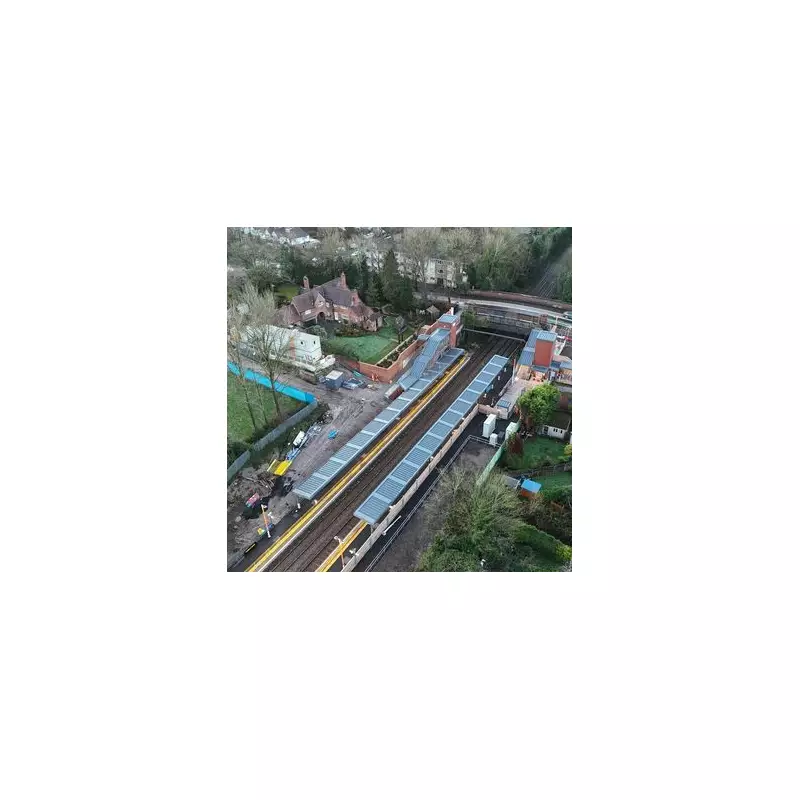
Major construction work on five eagerly anticipated new railway stations across the West Midlands has been officially completed, paving the way for passenger services to commence in early 2026. The milestone was marked by Mayor Richard Parker, who formally handed over the sites to West Midlands Railway.
A Long-Awaited Milestone for Local Transport
The completed projects include three new stations on Birmingham's Camp Hill line at Kings Heath, Moseley, and Pineapple Road. Furthermore, two stations in the Walsall area – Willenhall and Darlaston – have also been finished. All five were originally scheduled to open in 2024 but faced significant delays and rising costs.
With the building phase now over, the focus shifts to final preparations and testing to ensure the stations are fully operational and safe for public use. This preparatory work will continue into the new year ahead of the passenger launch.

Restoring Services After Decades of Absence
The opening of these stations will mark a historic return of regular passenger trains to their respective lines. For the Camp Hill line through south Birmingham, it will be the first passenger service since the early 1940s, ending an absence of over 80 years.
In Walsall, the communities of Willenhall and Darlaston have waited even longer. Their stations closed in 1965, meaning the restart of services will conclude a 60-year wait for a local rail connection.
Collaborative Delivery and Future Impact
The ambitious station programme was delivered through a partnership involving several key bodies:
- The Department for Transport
- West Midlands Railway
- Network Rail
- Walsall Council and Birmingham City Council
Mayor Richard Parker expressed his delight at the achievement, stating: "It's fabulous seeing the completion of these five new stations in the region." The stations are expected to improve connectivity, reduce road congestion, and provide a significant boost to the local economy and communities they will serve.
The confirmed timeline means residents can finally look forward to stepping onto trains at their new local stations in the first months of 2026, reconnecting areas to the wider regional rail network after generations.