Birmingham City Council has launched a significant new phase in its battle against speeding, with a network of imposing average speed cameras being activated across the city's road network.
Major Safety Crackdown Follows 'Emergency' Declaration
This initiative is a direct response to what the council has declared a 'road safety emergency'. The move coincides with a sweeping reduction of speed limits on 27 major roads, where the maximum permitted speed has been lowered from 40mph to 30mph. Councillor Majid Mahmood, Cabinet Member for Environment, stated the action is necessary due to a rise in reckless driving and the tragic loss of lives on roads such as the Coventry Road.
The council's core message is unequivocal: 'Slower is Safer'. The new enforcement measures are designed to compel drivers to adhere to the revised limits, with the ultimate goal of preventing fatalities and serious injuries.

Where Are The New Cameras Being Installed?
Authorities have identified six new locations for average speed camera enforcement, supplementing existing operations. The first of these to become operational is an extension of an existing zone along the A45 Coventry Road and Small Heath Highway.
The full list of new sites, chosen for their history as hotspots for dangerous driving and speeding, includes:
- A47 Nechells/Fort Parkway
- B4121 West Boulevard
- A34 Walsall Road
- B4114 Washwood Heath Road
- A34 Stratford Road
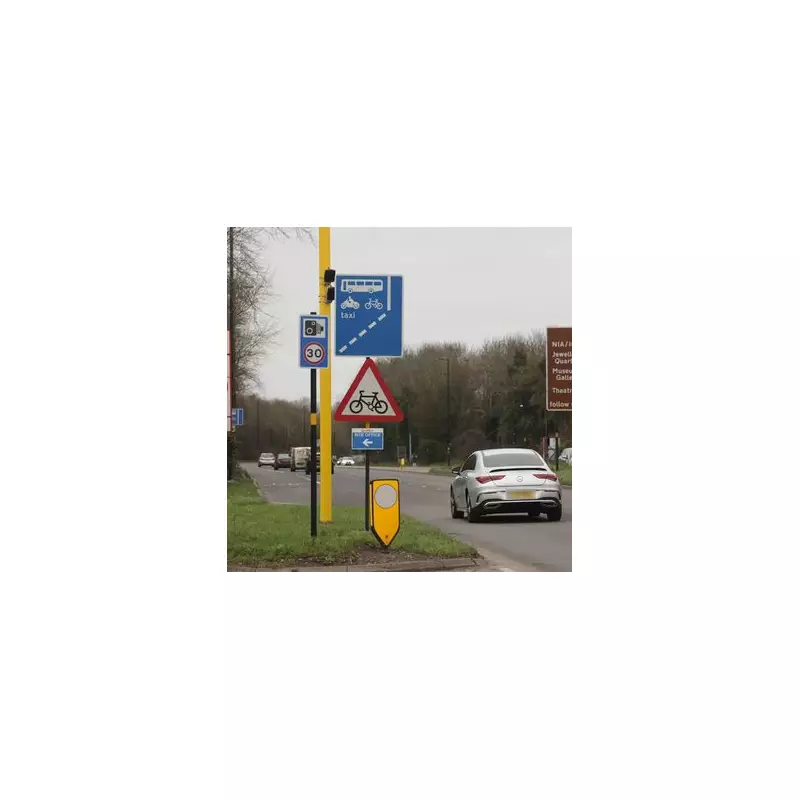
The distinctive camera poles and signage are already visible, and the remaining five locations are expected to be switched on shortly after the A45 system.
How Average Speed Cameras Work
Unlike traditional fixed-point Gatso cameras, these average speed systems track a vehicle's progress over a set distance between multiple camera points. This technology makes it far more difficult for motorists to avoid detection by simply braking momentarily as they pass a single camera.
The cameras are being activated in phases to allow drivers time to adjust to the new enforcement zones. However, the council is urging all motorists to familiarise themselves with the locations to avoid fines and penalty points.
This tougher stance forms a key part of Birmingham's infrastructure strategy as the city undergoes major changes like the arrival of HS2. By deploying average speed technology in high-risk areas, the authorities aim to cultivate a lasting culture of responsible driving and achieve a substantial reduction in speed-related casualties on Birmingham's streets.