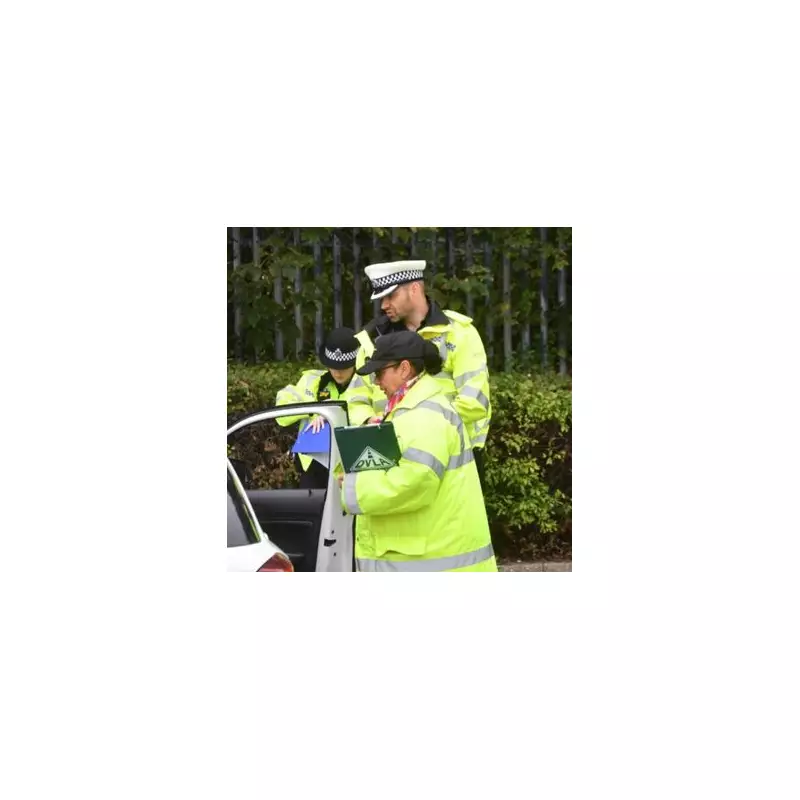
The Driver and Vehicle Licensing Agency (DVLA) is set to receive significant new enforcement powers, allowing for the seizure of vehicles fitted with illegal registration plates. This forms part of a major government crackdown on so-called 'ghost plates' announced today.
Public Consultation Launched on Tougher Penalties
The Labour government has initiated a public consultation seeking views on stricter punishments for motorists who break number plate laws. The consultation will remain open until March 31, 2026, and is a component of a broader review of motoring offences.
One key proposal under consideration is whether drivers caught using counterfeit or non-compliant plates should receive penalty points on their licence, in addition to facing potential vehicle confiscation. The move targets plates specifically designed with reflective coatings to evade detection by police Automatic Number Plate Recognition (ANPR) camera systems.

A Victory for Road Safety Campaigners
The official announcement marks a success for a sustained campaign led by West Midlands Police and Crime Commissioner Simon Foster and Sarah Coombes, the MP for West Bromwich. They have long argued that 'ghost plates' enable criminal activity and pose a serious risk to public safety.
"This is a significant win for law and order and a huge step forward for road safety," stated PCC Simon Foster. "For too long, criminals have used 'ghost plates' to operate under the radar. This victory will help us catch criminals, protect the public, and ensure that no driver is above the law."
Sarah Coombes MP added: "After a sustained campaign in parliament, I am delighted the government has listened. There is no good reason to use a ghost plate. The Government's landmark road safety strategy is taking decisive steps to end this number plate Wild West."
Part of a Wider Road Safety Strategy
The crackdown on illegal plates is integrated into the government's new Road Safety Strategy, which aims to tackle the main causes of serious collisions. PCC Foster highlighted the strategy's focus on the 'fatal four' offences: speeding, drink and drug driving, not wearing a seatbelt, and using a mobile phone while driving.
"Reducing the number of people tragically and avoidably killed or seriously injured on our roads has always remained one of my top priorities," Foster said. "This new strategy provides vital tools to tackle the 'fatal four'... It will save countless lives in the West Midlands and beyond."
The consultation now invites feedback from the public and stakeholders on the proposed measures, with the government aiming to implement stronger enforcement mechanisms later this year.