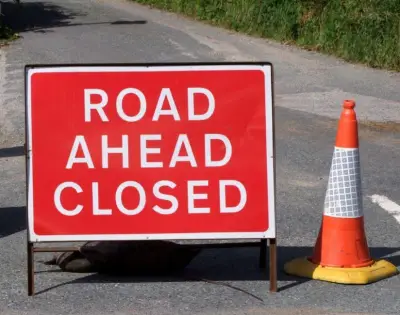
A recent survey has revealed that 57 per cent of drivers on UK roads want the red ‘road ahead closed’ signs to be changed. Motorists have criticised the signs, describing them as ‘uninformative’ when trying to understand the details of road closures they are approaching.
Confusion Over Closures
Among those who find the signs uninformative, the most common reasons for confusion are that the signs do not specify which road is closed or how far ahead the closure is located. Additionally, 15 per cent of drivers do not trust that the signage is up to date.
Over nine in ten drivers who responded to the survey would support councils and their contractors providing more information about where closures are. Only 30 per cent of drivers surveyed by the RAC said they always follow yellow diversion signs after seeing red ‘road ahead closed’ signs.
Reliance on Alternatives
According to the survey, 79 per cent of drivers rely on their own local knowledge to find a better alternative route. Meanwhile, 58 per cent worry that the diversion will take them miles out of their way, and just over half state that they simply follow their sat-nav.
RAC head of policy Simon Williams commented: “Our research with drivers reveals very clearly that, as things stand, ‘road ahead closed’ signs are not fit for purpose. Simply stating ‘road ahead closed’ is too vague as it doesn’t give drivers enough information about the closures they’re approaching and is causing a lack of trust.”
Williams added: “Our findings also show that in many cases drivers aren’t taking official diversion routes, which could cause issues in terms of traffic flow and potentially lead to dangerous situations around essential maintenance works. Sat-navs can be useful for finding alternative routes, but they don’t get everything right and sometimes won’t pick up emergency closures.”
“Drivers ought to be able to trust the signs they are supposed to follow, and it wouldn’t take a lot of effort to improve them. By including key information, such as which road is closed, and ideally for how long, drivers would surely have more trust in the signage and be less likely to ignore official advice.”