Driving Expert Reveals 'Speed Window' That Slashes Fuel Costs by 15%
A transport specialist has detailed how adjusting your driving speed can significantly reduce petrol consumption and lower motoring expenses. With current fuel prices at record highs, this simple technique could save drivers hundreds of pounds annually.
The Current Fuel Price Situation
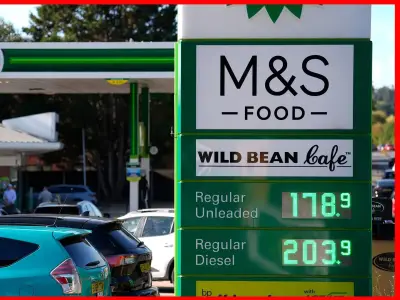
Latest statistics show petrol averaging 158.1p per litre and diesel at 191.2p per litre. These prices represent increases of 25p and 49p respectively since the beginning of the Iran conflict, putting substantial financial pressure on motorists across the country.
The Efficiency Window Explained
Joe Webster, a transport and logistics expert with A1 Auto Transport and over thirty years of experience, explains that most drivers are missing a crucial efficiency window in their daily driving habits.
"There's a clear efficiency window that most petrol cars operate in, and the majority of UK drivers are routinely driving above it," says Webster. "Understanding that window, and making small, practical adjustments, can make a significant difference to what you're spending at the pump each month."
How Speed Affects Fuel Consumption
The relationship between speed and fuel consumption isn't linear. As vehicles accelerate, they must work considerably harder to overcome aerodynamic drag, which increases exponentially with speed.
"People often assume that driving faster uses a little more fuel," Webster notes. "In reality, the relationship is much more pronounced. Aerodynamic drag increases with the square of your speed, so going from 50mph to 70mph can nearly double the energy your engine needs to maintain that speed."
The Optimal Speed Range
For most petrol-powered vehicles, the most fuel-efficient range falls between 45-55mph. On UK roads, where motorways and dual carriageways dominate longer journeys, the practical efficiency zone typically sits at 50-60mph.
"The sweet spot will vary slightly depending on the car," Webster explains. "But broadly speaking, 50-60mph is where most petrol cars are doing the least work for the most forward movement. That's the zone where your fuel goes furthest."
Beyond the Efficiency Window
Above 60-65mph, fuel consumption begins to rise disproportionately. At the standard UK motorway speed limit of 70mph, many petrol vehicles operate well outside their most efficient range, burning significantly more fuel than necessary.
Webster emphasizes practical application: "Nobody is suggesting you hold up traffic or turn a two-hour journey into three. But if you're doing regular motorway miles, even settling at 65mph instead of 70 can produce savings that add up quickly over a month."
Practical Tips for Fuel Savings
- Utilize cruise control to maintain steady speeds and avoid unnecessary acceleration
- Reduce motorway speeds from 70mph to 60mph to improve fuel economy by 10-15%
- For drivers covering 1,000 motorway miles monthly, this could save multiple fuel tanks annually
Who Benefits Most?
High-mileage drivers stand to gain the greatest savings. Tradespeople, long-distance commuters, and anyone covering substantial motorway distances for work can benefit significantly from adjusting their cruising speeds.
"Think about it in terms of how often you fill up," Webster suggests. "If a change in driving speed means you're filling your tank slightly less often, that's money back in your pocket, week after week."
The Bottom Line
Webster concludes: "There's no single magic number that works for every car and every driver, but the efficiency window is real and well within reach for most people on UK roads. The sweet spot sits between 50 and 60mph broadly, and while that's not always practical on a busy motorway, even nudging your cruising speed down by 5 or 10mph can make a difference."
"With fuel prices where they are, drivers are right to look for savings. Speed is the simplest lever available, and you don't need a new car or a change of routine to use it. Over a month of regular driving, that one small adjustment can be one of the easiest ways to cut your fuel costs."