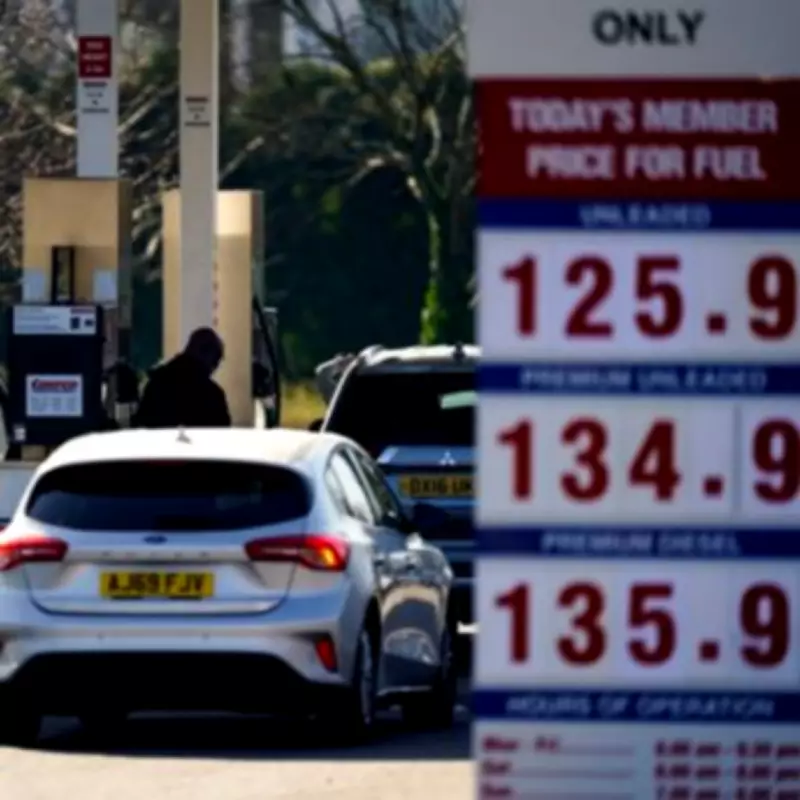
UK Drivers Confront Soaring Fuel Costs as Middle East Crisis Intensifies
Motorists across the United Kingdom are facing unprecedented pressure at the pumps, with new data revealing petrol prices have surged to 149p per litre on some forecourts. This dramatic increase comes as escalating tensions in the Middle East continue to disrupt global oil markets, creating a perfect storm for British drivers already grappling with high living costs.
RAC Data Reveals Sharp Weekly Increases
According to the latest figures from the RAC, petrol prices have jumped by 3.7p to reach 136.52p per litre since just last Saturday. The situation is even more severe for diesel drivers, who are now confronting the most expensive fuel prices in 16 months, with costs rising by a substantial six pence to 148.35p per litre.
The financial impact on household budgets is becoming increasingly significant. In less than a week, the average cost to fill up a standard 55-litre family car has increased by approximately £2 for petrol and nearly £3.30 for diesel. These rapid price movements are placing additional strain on commuters, businesses, and families across the nation.
Expert Analysis Points to Prolonged Crisis
Clayton Seigle, a senior fellow at the Center for Strategic and International Studies, provided sobering context for the current market conditions. "The grace period given by the market to the Trump administration expired at the end of last week," he explained. "A deficit of 20 million barrels per day is hitting global oil market balances with no sign of relief. To the contrary, President Trump is demanding unconditional surrender, a very unlikely prospect."
Seigle further noted that initial assumptions about the administration's approach to oil prices have proven incorrect. "While observers may have initially thought his disregard for painful oil prices was a bluff, it's now clear that it isn't," he stated.
Central Banks Struggle with Energy Shock Inflation
Alan Taylor, an independent member of the Bank of England's monetary policy committee, highlighted the challenges facing economic institutions. "Large energy shocks move faster than inflation-targeting central banks can respond," he remarked in a recent speech. "Central banks and their mandates can never fully solve every type of inflation problem, including the big shocks of recent years."
Investment Bank Predicts Further Escalation
Goldman Sachs issued a particularly concerning forecast on Friday night. "Based on these new data, developments and the size of the shock, we now think that oil prices would likely exceed $100 next week if no signs of solutions emerge by then," the investment bank stated.
The analysis grew even more alarming with additional projections. "We now also think it's likely that oil prices, especially for refined products, would exceed the 2008 and 2022 peaks, if Strait of Hormuz flows were to remain depressed throughout March." This critical shipping lane handles approximately one-fifth of the world's oil supply, making its stability crucial to global energy markets.
Taxation Composes Majority of Pump Prices
The RAC provided important context about the composition of fuel costs in the UK. "The total retail price paid at the pump also includes a significant amount of tax – 57.95p per litre in fuel duty and 20% VAT," the organization explained. "This means that over 60% of the price we pay at the pump goes direct to the Treasury, which together with car tax and 'showroom' tax totals more than £40 billion a year."
This tax structure means that even as crude oil prices fluctuate, a substantial portion of what drivers pay remains constant, providing limited relief during periods of market volatility. The current crisis highlights how international conflicts can have immediate and tangible effects on everyday expenses for British consumers.
As tensions continue to escalate in the Middle East with no clear resolution in sight, industry analysts warn that UK drivers should prepare for potentially higher fuel costs in the coming weeks. The combination of geopolitical instability, supply constraints, and existing tax structures creates a challenging environment for motorists seeking affordable transportation options.