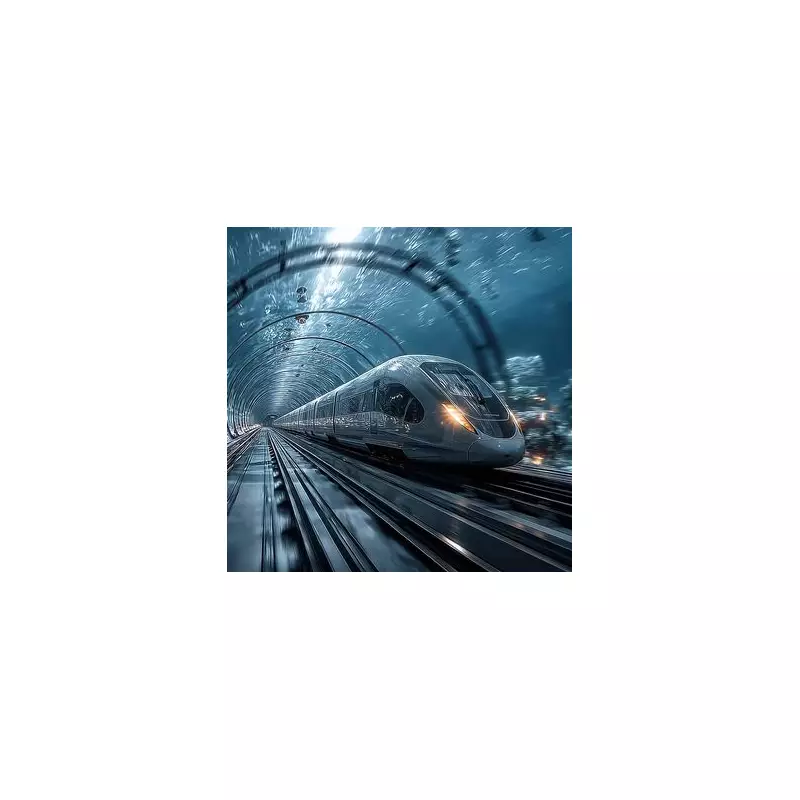
China has officially approved plans to construct the world's longest underwater tunnel, a colossal infrastructure project set to revolutionise travel in the region. The Bohai Strait Tunnel will connect the cities of Dalian and Yantai, cutting a gruelling six-hour journey down to a swift 40-minute high-speed train ride.
Engineering Ambition on a Grand Scale
The scale of the project is staggering. The tunnel will stretch for 76 miles (122 kilometres), with approximately 56 miles of that submerged beneath the seabed. This underwater section alone will be longer than the combined lengths of the Channel Tunnel and Japan's Seikan Tunnel. The design features two parallel tunnels dedicated to high-speed trains capable of speeds exceeding 150 miles per hour, significantly outpacing the Eurostar services in the Channel Tunnel.
With an estimated cost of 220 billion Yuan (over £23 billion), the tunnel represents one of the most ambitious engineering endeavours of the decade. Planners anticipate construction will take between 10 and 15 years to complete, a timeline that underscores the project's complexity compared to the six years it took to build the shorter Channel Tunnel.

Economic Catalyst and Environmental Concerns
The primary driver for the Bohai Strait Tunnel is economic integration. Dalian is a major financial, shipping, and logistics hub, while Yantai has rapidly expanded into petrochemicals, advanced manufacturing, and technology. Currently linked by an eight-hour ferry, the new 40-minute connection is expected to supercharge economic output by seamlessly linking these vital industrial centres.
Experts like Lu Dadao from the Chinese Academy of Sciences believe the tunnel will transform national transport networks by relieving pressure on major railway hubs in Beijing and Tianjin. Similarly, Du Yanliang from the Chinese Academy of Engineering Sciences highlights how it will strengthen ties between northeast China's industrial heartlands and key economic zones.
However, the project faces scrutiny from environmental campaigners. The Bohai Strait is a rich habitat for wildlife, serving as a crucial breeding ground for the Class 2 protected spotted seal. Researchers, including Sun Fenghua from the Chinese Academy of Sciences, have urged for serious study of all environmental impacts before construction proceeds, stressing that "We must not proceed until these questions are fully understood."
Safety and Strategic Importance
Given the tunnel's location in an earthquake-prone zone between the Liaodong and Shandong peninsulas, planners are incorporating state-of-the-art safety technology. This will include advanced ventilation and waterproofing systems, structural sensors, and numerous emergency exits to ensure passenger safety.
The project, which authorities have been keen to start "as soon as possible" since at least 2018, now has the official green light. When completed, the Bohai Strait Tunnel will not only hold the title of the world's longest tunnel but will also stand as a testament to China's commitment to large-scale infrastructure as a driver of regional economic unity, despite the significant environmental and engineering challenges it must overcome.