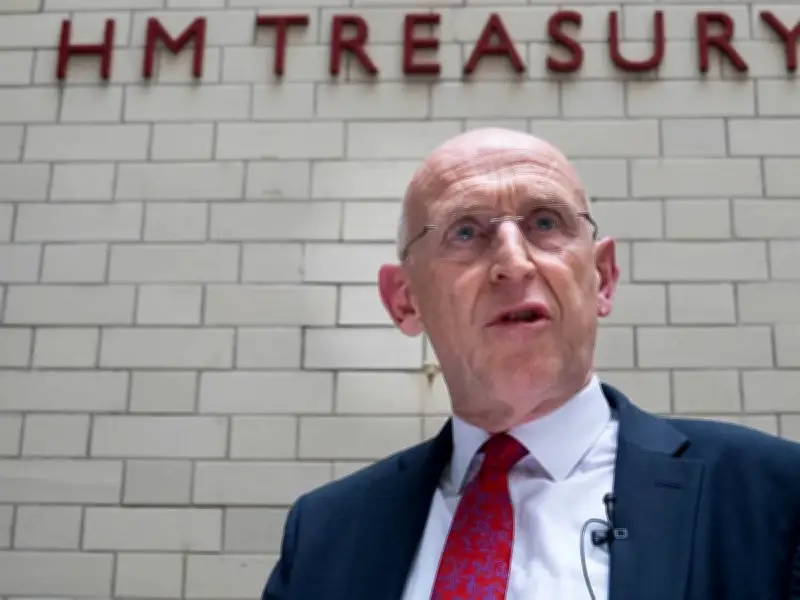
Chancellor John Healey is set to inject £150m into start-ups across the North of England, backing university spin-outs and emerging businesses in Liverpool, Manchester, Leeds, Sheffield and Newcastle. The fund, drawn from the British Business Bank's existing budget, will be unveiled during a speech at a prominent British manufacturing facility this morning.
Healey is expected to declare that the initiative will be deployed "to get behind the most innovative and fast-growing firms. This is not sentimentality, it's supply side economics." The announcement aims to provide economic underpinning to Prime Minister Andy Burnham's devolution agenda, which he claims will deliver "growth in every postcode," as reported by City AM.
Leveraging private investment
The £150m of government funding is intended to lever in additional private investment into Northern businesses. Healey is anticipated to pledge support for "city regions with real power, supported by a stronger state, creating local industrial strategies and using public investment to unlock private investment, to support our innovation economy, and to create the new jobs their areas need."

The Chancellor will outline the government's vision for delivering "good growth" across the nation. He will say: "Ask an economist what growth is and you'll get a number. But ask the country and you'll get a different answer."
"A young person getting a new job in a company that's on the up. A sole trader winning a new contract that pays for a holiday with their kids. A business winning a new export order, giving the community around it a new lease of life."
Devolution as a growth strategy
Treasury officials said the Prime Minister believes he has set out a "clear diagnosis" for the problems facing the UK. Burnham has blamed neoliberalism, de-industrialisation and austerity for "decades of low growth."
Healey's Northern scale-up fund will form a central plank of the government's renewed effort to persuade both voters and business leaders that it holds the right blueprint for driving economic growth.
"The solution is a fundamental shift that starts with putting power in the right places. The next chapter of Britain's growth story will be written in more places," the Chancellor will say.
Number10 North and the dual mission
Healey will also elaborate on how the newly-established Number10 North fits within his broader economic strategy for the country. It will operate as part of a "dual mission" alongside the Treasury to "drive growth and productivity," he will say.
The Chancellor will say: "Instead of getting in the way with complexity and red tape, we need a strong, strategic centre wired to enable local leaders and their ambitions."
"I want to see wealth creation in this country. I want to see businesses make a profit. And to create the conditions for that we need an active, accountable state at all levels to remove blockages and create the conditions for more investment."
Budget pressure and political reaction
The government's pledge to drive growth across the UK's regions comes as Healey prepares to deliver his inaugural Budget as Chancellor next month. He is facing mounting pressure from business leaders to address the 'cost of doing business' by reducing employment costs, overhauling business rates and cutting energy bills for companies.
The Conservatives have rounded on Healey's announcement, dismissing the preview of the Chancellor's speech as a "policy-light word salad." Shadow chancellor Andrew Griffith said: "It will do little to comfort hard-working families and businesses across the country who are worried about more tax rises or the fact that government borrowing rates are near a 28-year high."
"We are facing serious threats from Russia and Iran on our doorstep, as well as threats to the Falkland Islands. Yet the Chancellor, the man who resigned over defence spending, seemingly does not want to mention our Armed Forces or how we will reach 3 per cent of GDP on defence."