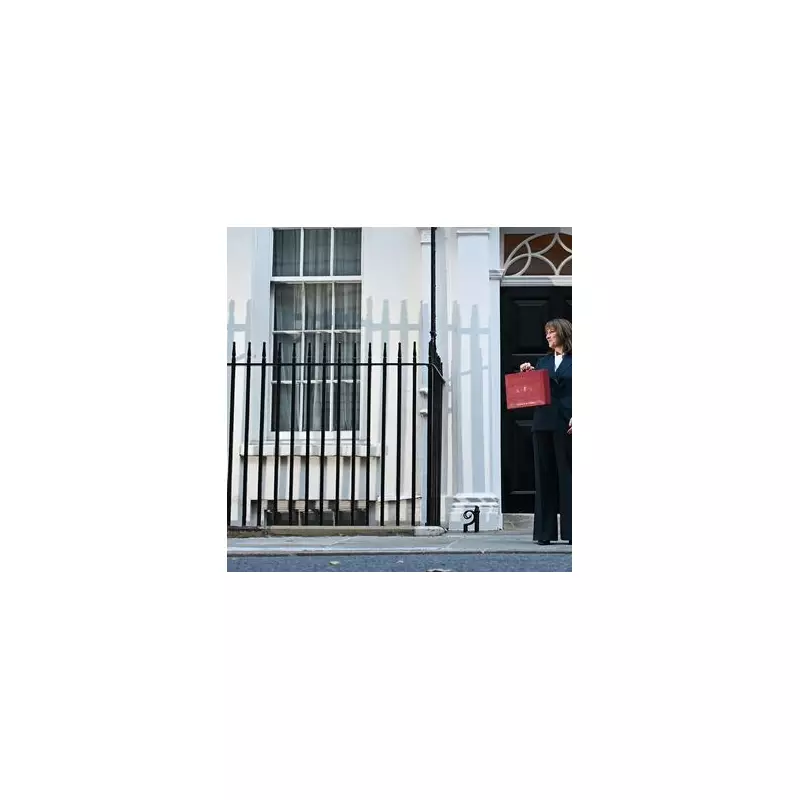
Business leaders across North West England have delivered a mixed response to Chancellor Rachel Reeves' first Budget, warning that the region's cities and enterprises still need more government support despite some welcome measures.
The Chancellor announced tax rises totalling £26 billion while confronting forecasts of weaker economic growth, persistent inflation, and rising unemployment. Key measures included abolishing the two-child benefit cap to tackle child poverty and creating additional borrowing flexibility.
Business Concerns Over Growth Strategy
At a Liverpool Chamber event attended by BusinessLive, local business representatives expressed relief at the lack of surprises but deep uncertainty about where future growth would originate.
Subrahmaniam Krishnan-Harihara, Deputy Director of Research at Greater Manchester Chamber of Commerce, didn't mince words: "The result is a Budget that fundamentally fails to deliver what the UK economy needs."
He highlighted several concerns, noting that the announced measures raise approximately £26 billion while government spending commitments continue to escalate. "The arithmetic does not appear to work," he stated, pointing to new annual costs including £6.3 billion for special needs education and up to £20 billion for sickness benefits by the decade's end.
Mr Krishnan-Harihara also criticised the extension of income tax threshold freezes to 2030/31, warning this would strip up to £800 annually from a full-time minimum wage worker's spending power while pulling 400,000 more people into paying income tax and pushing 600,000 into higher tax bands.
Regional Investment Questions Remain
Perhaps most damagingly, business leaders questioned the Budget's silence on long-term regional economic rebalancing. "There is still no confirmation of Northern Powerhouse Rail or a new line from Manchester to Liverpool," noted Mr Krishnan-Harihara.
Bill Addy, CEO of Liverpool Business Improvement District, echoed these concerns: "There's not a huge amount that's positive for our businesses within the visitor economy."
He welcomed the maintained lower business rates for retail, leisure and hospitality but cautioned that larger retailers with rateable values over £500,000 could face disproportionate burdens. "We need those major brands to be anchor tenants that draw in footfall," he emphasised.
Mr Addy also questioned the government's vision for the private sector's role, suggesting businesses were "essentially plugging the gap" of reduced public investment.
Welcome Devolution Moves
Not all reaction was negative. Several business leaders welcomed the government's continued commitment to devolution, with £13 billion allocated for regional mayors to invest in local priorities like skills development.
Ken McPhail, Head of School at Alliance Manchester Business School, found encouragement in this approach: "In Manchester, our local leaders are well-placed to understand the different skills and talent needs of our businesses."
Tim Heatley, co-founder at regeneration specialist Capital&Centric, described the budget as one that "puts real money behind regeneration," particularly praising the devolution of power and funding to mayoral city regions.
Property experts also saw potential. Stephen Cowperthwaite, Managing Director of UK Regions at Avison Young, called it "a real moment of opportunity for the UK regions" but stressed that "the government must back its cash with coherent policy."
Despite these positive notes, the overarching message from North West businesses was clear: while some measures show promise, the Budget falls short of delivering the comprehensive growth strategy and regional investment the region urgently needs to thrive.