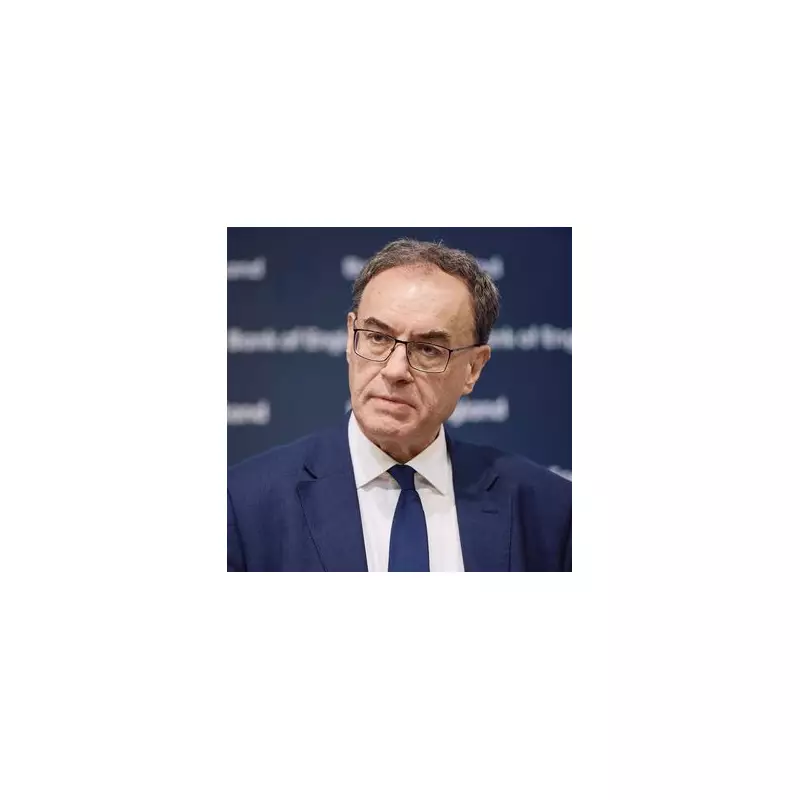
The Bank of England has delivered a significant pre-Christmas boost to borrowers, cutting its main interest rate for the first time in four months. In a knife-edge decision, the Monetary Policy Committee (MPC) voted to reduce Bank Rate by a quarter of a percentage point to 3.75 per cent.
A Close Vote Driven by Economic Slack
The move, which marks the first reduction since August, was passed by the narrowest of margins. The committee was split 5-4, with Governor Andrew Bailey's casting vote proving decisive. The Governor argued that a deteriorating labour market and weaker-than-expected growth indicated a build-up of economic slack in the UK economy. This concern ultimately outweighed persistent, though declining, inflationary pressures.
Since the Bank's last hold decision in November, economic data has disappointed. Official figures show unemployment jumped above five per cent between October and November, while redundancies hit their highest level since February. "We've passed the recent peak in inflation and it has continued to fall, so we have cut rates for the sixth time, to 3.75 per cent, today," Bailey stated following the announcement.

Inflation Outlook Brightens for 2026
MPC members pointed to several factors suggesting a milder inflation picture at the start of next year. Falling oil and gas prices, combined with measures announced by Chancellor Rachel Reeves in the Autumn Budget, have improved the forecast. Reeves' decisions to lower regulatory costs on energy bills and continue the fuel duty freeze, alongside dropping commodity prices, led officials to reduce their inflation forecast by 0.5 per cent.
Bank staff now believe the pace of price increases could return to the MPC's two per cent target as early as the second quarter of 2026. The administered price changes and new demand-reducing taxes, most taking effect in April, are expected to further dampen price rises.
Hawks Warn of Persistent Pressures
Despite the cut, significant concerns about underlying inflation remain. The decision was opposed by four committee members, including Chief Economist Huw Pill, Deputy Governor Clare Lombardelli, and external members Catherine Mann and Megan Greene. They voted to hold rates at four per cent, warning that the pace of disinflation may slow and could consistently exceed the target even after this cut.
This hawkish faction highlighted forward-looking indicators, such as the Bank's regular survey of businesses. In the latest Decision Maker Panel, executives said they expected their wage bills to rise by 3.8 per cent over the next year and planned to raise prices by 3.7 per cent—nearly double the Bank's target. Households also expect inflation to run at around 3.5 per cent, a mindset that can trigger second-round effects like stronger demands for pay rises.
Bailey, who had sided with the hawks in November, switched his stance this month. He joined four other rate-setters who pointed to weak economic activity and subdued household spending as justification for further monetary easing. "We still think rates are on a gradual path downward," Bailey cautioned. "But with every cut we make, how much further we go becomes a closer call."