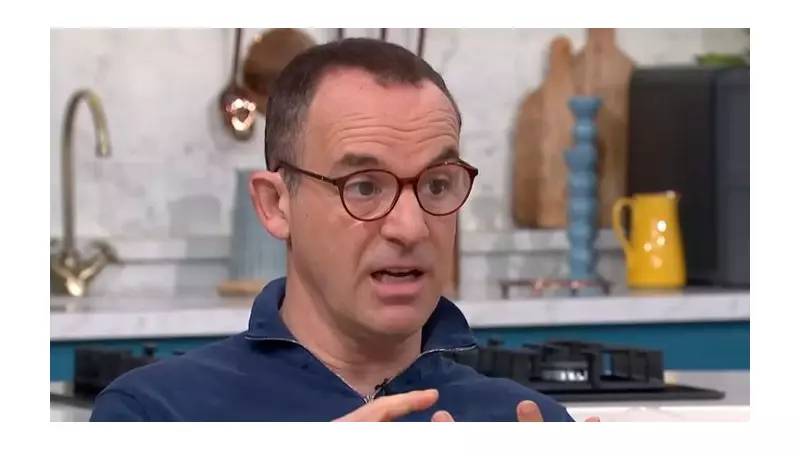
Financial guru Martin Lewis has delivered crucial guidance for savers contemplating a switch between different Individual Savings Accounts (ISAs), cautioning that ill-timed withdrawals could result in losses of hundreds of pounds. In a recent episode of his BBC podcast, the founder of MoneySavingExpert addressed a listener's query about transferring funds from a Help to Buy ISA to a Lifetime ISA, focusing on the implications for a £10,000 balance.
Understanding the ISA Landscape
The discussion centred on the distinctions between these two government-backed savings schemes and the penalties associated with withdrawals. Help to Buy ISAs, which are no longer open to new applicants, permitted first-time buyers to save up to £200 monthly, with a 25% Government bonus applied when purchasing a home valued at up to £250,000, or £450,000 in London.
In contrast, Lifetime ISAs are accessible to adults aged 18 to 39 and can be utilised for either buying a first home worth up to £450,000 anywhere in the UK or for retirement savings. Savers may deposit up to £4,000 annually, receiving a 25% bonus capped at £1,000 per year, with contributions allowed until age 50.

Penalties and Withdrawal Rules
A critical point highlighted by Mr Lewis is that funds in a Lifetime ISA can be withdrawn penalty-free once the saver reaches 60. However, withdrawals for reasons other than purchasing a qualifying property incur a 25% charge.
On the podcast, listener Felice inquired: "For those of us who put £1 in a Help to Buy ISA account before they were ended and have been steadily adding away over the years since, is it worth getting the money we've saved out and putting it into a Lifetime ISA instead? Will we face a penalty when we do that because the withdrawal is not for the purchase of a home and at what point would that penalty be offset by the amount we can gain from the Government bonus if we switch?"
Key Advantages and Drawbacks
Mr Lewis clarified that individuals are permitted to hold both accounts but can only claim the property bonus from one. He noted that while Lifetime ISAs often seem more appealing, the decision is nuanced.
One significant benefit of a Lifetime ISA is the higher annual contribution limit. "In brief, the big pro of the Lifetime ISA is you can put more money in each year, which means, of course, then if you go and get your qualifying house, you're going to get more free cash because you can put up to £4,000 a year in a Lifetime ISA, you can't put anywhere near that much in a Help to Buy ISA - I think it's £2,400 a year if you exclude the first year," he explained.
Additionally, Lifetime ISAs can be used for properties valued up to £450,000 across the UK, whereas Help to Buy ISAs are limited to £250,000 outside London. Mr Lewis also pointed out that with a Lifetime ISA, the bonus is paid at exchange, while the Help to Buy bonus is only disbursed at completion.
The Penalty Risk Factor
However, Mr Lewis emphasised that the Help to Buy ISA offers a major advantage: no penalty for withdrawals not used for home purchases. "But the Help to Buy ISA does have one big benefit over the Lifetime ISA. That is, if you withdraw your money not for buying a qualifying property, there is no penalty. You will get back all the money you have put in - and the interest. You won't get the 25% bonus because you're not buying a property. But you won't lose any money either," he stated.
In comparison, withdrawing from a Lifetime ISA before age 60 for non-qualifying purposes results in a financial setback. "With the Lifetime ISA you get a 25% bonus once you put the money in to be used on a first-time property or after you're aged 60. But if you take the money out before age 60 and you're not using it to buy a qualifying property, then you pay a 25% penalty," Mr Lewis detailed.
He elaborated that this penalty effectively erodes more than just the Government bonus. "What does that mean? So you get 25% and then 25% is taken off… then effectively you lose 6.25% of your money. So if you've got £10,000 in your Lifetime ISA when you take it out, you will only have £9,375. You're effectively paying a fine to the state of £635 on £10,000," he calculated.

By contrast, with a Help to Buy ISA, withdrawing £10,000 for non-property purposes returns the full amount without loss.
Personalised Decision-Making
Mr Lewis stressed that the choice depends heavily on individual circumstances. "If you’re not certain you’ll be buying a qualifying property under £450,000, you may be safer keeping your money in a Help to Buy ISA because there’s no risk of a penalty," he advised.
Another important rule is that a Lifetime ISA must be open for at least 12 months before it can be used for a first home purchase. "If you don’t already have one open and you plan to buy within a year, that’s a problem. In that case, stick with the Help to Buy ISA," he recommended.
For those purchasing homes priced between £250,000 and £450,000 outside London, switching to a Lifetime ISA could be beneficial, as it is the only way to receive a Government bonus in this price range. Mr Lewis also highlighted the 'over-60s rule', noting that Lifetime ISAs can serve as retirement savings vehicles. "You can take the money out once you’re aged over 60 without penalty, so it can also be used for later life savings, not just house deposits," he added.
In summary, Mr Lewis urged savers to carefully evaluate property price limits, timing considerations, and the risk of penalties before transferring money between accounts. The full analysis is available on his BBC podcast.