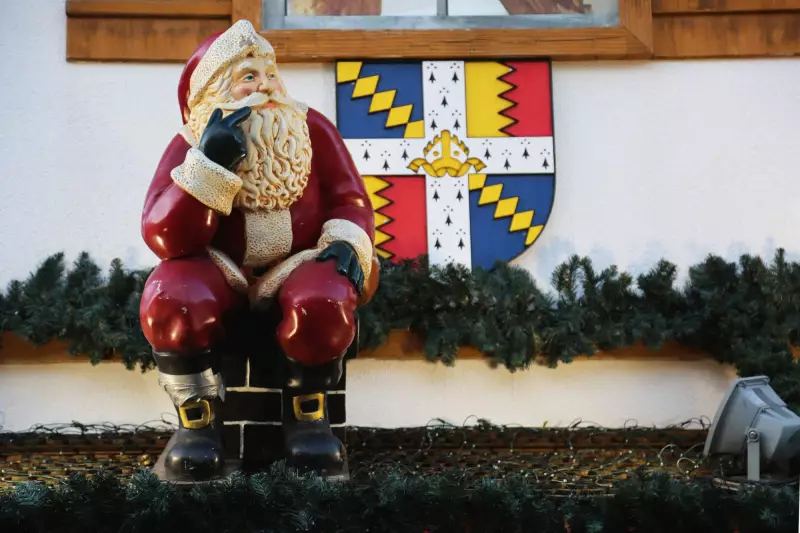
As winter tightens its grip, Birmingham's city centre undergoes its annual transformation, colonised by wooden huts, the scent of mulled wine, and the relentless cheer of festive tunes. The Frankfurt Christmas Market, a behemoth claiming to be the largest authentic German-style market outside Germany or Austria, is back. But is it a beloved tradition or a commercial headache?
Global Stalls and Local Grumbles
The market's reach is undeniably international. Take Alexandra, a stallholder who travelled from Cluj-Napoca in Romania – her nation's second city – to serve patrons in Birmingham, England's own second city. She proudly sets a rum and red wine concoction alight, declaring it "real băutură" (real booze). She is part of a hundreds-strong workforce that populates the stalls, which now appear with increasing ambition. This year, erection began on 31 October, a date that rankles with those who feel the consumer Christmas season encroaches too far into autumn.
For many residents, the market provokes a mix of festive warmth and logistical irritation. "It does make things a bit merrier," notes Jonathan, who has experienced homelessness for six months, though he adds the situation remains "pretty shit". Commuters bemoan the takeover of New Street and the picturesque St Phillip's Square, while visitors like Zoe from Coventry have made peace with it. "I think it's part of the furniture," she says, now a regular patron.
The market's pull is powerful, drawing an estimated five million visitors annually. Yet, its very success highlights a curious one-way street. The market was the brainchild of Frankfurt's tourist board in the 1990s, a successful export to its twin city. While it drove a 30% increase in British visitors to Frankfurt's original market between 2000 and 2010, few Germans make the reciprocal trip to Birmingham for the experience.
The Multi-Million Pound Festive Engine
Beneath the tinsel and twinkling lights lies a serious economic engine. The market is very big business, operated by Frankfurt Christmas Market Ltd, run by Marlis and Nadine Löwenthal from Bremen. Its impact on the local economy is substantial:
- It generates around £261.7 million in increased spending on food, transport, and accommodation.
- The city council earns approximately £322,000 in gross revenue for providing services like cleaning and security.
- The overall economic impact is a positive £351.4 million for the city.
For independent local traders, securing a piece of this pie is challenging. They must enter an annual ballot for a stall slot. Pitch fees are reported to start at £200 per day, and with additional costs for stock and labour, margins can be tight. While one jewellery stall owner reported consistent success since 2020, others were reluctant to discuss the financial realities on the record.
A Missed Opportunity for Birmingham?
For some, the market represents a festive annoyance. For others, it's a symbol of a deeper, missed opportunity. The market is a microcosm of Birmingham's twin-city relationships – with Frankfurt and Lyon. While Birmingham hosts a hugely successful Frankfurt import, there is little evidence of a comparable Brummie export to the Römerberg or Place Bellecour.
"The most we seem to have managed in 59 years is an exchange of young chefs," the article observes, questioning why Birmingham isn't leveraging these connections to promote its own culinary culture, from Desi pub curries to faggots and peas.
As the city hums along to 'Santa Baby', the debate continues. The market is a juggernaut that brings significant revenue and festive cheer to millions, yet it also brings congestion and a sense of commercial overload. Perhaps the greater question it raises is how Birmingham can better project its own unique identity onto the world stage, moving beyond being a successful host to becoming a confident exporter of its own culture, not just at Christmas, but all year round.
Meanwhile, The Dispatch, Birmingham's email-based newspaper, is channelling the communal spirit by hosting its own Christmas quiz at Temper and Brown in the Jewellery Quarter on 18 December, offering a £100 cash prize and a classic local celebration.