Birmingham has long been celebrated as Britain's manufacturing heart, but its legacy extends far beyond industry. The city has produced a remarkable array of inventions that have transformed daily life globally. Here, we explore some of the pioneering creations and the brilliant minds behind them.
The Bicycle Bell: A Simple Safety Device
John Richard Dedicoat, born in 1840 and an apprentice to James Watt, patented the bicycle bell in 1877. His invention became a crucial road safety tool. Dedicoat also manufactured the Pegasus bike and devised a spring step for easier mounting. Additionally, he patented the first pencil sharpening machine, showcasing his inventive versatility.
The Postage Stamp: Revolutionizing Communication
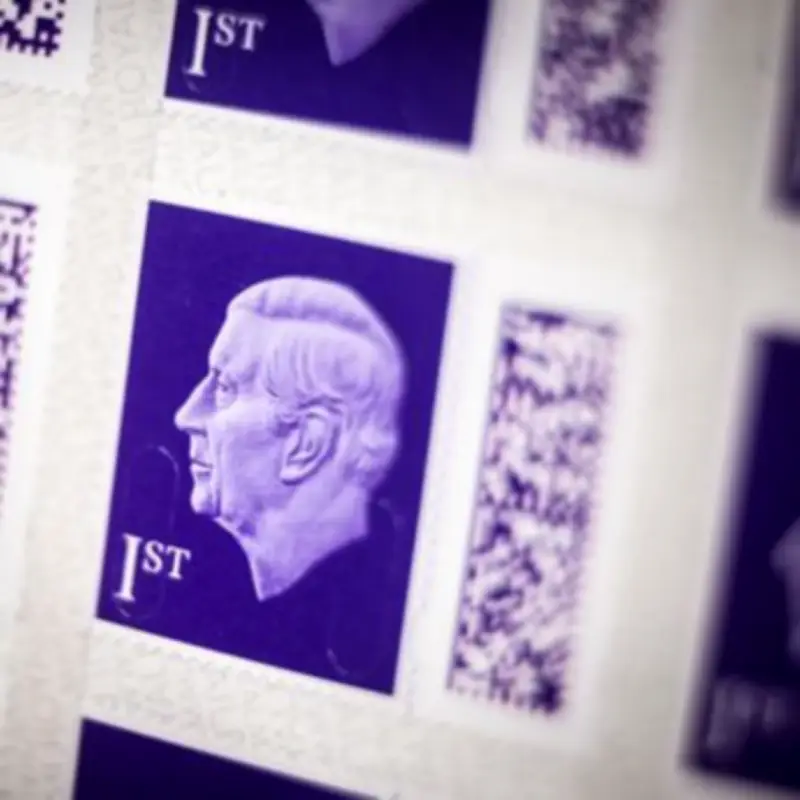
Sir Rowland Hill, born in Kidderminster in 1795, introduced the adhesive postage stamp in 1839. Inspired by a woman unable to afford a letter from her fiancé, Hill's Penny Black, issued in 1840, made postal services affordable and boosted mail volume. Hill, who worked at Birmingham's Assay Office, is buried in Westminster Abbey, with a memorial in Highgate Cemetery.

The Electric Kettle: A Kitchen Essential
In 1922, Arthur L Large, an engineer at Birmingham's Bulpitt and Sons, electrified the kettle, transforming tea-making. The company's Swan Brand became iconic, though it was later acquired by Moulinex. Large's innovation marked a significant leap from the ancient Mesopotamian kettles.
The Windscreen Wiper: Safer Driving in Rain
While America invented wipers, Birmingham's Mills Munitions patented them in 1921. The company, also known for inventing the grenade, produced aluminium golf clubs and a telescopic walking-stick seat. Sir William Mills, the genius behind these inventions, died in 1932.
The Pacemaker: A Lifesaving Innovation
In 1960, Birmingham heart surgeon Leon Abrams, a University of Birmingham graduate, implanted the first variable-rate pacemaker. Designed with engineer Ray Lightwood, it replaced painful, short-term hospital pacemakers. By 1966, 56 patients had received the device, with the first three recovering well. Abrams also developed the first artificial heart valve.
The Weather Map: Forecasting the Future
Sir Francis Galton, a Victorian explorer and cousin of Charles Darwin, published the first weather map in The Times on April 1, 1875. Though it showed the previous day's conditions, it laid the groundwork for modern meteorology. Galton invented various weather instruments and died in 1911, buried in Claverdon, Warwickshire.
The Whistle: A Sound of Authority
Joseph Hudson, a toolmaker born in 1848, won a Metropolitan Police competition in 1883 with his small, loud whistle, replacing shouts and rattles. He later invented the referee's whistle and the Acme Thunderer, the world's first pea whistle, still widely used. Hudson died in 1930.
The Vacuum Cleaner: Revolutionizing Housework
Walter Griffiths from Highgate invented the first portable vacuum cleaner in 1905, called "Griffith's Improved Vacuum Apparatus for Removing Dust from Carpets." It featured a flexible pipe and nozzles, making it accessible to households. Though earlier models existed, Griffiths' design resembled modern vacuums and was marketed as a luxury item.
The X-Ray: A Medical Breakthrough
Dr. John Hall-Edwards from Kings Norton performed the first clinical radiograph on January 11, 1896, discovering a needle under a patient's skin. He later took the first X-ray guided operation and the first X-ray of the human spine. Despite developing cancer from radiation, leading to amputations, he served as Birmingham General Hospital's first surgeon radiographer. He died in 1926.
The Cooker: Transforming Kitchens
In the early 19th century, Birmingham joiner John Heard designed the first standalone cooking range with a flue-pipe to remove fumes. His invention, published in 1820, allowed baking, boiling, roasting, and room heating with minimal fuel, suitable for ships and homes.