Birmingham's Bookshop Crisis: Why England's Second City Lags Behind Manchester
"Understanding the Birmingham book scene from the past feels like chasing whispered names down corridors," reflects Clive Judd, co-owner of Voce Books in Digbeth. This evocative statement captures the elusive nature of Birmingham's literary retail landscape, raising a pressing question: why does England's second city have so few independent bookshops compared to other major urban centres?
A Stark Statistical Reality
The numbers reveal a concerning disparity. The West Midlands conurbation, with a population of 2.59 million, supports just eight independent bookshops. This translates to one indie bookshop per 323,700 people. In striking contrast, Greater Manchester boasts approximately 25 independent bookshops for its 2.8 million residents, equating to one per 112,000 people.
When adjusted for population size, Birmingham has merely 3.1 independent bookshops per million people, while Manchester sustains 8.9 alternative booksellers per million. For every indie bookshop operating in Birmingham, Manchester supports nearly three. This represents a significant gap for a city with such a rich literary heritage, having contributed giants like Shakespeare, J.R.R. Tolkien, and Philip Larkin to English literature.

A Vanished Network of Literary Havens
Birmingham hasn't always been a desert for independent booksellers. During the second half of the twentieth century, the city hosted a thriving network of indie bookshops that reflected its diverse character. These establishments often specialised in radical, alternative, black, Indian, and science fiction literature, drawing readers from across the United Kingdom.
For several decades, Birmingham's bookshop scene mirrored the city itself: diverse, political, practical, trade unionist, academic, and scientifically forward-looking. The northwest area once supported three radical black booksellers in Handsworth, while central Birmingham boasted six alternative bookshops. Today, Handsworth has none, and central Birmingham retains just one.
Before the economic downturns of the late 1980s, enthusiasts could move between radical sit-ins at The Peace Centre and science fiction discoveries at Andromeda Bookshop within minutes. However, by the early 2010s, most of these distinctive establishments had disappeared, crushed by the rise of Amazon, declining reading interest, and the city's overreliance on car travel, which restricted footfall and impulse purchases.
Between the late 1980s and early 2010s, the region lost twelve independent bookshops. Since 2010, seven have opened in the West Midlands, resulting in a net loss of five bookshops since the 1980s. Consequently, vast areas of urban West Midlands now lack independent retailers, with Birmingham's bookshop offering resembling that of a depressed market town rather than a major metropolis.
A Stalled Revival in Independent Bookselling
By the 2020s, there appeared to be signs of improvement. In 2023, national media praised Birmingham for engineering a renaissance in independent bookselling, profiling five retailers that seemingly rebutted the notion that the digital era meant certain death for neighbourhood bookstores.
Sadly, two of those five featured bookshops have since closed, casting doubt on the proposition that "bookselling is thriving" in the city. Instead, Birmingham appears to be experiencing a stalled revival following a definite slump in indie retailers during the 2000s and 2010s.
Nevertheless, amidst the challenging market conditions, some establishments are not only surviving but excelling. Last year, the Heath Bookshop in King's Heath won Independent Bookshop of the Year at the British Book Awards, with judges praising its function as a "thriving community hub."
"We got 800 responses to a survey we put out asking if locals wanted a bookshop," says Claire Dawes, co-owner of Heath Bookshop. Her business partner Catherine Gale adds, "We were constantly told this is what we've needed, from locals." Both attribute the partial revival of independent bookselling in Birmingham to the COVID-19 pandemic, noting that people sought a return to real-life experiences and community spaces.

The Waterstones Factor and Real Estate Challenges
Clive Judd of Voce Books identifies another significant factor: "I have a long-held feeling that Birmingham has suffered from the sheer amount of Waterstones branches in the region," he explains. "Particularly in suburban areas where a good indie would probably prevail, like Solihull and Sutton Coldfield."
Judd suggests that the confidence needed to open an independent bookshop and compete has been lacking in Birmingham for a long time. He notes that the city lags behind Edinburgh, Liverpool, Sheffield, and Bristol for independent bookshops, partly because Waterstones acquired much prime real estate during an early 2000s expansion drive, occupying space once taken by other book retailers.
Despite these challenges, Judd remains quietly confident about the future. "The resurgence of indie bookshops is a relatively recent cultural move," he observes, "some of which could be attributed to people reorienting their perspectives during the COVID period."
Remembering Birmingham's Literary Past
If independent bookselling is undergoing a slow revival, it has considerable ground to recover before reaching the rich ecosystem Birmingham hosted in the 1970s and 1980s. Research reveals several now-vanished bookshops that once defined the city's literary landscape.
Andromeda on Smallbrook Queensway specialised in science fiction, with owner Rog Peyton possessing encyclopedic knowledge of his stock. Before digital bookselling dominated, Andromeda was reportedly "the biggest importer of US books, predominantly science fiction, into the UK."
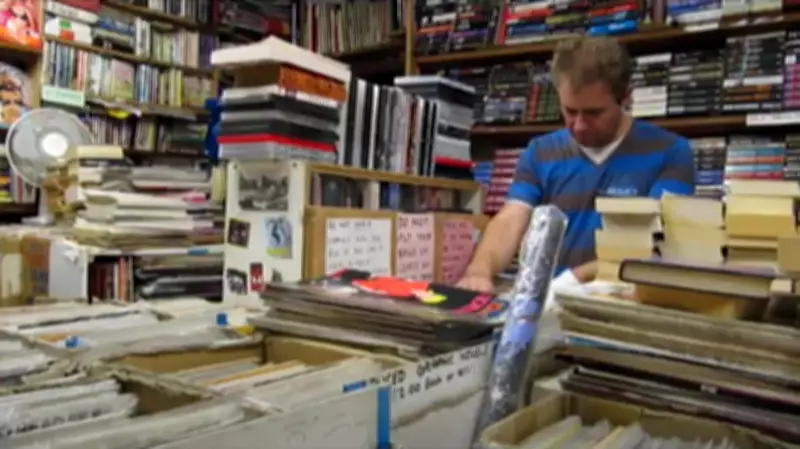
Readers World began as a second-hand book dealer in the Bullring's Rag Market during the 1970s before transforming into a bricks-and-mortar shop on Digbeth High Street. Known for its eclectic stock and slightly passive-aggressive handwritten notes, the shop closed in 2014 with a final message: "THIS SHOP. IS NOW CLOSED. NOT OPEN EVER."
In Moseley, Prometheus Bookshop served as the bohemian alternative to Andromeda's geekery and Readers World's cantankerousness. Owner John Dennis described it as intentionally non-commercial, writing in 1980: "Profitability has never been the sole or even the main criteria for stocking books in Prometheus and I am not interested in running a branch of WH Smith!"
A Slow But Steady Renaissance
The desire not to emulate corporate bookselling remains alive in Birmingham through the efforts of individuals like Clive Judd, Catherine Gale, and Claire Dawes. Despite the city's comparatively thin independent bookshop ecosystem, there are encouraging signs of revival.
King's Heath now boasts three independent shops within one square mile: the Heath Bookshop, BookTower, and how brave is the wren. This concentration would have been unthinkable during the late 2000s and early 2010s. With such a grand legacy of literary giants, Birmingham and the West Midlands needs to reclaim its position as a bookshop capital of the United Kingdom. Establishments like Voce Books and the Heath Bookshop are leading this gradual but determined resurgence, proving that independent literary culture can thrive even in challenging retail environments.