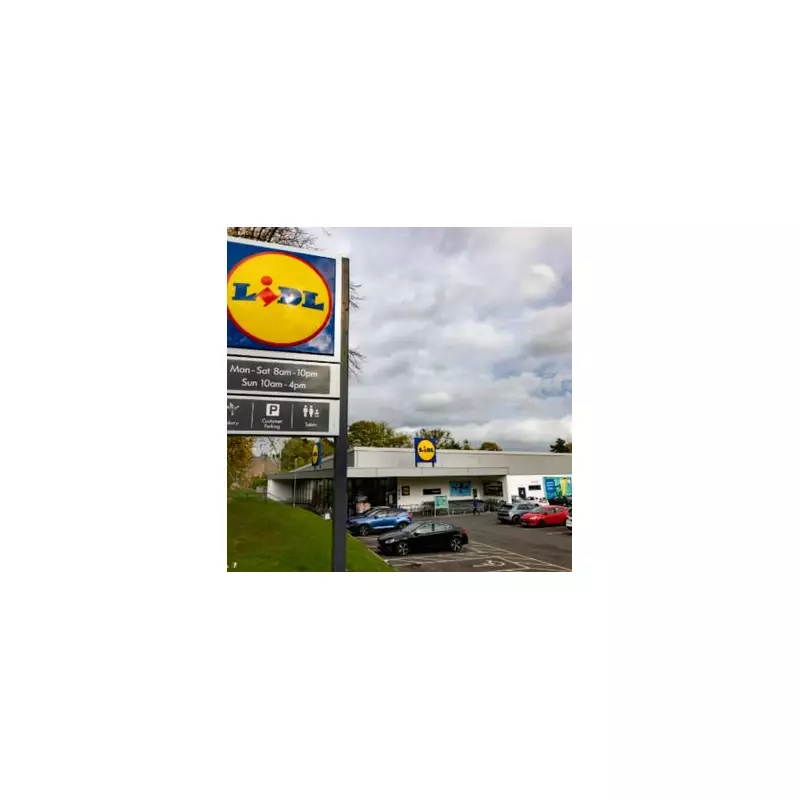
The German discount supermarket chain Lidl has announced an ambitious expansion strategy that will see 489 new stores open across Great Britain in one of the most significant retail growth plans in recent years.
Strategic Expansion Across Multiple Locations
Lidl's massive growth initiative will target prominent locations including town centres, retail parks, and standalone sites throughout England, Scotland, and Wales. The retailer has specified that it requires unit sizes between 18,000 and 26,500 square feet with at least 100 dedicated car parking spaces for each new store.
The supermarket giant posted in its official requirements: "Lidl has ambitious plans to open hundreds of new stores across Great Britain. This means we are looking to acquire sites that meet our standard store format requirements."
Detailed Site Requirements and Specifications
Beyond the basic size and parking requirements, Lidl is seeking locations with easy access and strong pedestrian or traffic flow to maximise customer convenience. The company is considering various acquisition options including freehold, leasehold, or long leasehold opportunities.
For standalone stores, Lidl requires plots of 1.5 acres or more, while mixed-use schemes could require up to 4 acres of land. The expansion will focus on both town centre locations and edge-of-town sites, providing shopping options for diverse communities across the UK.
Nationwide Coverage and Competitive Landscape
The comprehensive list of targeted locations spans from Aberdeen to York, covering hundreds of towns and cities across Britain. Some of the key areas include multiple sites in major urban centres such as London, Manchester, Birmingham, Glasgow, Edinburgh, Cardiff, and Leeds.
This expansion places Lidl in direct competition with other major UK supermarkets including Aldi, Morrisons, Tesco, Sainsbury's, and Asda. The move signals Lidl's commitment to strengthening its market position and challenging the established grocery retail hierarchy in Britain.
The detailed location list reveals Lidl's strategy to penetrate both underserved markets and complement existing store networks in areas where demand exceeds current capacity. This calculated approach demonstrates the German retailer's understanding of local market dynamics and consumer shopping patterns across different regions.