Solihull Council has come under fire from opposition councillors for not using covert surveillance powers granted under the Regulation of Investigatory Powers Act 2000 (RIPA) to help crack down on crime. A report presented at the latest governance committee meeting revealed that the authority had not used any such methods in the past 12 months.
What Are RIPA Powers?
While primarily designed for intelligence agencies like MI5, MI6 and GCHQ, RIPA allows councils to use covert surveillance to prevent and detect ongoing crime where an offence could lead to a jail sentence of six months or more. Elsewhere in the country, these powers have been used by young volunteers wearing undercover video cameras to test if shops are illegally selling age-restricted items, and to spy on known fly-tipping hotspots to bring offenders to justice.
Councillor Questions Lack of Action
At the meeting on June 18, Councillor Samantha Gethen asked: “My question needs to be why we have had no surveillance at all? We have had the issue with the phoenix shops (shops shut down then reopened under a different name), the issue with flytipping. Yet we don’t seem to be using any powers we have in order to tackle those issues - I’m wondering why.”

Andrew Kinsey, the authority's legal services manager and solicitor, responded: “I can’t speak for the individual departments as to why they are or are not using RIPA support. I can take that back and get a written answer from relative teams.”
Concerns Over Enforcement Capacity
Councillor Max McLoughlin raised further concerns: “We need to establish whether there is no qualifying crime, no capacity to investigate, or a change in process. That’s the point we need to have the detail on. I have raised previously the issue of a declining number of RIPA applications.” He recalled that at a meeting last December, it was recorded there had been more than 3,000 flytipping cases for the previous year, with only seven fixed penalty notices handed out. “My concern is it looks as though it is actually a lack of enforcement. There isn’t the capacity to be doing something previously used as a tool for addressing serious, organised crime.”
Next Steps
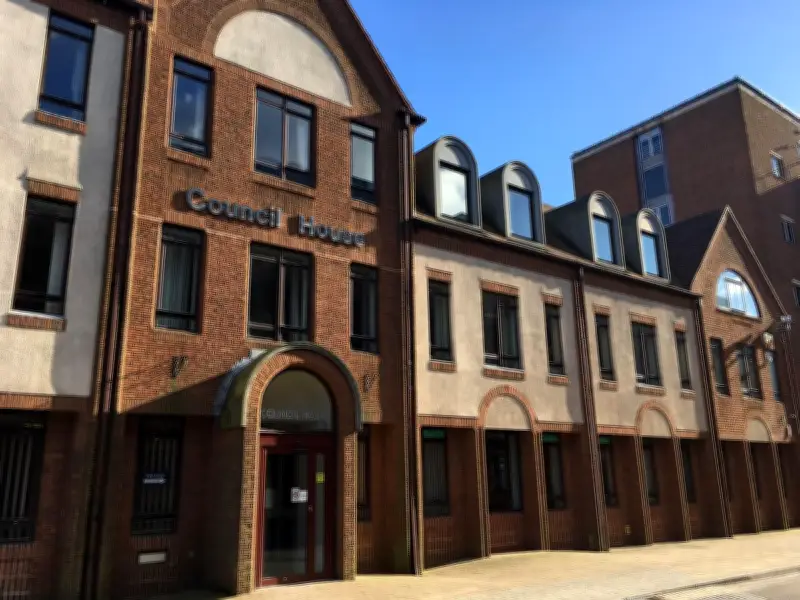
The officer confirmed that once responses were obtained from the relevant departments, these would be shared with the committee for further scrutiny. The meeting was held at the Civic Suite on June 18.