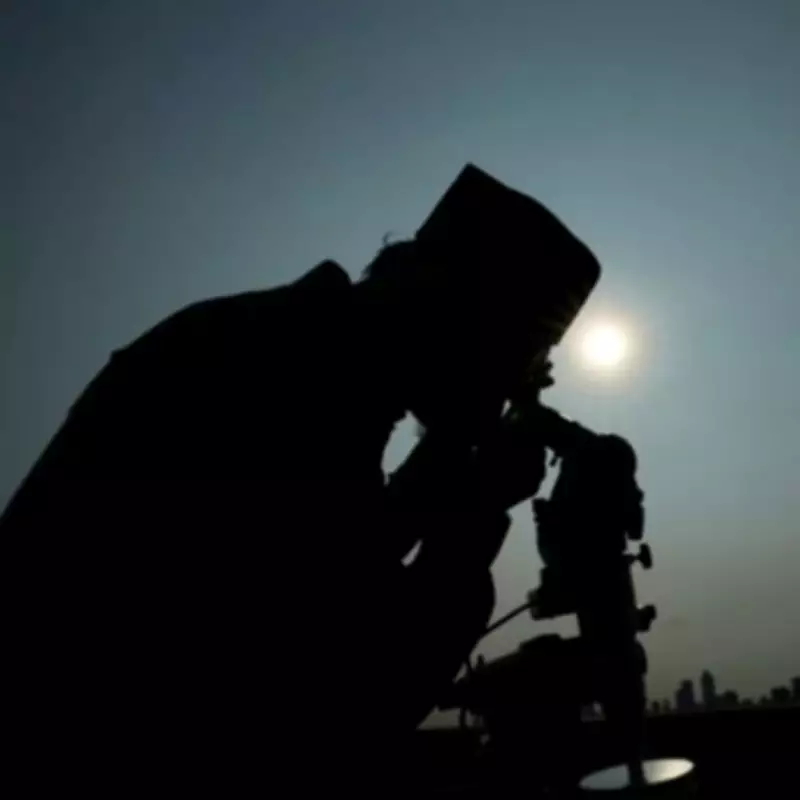
Ramadan 2026 Moonsighting Predictions Suggest Potential Split Start for Fasting
Astronomical forecasts for Ramadan 2026 indicate a possible divergence in the start date of fasting, with Saudi Arabia potentially beginning on February 18 or 19, depending on the sighting of the new crescent moon. While traditional observations determine the holy month, scientific data suggests a potential split in global start dates.
Astronomical New Moon and Visibility Challenges
The astronomical new moon is expected to occur at 12:01 Universal Time on Tuesday, February 17, 2026. However, visibility of the slim crescent will likely be restricted to specific regions in the Pacific, notably the Hawaiian Islands and parts of French Polynesia, which are far from major Islamic population centres.
UK astronomers at the HM Nautical Almanac Office indicate that the moon will not be visible to the naked eye in Mecca on February 17. It is only on Wednesday, February 18, that the crescent is forecast to be easily visible across Saudi Arabia.

Traditional Rules and Calendar Predictions
Under traditional rules, a February 19 start for fasting is most likely if the moon is only sighted on the 18th. This would follow the completion of a 30-day month for Shaban, ensuring the lunar cycle is fully observed.
Despite these visibility forecasts, Saudi Arabia’s official Umm al-Qura calendar has already predicted Ramadan to begin on February 18. This administrative calendar is used for government planning and public holiday schedules across the Kingdom.
Potential for Split Start and Global Implications
Experts suggest Saudi officials might still report a sighting on the evening of February 17 to align with the national calendar and thus confirm its accuracy. Such a declaration would mean fasting begins on Wednesday, February 18, for those following the Saudi announcement.
The potential for a split start remains high, as many UK congregations and other countries may wait for local sightings. If the moon is not visible in Britain or Morocco until the 18th, those communities will likely start fasting on February 19.
Debate Over Umm al-Qura Calendar and Final Decision
The Umm al-Qura calendar is often a point of debate, as it is based on astronomical calculation rather than actual visual confirmation. Critics argue this can sometimes lead to declarations that are physically impossible to verify with the naked eye.
Ultimately, the Saudi Crescent Sighting Committee will make the final decision based on reports from across the country. Muslims worldwide will be watching for the official decree from Saudi officials, who will examine all reports and decide on the date on the evening of February 17.
People must normally look for the moon in their own country, though some congregations in the UK, including Green Lane Masjid in Birmingham, align with the declarations from Saudi Arabia because of its status as home to Islam's most holy sites.