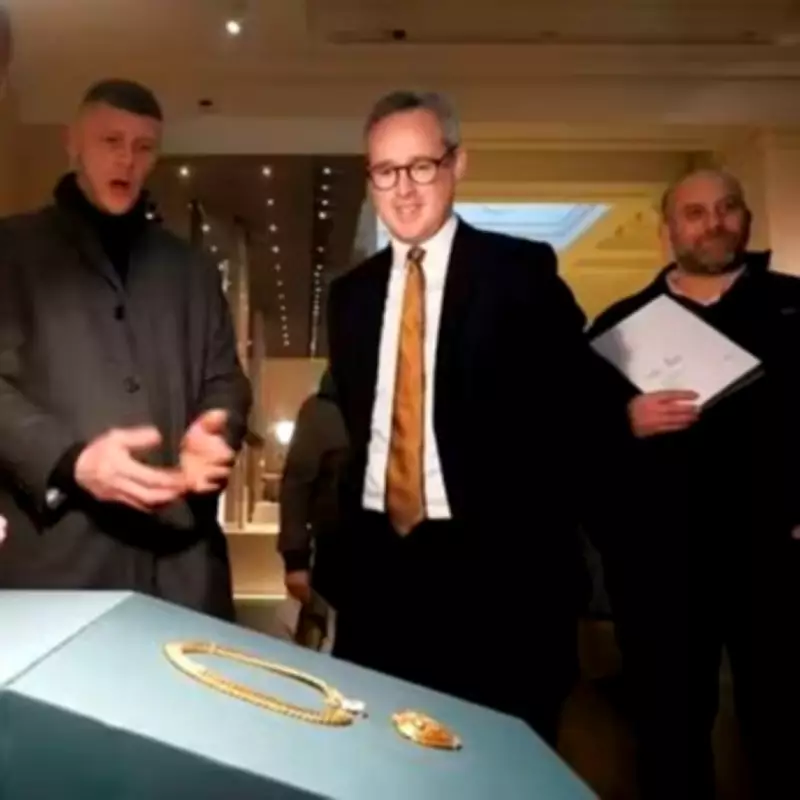
A Birmingham father and cafe owner has transformed his life overnight after unearthing a priceless Tudor pendant linked to Henry VIII, securing a staggering £1.75 million fortune from his metal detecting hobby.
From Field to Fortune: The Remarkable Discovery
Charlie Clarke, a Birmingham-based cafe boss, made what experts are calling a "once in 30 lifetimes" discovery while metal detecting in a Warwickshire field back in 2019. The amateur treasure hunter, who had only taken up the hobby six months prior, dug up a unique 500-year-old gold pendant connected to Henry VIII's marriage to his first wife, Katherine of Aragon.
Charlie described his immediate reaction to the find, recalling how he shrieked "like a little girl" when his detector signalled something significant. He had been about to call it a day after finding what he called "junk" when the device pinged, prompting him to dig down to the length of his elbow to retrieve the historic jewellery.
Securing the Tudor Heart for the Nation
The British Museum has now successfully raised £3.5 million through a celebrity-backed fundraising campaign to acquire the artefact, officially named the Tudor Heart, for the nation. The substantial sum will be divided equally between Charlie and the landowner where the pendant was discovered, netting the Birmingham dad his life-changing £1.75 million share.
Nicholas Cullinan, Director of the British Museum, expressed heartfelt gratitude to all supporters of the campaign, stating: "The success of the campaign shows the power of history to spark the imagination and why objects like the Tudor Heart should be in a museum. This beautiful survivor tells us about a piece of English history few of us knew, but in which we can all now share."
The Pendant's Royal Connections and Mysterious Journey
According to meticulous research conducted by the British Museum, the stunning 24-carat gold artefact may have been created for a tournament held in October 1518 to mark the betrothal of Princess Mary, Henry VIII's daughter, to the French heir apparent. The pendant beautifully unites the Tudor rose with Katherine of Aragon's pomegranate symbol and features a banner inscribed with "tousiors", old French for "always".
Henry VIII regularly commissioned London goldsmiths to create elaborate costume jewellery for major celebrations and state occasions, with court members wearing these pieces briefly to create an impression of magnificent splendour. Why this particular pendant ended up buried in a Warwickshire field remains an intriguing historical mystery that continues to captivate experts.
A Father's Motivation and Future Plans
Charlie has been refreshingly candid about his motivations for the windfall, telling The Guardian in 2023: "That's all it's really about. Birmingham is a bit of a rough place, and I think any parent ... would want the best education for their children." He plans to use a significant portion of the money to fund his son's education, providing opportunities he might not otherwise have been able to afford.
The Birmingham metal detectorist has been quick to dismiss comparisons to lottery wins, noting: "People say it's like winning the lottery; it's not. People actually win the lottery. When was the last time a crown jewel was unearthed?"
Heritage Preservation and Public Access
Following its discovery, the pendant was properly reported under the Treasure Act 1996, which provides museums and galleries across England with the opportunity to acquire significant historical objects for public display. The British Museum launched its fundraising appeal last October and announced on Tuesday, February 10, that it had reached its ambitious target.
The campaign received £360,000 in public donations alongside substantial contributions from grants, trusts, and arts organisations. Simon Thurley, Chairman of the National Heritage Memorial Fund, which contributed £1.75 million, commented: "The Tudor Heart is an extraordinary insight into the culture of Henry VIII's court, and I am delighted that Memorial Fund support will enable it to go on public display, where people can enjoy it and learn what it tells us about this fascinating period in our history."
Future Display and National Tour
Since the fundraising efforts were announced, the Tudor Heart has been on display in Gallery Two at the British Museum, where it will remain temporarily. The museum hopes to formally add the pendant to its permanent collection later this year, with plans already underway for it to tour the UK in the future, allowing people across the country to appreciate this remarkable piece of Tudor history.
Jenny Waldman, Director of Art Fund, which supported the campaign, added: "This remarkable object, so rich in history and meaning, can now inspire wonder for generations to come thanks to the collective efforts of so many who believe in the importance of keeping our shared heritage accessible to all."
Charlie Clarke's extraordinary discovery serves as a powerful reminder that history sometimes lies just beneath our feet, waiting to be uncovered by those with patience, passion, and a little bit of luck.