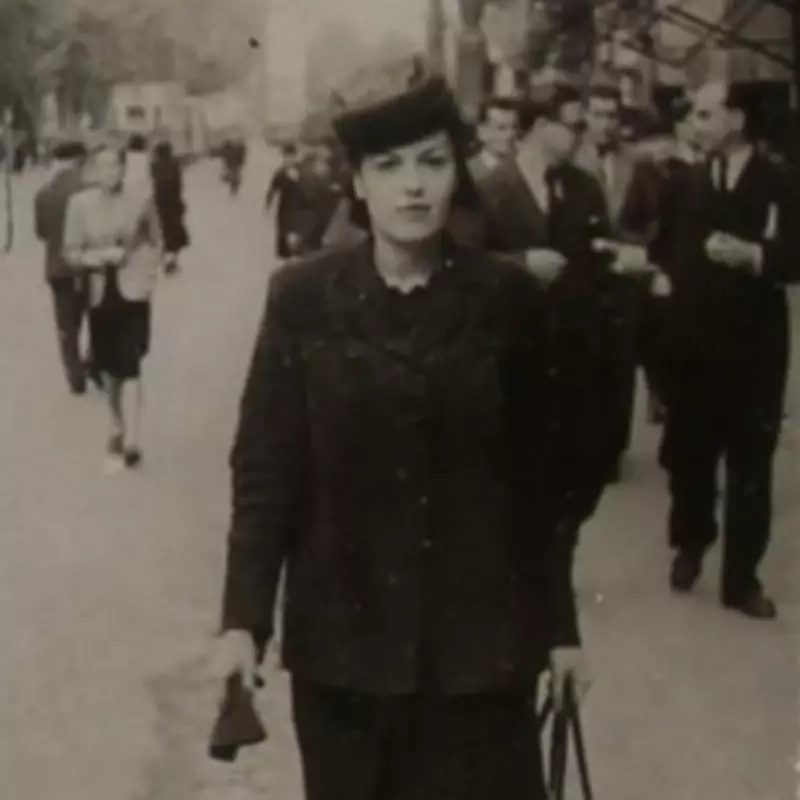
Solihull Socialite Stella Lonsdale: WWII Spy Cleared of Nazi Loyalties in New Study
New historical research has dramatically rewritten the story of Stella Lonsdale, the Solihull-born socialite whose scandalous wartime activities earned her comparisons to both James Bond and Mata Hari. According to a groundbreaking study, while her unconventional lifestyle shocked MI5 spymasters, she was not the Nazi sympathizer they believed her to be.
The 'Female James Bond' with a Controversial Reputation
Stella Lonsdale, born Stella Clive in 1913 to a Black Country travelling salesman, lived a life that reads like sensational fiction. MI5 agents who interrogated her during World War II described her conversations as "indescribably filthy" and too scandalous to include in official reports. They labeled her a "nymphomaniac" with "a cesspool mind" and suggested her "loose living would make her an object of shame on any farmyard."
Her rise from humble Warwickshire beginnings to high society was fueled by relationships with wealthy men, including financier Paul Christian Bog Homes and Nicolas Sidoroff, son of a White Russian prince. Her most notorious entanglement was with John Lonsdale, a Mayfair playboy convicted for his role in a £13,000 jewel robbery, whom she eventually married.
Wartime Activities and MI5 Suspicion
When World War II erupted, Stella's decision to remain in Nazi-occupied France while her husband evacuated raised immediate suspicions. She admitted to agreeing to spy for Hitler when arrested by the SS in Nantes in October 1940, though she claimed this was purely for self-preservation.
According to historian David Tremain's 2021 book "Agent Provocateur for Hitler or Churchill?: The Mysterious Life of Stella Lonsdale," she actually worked with resistance groups and extracted secrets from high-ranking Nazis through intimate relationships. One such relationship was with Siegfried Rauch of the Abwehr intelligence service, whom she reportedly abandoned when he failed to reveal details of Germany's planned invasion of Russia.
From May 1941, she collaborated with networks of Allied soldiers and airmen hidden in enemy territory, and even worked with German naval officers who wanted Hitler removed from power. Despite these efforts, British intelligence dismissed her information, convinced her liberal lifestyle proved she was a Nazi agent.
Post-War Life and Historical Vindication
After slipping back to Britain via Spain in late 1941, Stella underwent interrogation at London's Waldorf Hotel. She offered to return to France as a British spy, but MI5 declined, considering her "too unreliable, too much of a loose cannon."
Following the war, she married a Frenchman and in 1947 attempted to sue the Sunday Express over claims she had worked for the Gestapo. With MI5 supporting the newspaper's defense, she was forced to abandon the legal battle.
Stella died in July 1994 at age 81, financially secure thanks to her long-term relationship with wealthy landowner George Pitt-Rivers, a supporter of English fascist leader Oswald Mosley. Pitt-Rivers left her a substantial portion of his fortune when he died in 1966.
A Complex Legacy Finally Understood
Tremain's research concludes that Stella Lonsdale was an eccentric but loyal British operative whose unconventional methods and scandalous personal life led to her being misunderstood by the establishment. While MI5 files paint her as a promiscuous temptress with questionable morals, the historical evidence suggests she served Allied interests despite the personal risks.
Her story remains one of Birmingham's most intriguing wartime mysteries—a socialite from Solihull whose life blurred the lines between espionage, scandal, and service, and whose reputation has finally been reassessed by modern historians.