More than 30,000 households across the United Kingdom have been left with significant defects in their properties following what has been described as a "clear and catastrophic failure" of two major government insulation schemes.
Parliamentary Committee Uncovers Staggering Scale of Failure
The chairman of Parliament's Public Accounts Committee, Sir Geoffrey Clifton-Brown, has revealed the shocking extent of problems uncovered with the Eco4 and Great British Insulation Scheme initiatives, which were launched and primarily operated under the previous Conservative government.
Speaking exclusively to GB News, the Conservative MP stated that the scale of failure was unlike anything he had witnessed in over a decade of scrutinising public spending, describing it as "the most catastrophic fiasco" the Commons committee had ever dealt with.
Alarming Defect Rates Revealed
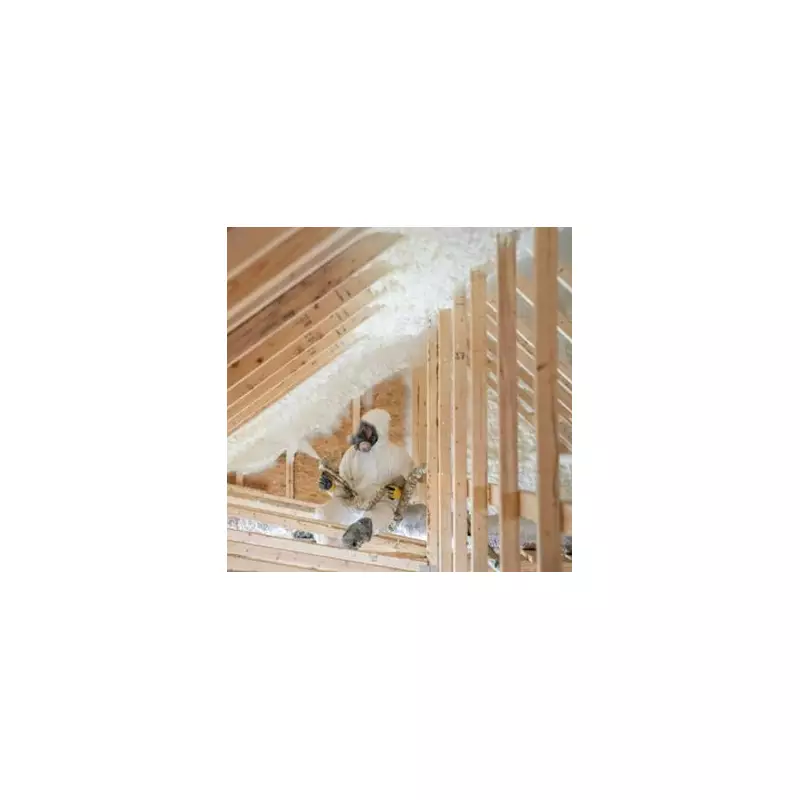
The investigation uncovered truly staggering statistics regarding the quality of work carried out under these schemes. According to Sir Geoffrey, "98 per cent of all external wall insulation installations were defective. You really could not make it up."
Furthermore, approximately 30 per cent of internal installations were also found to be incorrect, resulting in around 30,000 homes across the country suffering from defects of various types and severity.
Serious Health Risks and Property Damage
The defective installations have led to significant property damage, with many households experiencing leaks, mould growth, and other serious issues. Sir Geoffrey expressed particular concern about the potential health implications, especially for elderly residents.
"We are aware of cases where defects are serious, including significant leaks and mould," he explained. "If elderly people are living in those conditions, the consequences could be very serious indeed."
Financial Burden on Households
The financial impact on affected households has been substantial, with some cases involving remediation costs exceeding £250,000. The committee chairman expressed scepticism about whether original installers and guarantee providers would be able to withstand the scale of claims likely to emerge.
"The Government has told the Committee that no household should have to pay for remediation, and we expect it to live up to that pledge," Sir Geoffrey stated. "We will judge it on whether that actually happens."
Systemic Failures in Scheme Design and Implementation
Sir Geoffrey highlighted fundamental problems with how the schemes were designed and implemented, noting that previous ECO initiatives had worked effectively. "For reasons that are difficult to understand, the Department decided to completely redesign this scheme, and they designed it in the most complicated way possible," he said.
The MP criticised the lack of proper testing and oversight, stating: "They should have tested this scheme on a small number of houses first. They knew key bodies did not have the resources or IT systems to cope with this volume of work."
Multiple Agencies, No Clear Responsibility
A significant contributing factor to the failure was the involvement of too many organisations without clear lines of responsibility. "There were too many bodies involved, each thinking someone else was responsible," Sir Geoffrey explained. "As a result, installers were not properly supervised and work was not carried out correctly."
Government Response and Recovery Efforts
The Department for Energy Security and Net Zero (DESNZ) has responded to the allegations, with a spokesperson telling GB News: "It is categorically untrue that there are widespread health and safety risks - for the vast majority, this means a home may not be as energy efficient as it should be."
However, Sir Geoffrey remains concerned about the government's ability to identify all affected households, noting that TrustMark - the government-backed quality scheme - aims to find them all within fifteen months, but progress has been "far too slow" so far.
Restoring Public Confidence
The committee chairman emphasised that public confidence has been severely shaken by these failures. "Government now has a job on its hands to restore it," he stated. "We will judge them on whether they protect households from paying for damage they did not cause."
The revelations have prompted calls for the Serious Fraud Office to investigate the UK's home insulation sector, as thousands of householders continue to deal with ruined homes, substantial financial losses, and months of disruption from what has been described as a fundamentally flawed government initiative.