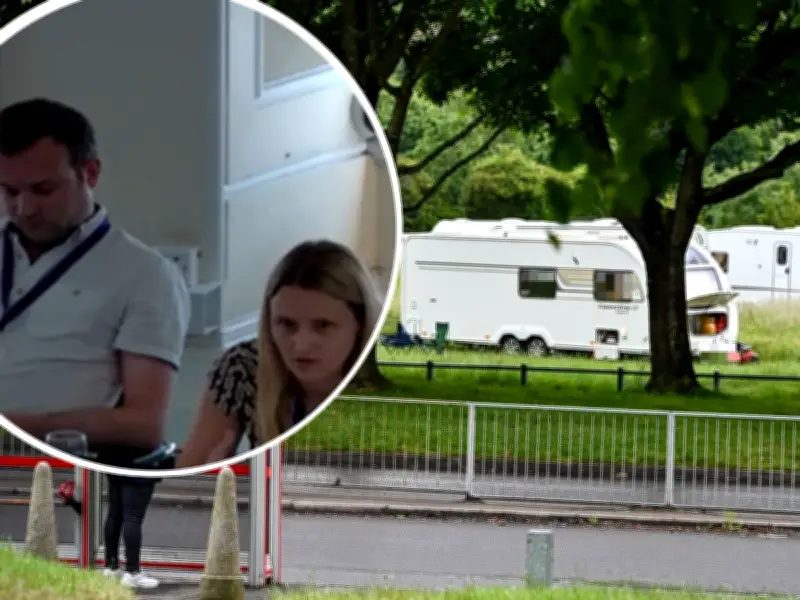
Conservative councillors Adam Higgs and Anja Pawson have called for a fresh approach from Birmingham City Council to address the rising number of unauthorised encampments in the city’s parks. Their appeal comes days after the council confirmed it had scrapped a pilot ‘negotiated stopping’ programme, which would have provided unused land for short-term stays by the travelling community.
Pilot Scheme Abandoned Due to Lack of Suitable Sites
The pilot was considered due to issues with the council’s limited permanent transit sites, such as the one at Proctor Street, which has suffered repeated damage and vandalism. Despite a surge in unauthorised encampments in 2025/26, the council announced that the pilot would not proceed because “it has not been possible to identify enough suitable sites.”
At a licensing and public protection meeting, Councillor Adam Higgs expressed frustration: “It’s obviously clear looking at the increased numbers of unauthorised encampments across the city, that the current strategy is not working. A new approach is needed.” He highlighted that his ward, Daisy Farm Park, had experienced three traveller encampments in under a month, adding, “Residents are fed up of the constant merry-go-round of our parks being repeatedly taken over – and I am too for that matter.”
Residents Demand Action and Sustainable Solutions
Councillor Anja Pawson echoed these concerns, asking, “What action is the council taking now and planning to take in the future? Residents are very concerned about this.” She noted the significant increase in encampments and demanded a clear plan.
Councillor Majid Mahmood, who recently left the Labour Party, reported that Stechford Hall Park in his ward had faced numerous unauthorised encampments in the last six months. “Each incident has resulted in significant damage to the park and substantial clean up costs for taxpayers,” he wrote on social media. He emphasised that residents want “a sensible and sustainable solution” and that the council needs “a clear strategy that both provides safe and appropriate sites for travelling communities and protects our parks and green spaces.”
Call for a Lasting Strategy That Benefits All
Mahmood continued: “A question I am repeatedly asked is why these encampments continue to take place in our public parks, often leaving behind damage that local taxpayers ultimately have to fund. That’s why our residents are understandably frustrated by what they see as a cycle that continues without a long-term solution.” He expressed hope that the new cabinet member for housing would help develop a “lasting strategy that is fair, practical and effective.” He added, “Our residents deserve to enjoy their parks without repeated disruption and damage, while travelling communities deserve access to safe and suitable places to stay. The council must now deliver a solution that achieves both.”
Committee Chair Urges Caution Against Demonisation
Committee chair Councillor Sam Forsyth acknowledged the summer increase in unauthorised encampments and residents’ concerns. “We do have a good team that deal with them and they serve the eviction and legal papers relatively quickly – we do get it before the courts as quickly as we can,” she said. However, she cautioned, “Let us not demonise any section of the community either.”
Council Explains Decision and Future Plans
A Birmingham City Council spokesperson justified the decision to abandon the pilot: “After a thorough search, it has not been possible to identify enough suitable sites that meet the requirements for a negotiated stopping programme. This includes geographical spread across the city, suitable size of site(s), accessibility and impact on neighbouring amenities.” The council is now reviewing its Local Development Plan, which includes a policy to “consider future planning applications for both transit and permanent sites to meet the needs of Gypsies, Travellers and Travelling Showpeople.” The West Midlands Spatial Development Strategy (SDS) will address wider needs, with an initial consultation expected in late 2026.
The council also noted that its Gypsy and Traveller service is now led by a dedicated team focused on improving engagement and building trust. It has been working with partners including West Midlands Police, education services, housing providers, and charities to “improve outcomes for GRT communities.” The transit site on Proctor Street has been reopened to provide a “safe and managed space for those travelling through the city.” Paul Langford, executive director of City Housing, said, “Building trust is key. We’re starting to see positive changes, with partners working more closely together and residents feeling more confident in sharing their experiences with us.”