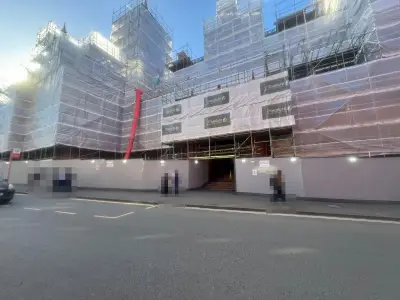
Sandwell Council is grappling with a significant financial challenge, anticipating a £625,000 budget shortfall this year directly linked to a steep decline in major housing development proposals.
Industrial Legacy Haunts Modern Development
The council's financial woes are partly rooted in the region's proud industrial past. As a cornerstone of the Midlands industrial powerhouse that fuelled the 18th and 19th-century Industrial Revolution, Sandwell was home to coal mining, ironworks, and metal trades.
However, the remnants of this heavy industry have left a lasting mark. Councillor Peter Hughes, the cabinet member for regeneration and infrastructure, explained that parcels of land ripe for redevelopment are being spurned by private developers due to contamination from this historical industrial use.
"We've got a problem with our industrialised land and that's a fact," Cllr Hughes stated at a council scrutiny meeting on October 28. "It's a problem and it doesn't necessarily attract the developers coming in. We need a lot of subsidy attached to some of these developments. They're not easy."
A Perfect Storm of Challenges
The issue is not solely contamination. Councillors heard that a lack of available greenbelt land, with other councils utilising their own, is also a contributing factor. This creates a perfect storm where the land that is available is often costly and complex to develop.
Cllr Hughes disclosed that there has been a significant drop in income from an "ongoing dearth of larger planning applications" since the onset of the Covid-19 pandemic in 2020.
"A few years ago, pre-pandemic, we would have got larger planning applications taking place and we would have expected income to come through on that basis," he shared. "We thought that things would get better but it is not getting better quickly enough."
Long-Term Financial Implications
The financial impact extends beyond the current year. The council's medium-term financial plan, which outlines budgets for the next five years, indicates that the £625,000 deficit could persist annually until at least 2031 if the downturn in planning applications continues.
This shortfall stems from reduced income from planning fees, which the council levies for various applications and services. These charges range from £528 for a household extension to over £31,000 for developments of 50 dwellings or more.
The Labour-controlled council is now examining its budget proposals for 2026/27, which are due to be finalised at the beginning of next year, against this challenging backdrop of reduced developer activity and a constrained land supply.