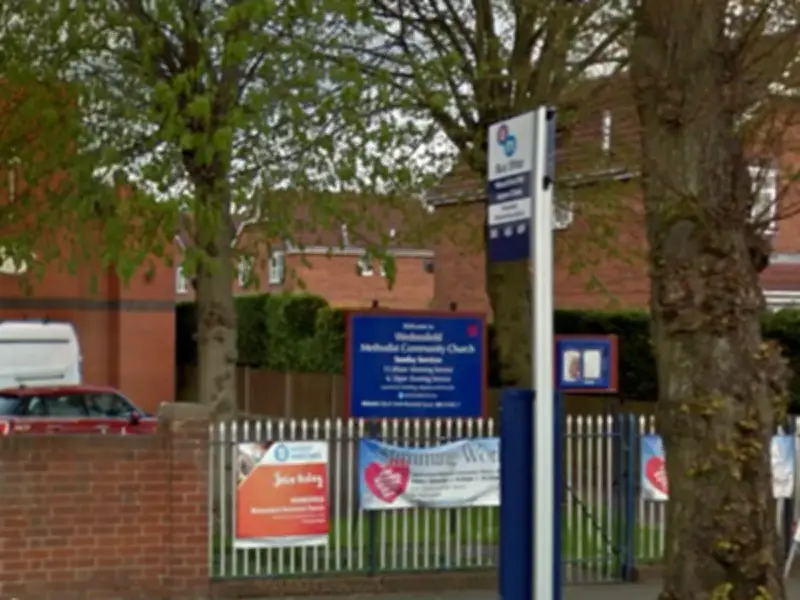
Miri Piri Afghan Charitable Trust has submitted a planning application to City of Wolverhampton Council asking for a restriction on the former Wednesfield Methodist Church in Wood End Road to be lifted. The restriction, granted in 1982, limits the building's use to a church and hall only. The charity's move comes after its proposals to convert the empty building into a Sikh temple and a nursery were rejected by the council.
History of rejected plans
The former Methodist church closed in 2017. In 2022 and 2023, City of Wolverhampton Council rejected plans to convert the building into a 42-child nursery. The council said the nursery would create too much traffic in an already congested area. It also stated that converting the church hall, although empty, would result in the loss of a community meeting space.
In 2024, the council rejected a separate application by Miri Piri Afghan Charitable Trust to convert the former church into a Sikh temple with a 150-person capacity. The council cited similar congestion concerns.

The charity's argument
A statement included with the latest application argues that planning policy, equality legislation, religious diversity, and approaches to community facilities have changed significantly since the 1982 permission. The statement says: “The permission was granted over forty years ago in March 1982. Planning policy, equality legislation, religious diversity and approaches to community facilities have changed significantly since that time.
“The local planning authority must determine whether a condition imposed in 1982 continues to serve a planning purpose in 2026 rather than merely because it formed part of the original permission.”
Restriction called 'unusually narrow'
The application says the 44-year-old rule prevents other religions from using the building despite it being empty. It states: “The condition prevents use by other Christian groups, other recognised religions, inter-faith organisations and community organisations using the premises for worship.”
The application argues: “The restriction is unusually narrow and goes significantly beyond what is required to protect residential amenity. There is no planning evidence that occupation by another Christian denomination, another religion, or a wider community organisation would inherently give rise to harm. Any impacts arising from the use of a building are normally assessed through traffic generation, parking demand, noise, hours of operation, and intensity of use. The denomination or faith affiliation of a user does not itself create planning harm.”
City of Wolverhampton Council will now determine whether to lift the 1982 condition, which would allow the charity to pursue its plans for the building's future use.