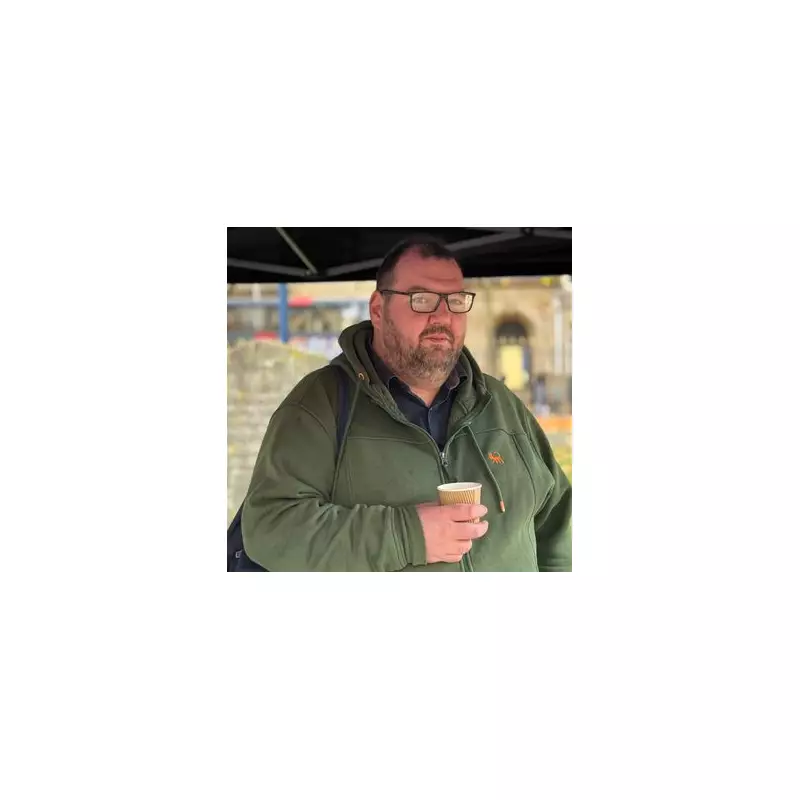
At 42, Wayne had everything society deems valuable: a thriving construction business, a four-bedroom house in Kings Heath, a wife and daughter, and financial security. Yet within a few devastating years, his entire world collapsed, leaving him homeless and fighting for survival on Birmingham's streets.
The Descent into Homelessness
Wayne's successful life began unravelling approximately five years ago when his business partner took extended leave. The construction firm they'd built together started failing, triggering a catastrophic chain reaction that would eventually cost him everything.
"I lived in Kings Heath. I had a four-bed house, lots of money. I was happy," Wayne recalled. "But my relationship fell apart. My family broke up. It all fell apart."

His descent into homelessness wasn't immediate but progressed through increasingly precarious living situations. He moved through HMOs (Houses of Multiple Occupation), supported accommodation, sofa surfing, living in a van, and various hostels before ending up completely street homeless.
During this period, Wayne witnessed the harsh realities of homelessness firsthand, including a tragic case where a drug-addicted couple had to choose which one would enter a recovery programme. The man insisted his girlfriend take the place, and while she now works in Birmingham city centre, he subsequently died.
Rock Bottom and Health Crisis
Wayne's lowest point came while staying at the Salvation Army, where his health deteriorated dramatically. His oxygen levels dropped to a life-threatening 70%, and he developed sleep apnoea alongside mobility issues that left him unable to walk properly.
"I nearly died at the Salvation Army," Wayne revealed. "I wasn't looking after myself. I couldn't walk."
He described the vicious cycle where poor nutrition exacerbates health problems for homeless people. "The food we are given is not healthy – things like chicken and chips and pizzas. Obviously we will eat it. If there was one simple change it would be to give people healthier food."
Wayne spent time living in what he described as "a welfare unit – a metal box where people have lunch," highlighting the dehumanising conditions many homeless people endure.
The Turning Point: Finding a Mentor
The crucial breakthrough came when Wayne entered Tabor Living, a hostel provided by a Christian charity, where he met volunteer Bernard Walsh. Bernard, a civil engineer working on HS2, became Wayne's mentor, spending approximately a year guiding him through what Wayne calls "the chaos to genuine opportunity."
In an extraordinary coincidence, Wayne discovered they'd crossed paths years earlier during his first construction job when he'd parked on Bernard's grass. Their reconnection at Tabor Living proved life-changing.
"He was very positive," Wayne said. "Training me in senior construction management. He just sat with me and helped me for about a year."
This consistent support provided the foundation for Wayne's remarkable turnaround. He now has his own apartment and describes himself as "at the back end of homelessness."
Giving Back and Campaigning for Change
Wayne now volunteers with multiple organisations including Let's Feed Brum, Crisis, and Street Banquet – a church initiative that serves nutritious, freshly prepared meals to homeless people on the first Sunday of each month, usually at Carrs Lane.
He's become an advocate for systemic change, having contributed to Conservative MP Bob Blackman's Homeless Prevention Bill aimed at tackling rogue landlords. Wayne argues strongly against using hotels as temporary accommodation, advocating instead for studio apartments where people can have their own front door.
"During Covid, money was allocated in Birmingham. People were put in hotels. Problem solved," he noted, before adding: "But hotels and temporary accommodation is the wrong direction. They need to be going towards studio apartments."
Wayne highlights the disparity in government spending, noting that the Ministry of Defence allocated £9.5 billion to fix forces houses while only £1.5 billion is spent on homelessness nationally.

He also identifies the lack of safe, warm spaces as a critical issue facing Birmingham's homeless community. "You can go to McDonald's for an hour. SIFA for an hour. You can go to the library but have to go early to get a seat. We are not allowed to sit in Birmingham New Street without a ticket. They recognise us. Where is somebody who is street homeless actually expected to exist?"
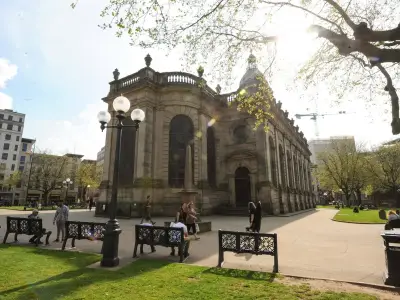
For Let's Feed Brum, which provides hot food, drinks, clothing and crucial community connection in Cathedral Square twice weekly, Wayne suggests creating "somewhere warm, somewhere safe to be" would significantly improve their service.
Having experienced both sides of homelessness, Wayne now represents hope and the possibility of recovery, proving that with the right support and determination, it's possible to reclaim stability and purpose.