Inside Birmingham's Teen 'Link Up' Phenomenon: Social Media Craze Explained
Videos showing chaotic teenage gatherings in Birmingham and across the UK have sent social media platforms into a frenzy, particularly TikTok, where clips of these mass meet-ups have gone viral. Behind the dramatic footage lies a complex social trend that reveals deeper issues facing today's youth.
Chaotic Scenes in Birmingham City Centre
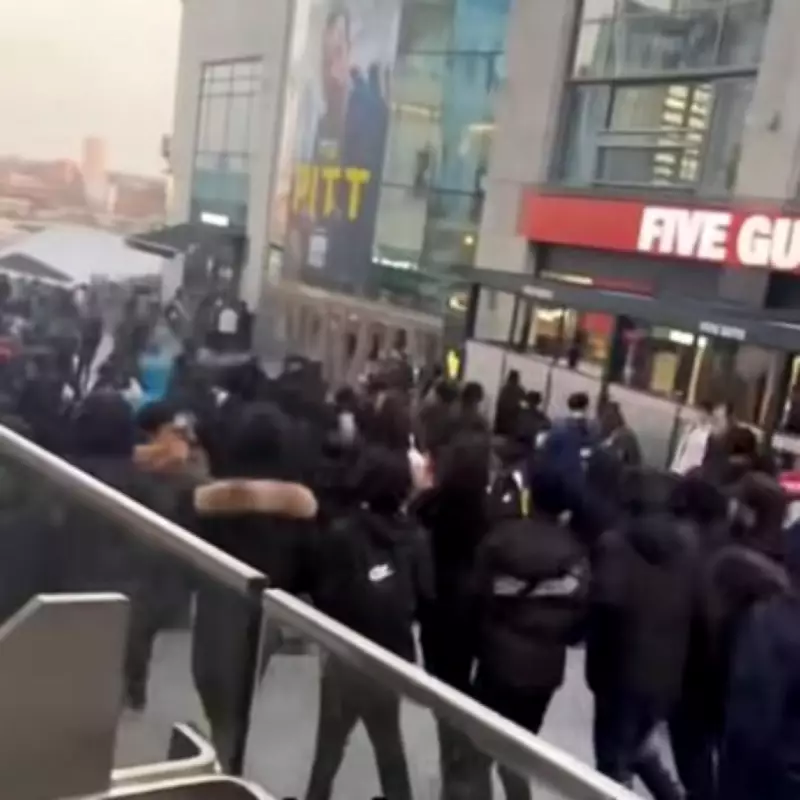
Scenes of hundreds of teenagers flooding Birmingham's city centre have become increasingly familiar to shoppers and concerned parents. These gatherings, often organized rapidly through platforms like Snapchat, have created significant disruption in recent months.
In March, shops around Birmingham's Bullring shopping centre pulled down their shutters early after large crowds of young people descended on the area. Police confirmed making a "handful" of arrests during this incident. Shoppers described being "terrified" as waves of giggling and screaming schoolchildren surged through the city centre after breaking up for the Easter holidays.

Just two weeks later, on April 9, similar scenes unfolded again. Footage widely shared on TikTok showed dozens of teenagers gathered outside Uniqlo, near the Bullring's iconic bronze bull statue. This time, police arrived in greater numbers anticipating trouble.
Officers used incapacitant spray to "prevent disorder", dispersing twelve people, stopping and searching eight others, and seizing a number of water pistols. Police were also investigating reports of an assault during this gathering.
The Social Media Mechanism Behind 'Link Ups'
Teenage 'link ups' typically begin with a simple post—often an AI-generated flyer—shared across Snapchat or TikTok. Within hours, hundreds of young people can be mobilized en masse at a specific place and time. While many attend simply to socialize, the sheer scale and lack of structure can quickly turn innocent gatherings into anti-social behavior.
Online reactions to these incidents have been mixed:
- Concerned parents asking "what is happening?"
- Teenagers proudly claiming "I was there", turning attendance into social currency
- Widespread confusion and fascination with the phenomenon
Similar incidents have been reported in cities including London, where large-scale meet-ups have drawn national attention. Despite the chaotic scenes, experts emphasize that the phenomenon itself is not entirely new.
Academic Perspectives on the 'Link Up' Craze
According to academics and youth workers, the appeal of 'link ups' may be less about causing trouble and more about a lack of alternatives for young people.
Lee Elliot Major, a professor of social mobility at the University of Exeter, explained there is "nothing new" about young people gathering in large numbers. "What's changed is the context," he told The Guardian. "We've dismantled the physical spaces where young people used to gather safely: youth clubs, community centres, even affordable public venues."
Digital platforms have filled this void, organizing gatherings at unprecedented speed. What appears as sudden, chaotic behavior may simply represent the modern version of something far more familiar—teenagers looking for somewhere to go and something to do.
Dr Tania de St Croix, a senior lecturer in the sociology of youth and childhood at King's College London, added: "Young people are really showing us that they need space where they can be a bit more informal and be together in groups, but we're seeing more and more public spaces not allowing this."
The youth worker of thirty years further noted: "Youth clubs have been sold off, and when there are still youth clubs, they're often very seldom open."
Risks and Root Causes
While 'link ups' may originate from teenage boredom, they are not completely risk-free. Police forces have warned that large, unregulated gatherings can quickly become unsafe for both participants and members of the public caught in the crowds.
However, focusing solely on punishment risks missing the bigger picture. Without safe, accessible spaces to socialize, and with social media amplifying trends at unprecedented speed, spontaneous mass meet-ups may represent an inevitable outcome.

A report by youth charity YMCA revealed alarming statistics:
- Local authority funding for youth services in England has fallen by 76 percent in real terms during the last fourteen years
- In 2024-25, the amount spent on youth services by local authorities in England and Wales fell by 10 percent from the previous year
For now, Birmingham—like other major cities—finds itself navigating a trend that sits somewhere between harmless teenage socializing and genuine public disorder. As videos continue to accumulate views online, one reality remains clear: these link ups may appear chaotic on the surface, but their underlying causes are, in many ways, more straightforward than they initially seem.