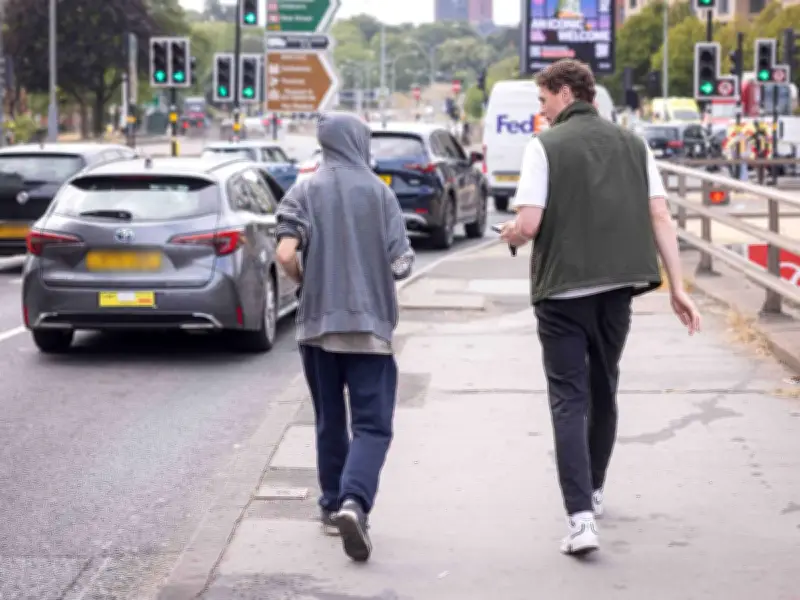
At Birmingham's busiest traffic light junctions, individuals weave between lanes, pleading for spare change before the lights turn green. For drivers, the encounter is fleeting, but for those standing between vehicles, those few seconds repeat perpetually—until seconds become hours, and hours turn into day after day. Known as 'traffic light beggars', they risk their lives daily, their hands outstretched in desperation.
Desperate Daily Struggle
Four years after first speaking to the people at the lights, we returned to the busy junction near Bristol Road McDonald's. None of the same faces remained, but their stories were painfully similar: seven days a week, pleading for coins to survive, some making as little as £15 for an entire day, others slightly more.
Ryan, 35, who asked for his real name not to be used, described how dramatically his life had changed. Originally from Devon, he now sleeps in a 'bush'. "I lost my son," he said, declining to delve deeper. "I split up with the baby mum. I was homeless for about four years and then I started getting into the HMOs." He claimed things went wrong: "I've had TVs robbed, clothes robbed, food taken, all from other people living in there. People are making ridiculous amount of money on HMOs - at the cost of exploiting people's vulnerability, in my opinion. Eventually I thought, it's better living on the streets, to be honest with you."

Ryan said he never imagined his life would end up like this. When he first arrived in Birmingham, he was 13 stone and wore Canada Goose. "Now look at me," he said. "I haven't got one bit of decent clothing on me."
Lack of Support and Housing Crisis
Asked what would help, Ryan claimed: "There's not a great deal of support out there. If there was, I'd go and seek it. They need to sort the housing situation out. I've seen so many abandoned buildings. Why don't they turn them into flats for us and make it more affordable? They've got the audacity to point fingers at people, saying, 'you're a tramp', this and that, do something about it. Pointing finger only creates problems - it doesn't solve them."
Ryan claimed staying at council-run homeless shelters presents a "massive risk". He said: "If you're in recovery and trying to get into places, it's obviously difficult being around it all. Other people going through similar. It can be nasty." Speaking shortly after 2pm on Wednesday, he said: "I've only just come here today. I've got myself two cigarettes and 20p so far. I can make much more than that - but only if I'm here all day." On spending habits, he said: "Food. Obviously you've got people out here with drug addictions, though, of course you have."
Different Circumstances, Shared Reality
Another man, Mo, aged 24, described Bristol Road as a "good spot" due to constant traffic. He said begging was a necessity for "food". Unlike Ryan, he praised support available: "They offer me food vouchers and help getting stuff from food banks." Asked if this is what he wanted to be doing, he said: "No, not every day. Sometimes I get £15 in a day."
A third man, a 38-year-old father-of-two who asked not to be named, said his heroin addiction led to losing contact with his children. "I have two kids somewhere," he said. "Not here [in Birmingham], but with their mum. I haven't seen them in years." His face dropped. "Of course. This is no life, out here, doing this. I'm lucky if I make a few bob. I'm here all day, from early in the morning until around five o'clock." He considered himself fortunate if he made £40.
Ignored Yet Understanding
After watching him weave through traffic, largely ignored, the dad returned to speak. "We're ignored 90 per cent of the time but I get it," he said. "People are just going about their day, aren't they? They think it's purely for drugs. We're not angels. I know that. We're not pretending to be. But who is? Trust me, I wish I wasn't in this position. I wish I had a good job. Life just hasn't worked out that way for me. I can't get a house and, without that, having a job wouldn't work. I'm sick of this, but it's all I know now."

An associate called him over, and he vanished further down the dual-carriageway. While the types of grief, circumstances, and life journeys differed, all shared one thing: spending their days on the same strip of road, waiting for the lights to turn red, hoping for a hand to appear out a window.