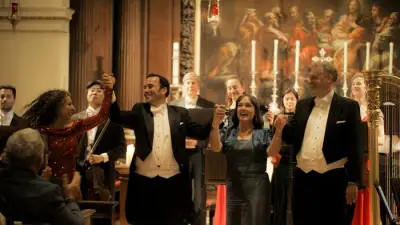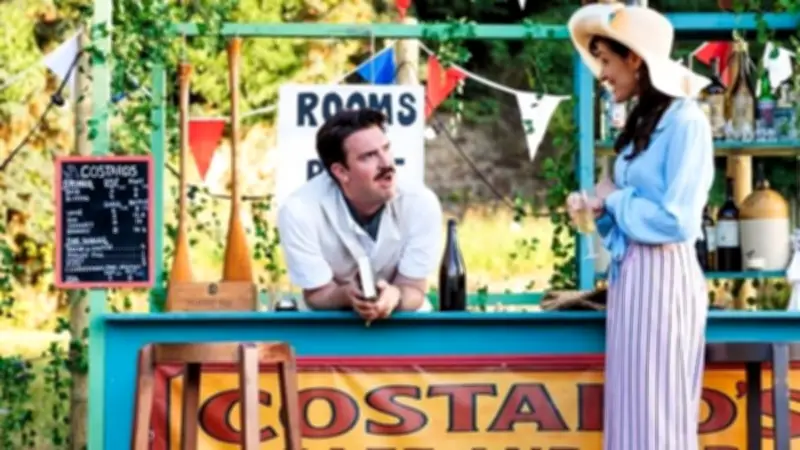
The Guildford Shakespeare Company has built a reputation for bold and brave productions, and this continues with their summer 2026 offering — actually two productions in repertory. Director Tom Littler presents Love's Labour's Lost alongside Much Ado About Nothing, inspired by the academic theory that Much Ado About Nothing may be Shakespeare's lost play Love's Labour's Won under another title. A reviewer attended an afternoon performance of Love's Labour's Lost followed by an evening showing of Much Ado. Both productions fizzed with wit, pace, and passion, bringing their own heat to an already scorching midsummer's day.
Two Plays as Companion Pieces
Shakespeare presents worlds where words can wound as easily as they woo, but both plotlines offer a world where love eventually has the last laugh. The intriguing proposition that they are 'joined' gains force from striking similarities between the works: their sparkling wit, playful deceptions, and hard-won romances make them seem less like separate plays than companion pieces in a single unfolding story. Littler has introduced judicious cutting and careful textual arrangements, combining character names so the two plays feel as though they inhabit the same world.
1939 vs 1945 Settings
With Love's Labour's Lost, audiences enter the seemingly carefree and faintly hedonistic world of 1939, its youthful exuberance untouched by the gathering storm. By contrast, Much Ado About Nothing unfolds in the more reflective atmosphere of 1945. The war is over, but its shadow lingers. Characters are tempered by experience — in some cases, as with John Longaville, wounded by conflict and their judgement perhaps coloured by trauma. Yet there is a new determination to embrace life with the promise of happier times ahead.

Standout Performances
Collectively the cast persuades audiences of both the folly and fervour of love. Central to it is Benedick, played by James Sheldon in a bravura performance of apparent cynicism and emotional vulnerability. Benedick is an open book with illustrations, and Sheldon fills in the margins with revealing nuances, allowing the audience to glimpse the tenderness beneath — a measured triumph of calibration and technique. Benedick needs his Beatrice, and Phoebe Pryce in the role provides a perfect counterbalance: spirited, intelligent, and gloriously feisty, matching Benedick wit for wit. Together, the slow burn of an evolving relationship becomes the emotional heartbeat of the production.
Open-Air Setting
Both productions have been described as 'pastoral comedies'. In the open-air setting of a neglected Braboeuf Manor (formerly The College of Law), both acquire an almost dreamlike quality where love, loss, and reconciliation seem to emerge naturally from the landscape itself. The productions can be enjoyed separately, but there is much to savour in a double visit. They play until Saturday, July 25.
Local Legacy: The Widdicombe Family
The death of national figure Ann Widdicombe has unlocked surprising memories. Only a few people will recall the young Ann Widdicombe when she lived with her parents in the village of Normandy, one of the close-knit communities west of Guildford. In the early 1960s, Rita and Murray Widdicombe purchased a newly built home close to the former Village Hall, a few yards from the junction of Guildford Road and Glaziers Lane. Rita and Murray were enthusiastic supporters of the Normandy Amateur Dramatic Society — less so was Ann, who very occasionally was asked to leaflet-drop the latest production. Murray would stride up Glaziers Lane to Wanborough Station to begin his commute to Guildford, then on to Waterloo, and for some years routinely ensured the NADS posters were up to date and renewed as necessary. With Ann Widdicombe's death comes the recollection of a family whose enthusiasm and community spirit made a small but valued mark on local village life.