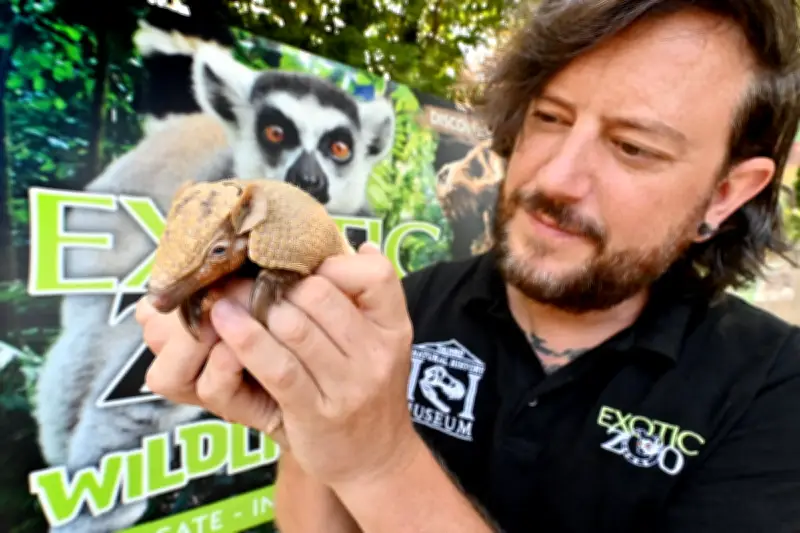
Zookeepers at a Telford zoo are hand-rearing a baby armadillo after a rare birth left the pup needing round-the-clock care. The tiny southern three-banded armadillo, born on 10 March at the Exotic Zoo in Telford, was rejected by its mother, prompting staff to step in.
Rare Birth at Exotic Zoo
The baby armadillo, which has not yet been named, is the first of its kind to be born at the zoo in over a decade. Southern three-banded armadillos are native to South America and are listed as near threatened on the IUCN Red List, making each birth significant for conservation efforts.
Zoo owner Scott Adams said the birth was a surprise, as the mother had not shown signs of pregnancy. “We noticed she was looking a bit rounder than usual, but we didn’t expect a baby,” he said. “When we saw the pup, it was a wonderful moment, but we soon realised the mother was not caring for it properly.”
Hand-Rearing Process
The armadillo pup is being hand-reared by keepers, who feed it every four hours with a special formula. It is kept in a warm incubator to maintain its body temperature, as armadillos cannot regulate their own heat when young. Keepers also stimulate the pup to urinate and defecate, mimicking the mother’s natural behaviour.
“It’s very intensive,” said Adams. “We have to be with it constantly, but it’s incredibly rewarding. The pup is doing well and gaining weight steadily.” The baby armadillo currently weighs around 100 grams and is expected to grow to about 1.5 kilograms as an adult.
Conservation Significance
Southern three-banded armadillos are unique among armadillos as they can roll into a perfect ball for defence. Their populations are declining due to habitat loss and hunting in their native range. The birth at Exotic Zoo highlights the role of zoos in preserving such species.
“Every birth is important for the captive population,” Adams added. “We hope to eventually introduce this pup to our other armadillos and contribute to a breeding programme.”
Public Viewing
Visitors to Exotic Zoo can see the baby armadillo during keeper talks, though it remains in a private area for most of the day to minimise stress. Once it is fully weaned and able to eat solid foods, it will join the main exhibit.
The zoo plans to run a competition to name the armadillo, with proceeds going to armadillo conservation in the wild. Adams said the response from the public has been “overwhelmingly positive,” with many following the pup’s progress on social media.