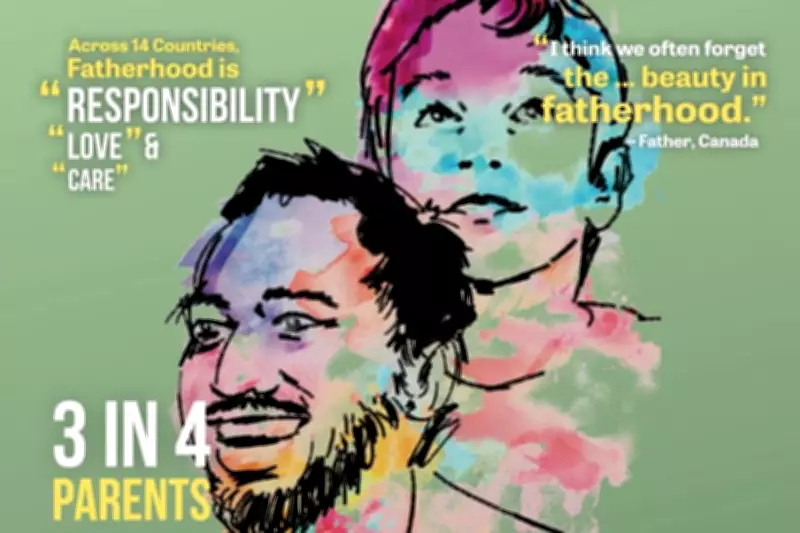
A new study released today, The State of the World’s Fathers 2026: Stretched to the Breaking Point, from Equimundo: Center for Masculinities and Social Justice, reveals that fathers value care more than ever but are stretched to breaking point. Fathers and mothers do not have the time, resources, or support to care for their families without constant strain. Fathers want to care, but it comes at a steep cost.
Economic Precariousness Underpins Sacrifices
Economic precarity underpins the daily sacrifices parents across the globe are forced to make to provide care for children. Many are draining savings, cutting hours, staying in jobs they want to leave, and giving up study and leisure time. More than 4 out of 5 parents say their employer will not allow flexible working, and only 39 percent of fathers have been offered parenting support, while fewer than half know that it exists.
Increasing Stress on Families
Equality in who does the care work is increasing, but the stress on families' ability to provide care has also steadily increased, inhibiting parents’ ability to care for their loved ones. More caregiving sacrifices mean more distress, playing out in increased anxiety, suicidal thoughts, and higher alcohol consumption, among other outcomes.
The Sacrifice Scorecard
The report’s “sacrifice scorecard” asked the world’s parents and caregivers what they have had to give up in order to care for their loved ones. One in four have had to refinance their homes to pay for care services, one in three turned down a professional advancement to provide care, three-quarters have worked overtime to bring home extra pay, and half have taken on a second or third job to increase their income.
This is a crisis of care. It is care that still matters most to the world’s fathers. Fathers want to be present and active in the daily lives of their children, but are held back by norms and policies that have not caught up with their intentions. Their needs are not met by workplaces and public services. The good news is that fathers are ready, along with mothers, to act for, demand, and vote for the care.
About the Study
The State of the World’s Fathers is a new study based on online panels of 8,000 parents and caregivers across 16 countries, including 400 in-depth interviews. It provides data-driven insight into the emotional, economic, and social pressures facing the world’s fathers, shedding light on their biggest challenges and what matters most to them. Equimundo has carried out this landmark analysis of fatherhood every two years since 2015, and the trends are clear: whilst fathers are caring more equally now than ever, they are facing an equal share of the stresses.
The latest 2026 study is one of the only global-reaching studies of men's involvement in parenting and care work, examining the impacts of ideas of masculinity on fathers' health, relationships, and politics, and the implications for fathers' ability to care for their families. The report provides a call to action for decision-makers across the globe to better support the world’s parents, making sustainable, equitable, and transformative changes so that all children, parents, and carers can flourish.
Traditional Beliefs and Disconnection
Whilst the majority of fathers say that caring for and spending time with loved ones makes them happy, the new data also reveals that the world’s fathers are becoming disconnected. Almost 4 in 10 say they do not trust government representatives, and the same number hold conservative beliefs. The data also highlights that young men – the fathers of the future – are retreating to more traditional, unequal gendered beliefs about care. Nearly half of all fathers believe that men who are full-time fathers are not real men. 40 percent think boys should not be taught to cook, clean, sew, or take care of their siblings.
The study shows that these traditional beliefs impact relationships. Men with traditional beliefs are 45 percent more likely to experience conflict in a relationship, but partners who discuss their way to equal care, rejecting traditional norms, report higher levels of care enjoyment and a reduced risk to well-being. The new study shows that parents across the globe are united in their main worries: economic precarity and affordability, concerns for their children’s online lives, and in their desire to care for children and their loved ones. The new research dismantles myths that men do not care. Fathers have not turned their back on caregiving – they care now more than ever.
A Call to Action
At a time when our world struggles with conflict, climate change, online hate and harm, and economic crises, care is critical. This study helps challenge polarising narratives and traditional beliefs around caregiving, showing that fathers want to care equally with mothers, and are doing more caregiving than ever. The study asks decision-makers across the globe to better welcome fathers into caregiving – not as helpers, but as equals. These demands come at a time when decades of women’s movements are under threat, as restrictive notions of masculinity are promoted by politicians and influencers seeking profit and notoriety. Acting on these calls for change, Equimundo is leading the MenCare Changemaker Initiative, a global initiative bringing together policymakers, media voices, the corporate sector, and funders to promote system changes to promote caring manhood.
Gary Barker, president and CEO of Equimundo, says: “The good news is that around the world men are doing more of the care work and finding meaning and happiness in doing so. But the data also tell us that families everywhere face enormous challenges to provide basic care. It’s time for men to join women to demand and advocate for the care services we all need.”
The State of the World’s Fathers 2026 arrives ten years after its first edition and is one of the only global studies of men’s involvement in parenting and care work. This article is produced by SWNS based on content distributed by GlobeNewswire.