Students at Birmingham schools have sent a powerful message to Prime Minister Keir Starmer about a proposed social media ban for under 16s - ban the adults behind dodgy sites, not us.
Many pupils told Dame Rachel de Souza, the children's commissioner for England, that they thought a ban was 'a good idea' because of the 'addictive' and 'hateful' nature of much of the content they see online. But they also spoke out forcefully to tell Dame Rachel that it is the social media companies, not innocent children, who should be forced to change their behaviour.
It was not the fault of children that nude images, hateful content pushed out by adults and exploitative bullies had become rife on social media sites, they told her. They called for the Government to regulate companies to introduce better regulations, proper age verifications and proof of identity, and end of addictive features like fast scrolling, along with a ban on some chat features on games.
Some companies are making progress and were better than others, they told her - but largely social media was becoming a turnoff.
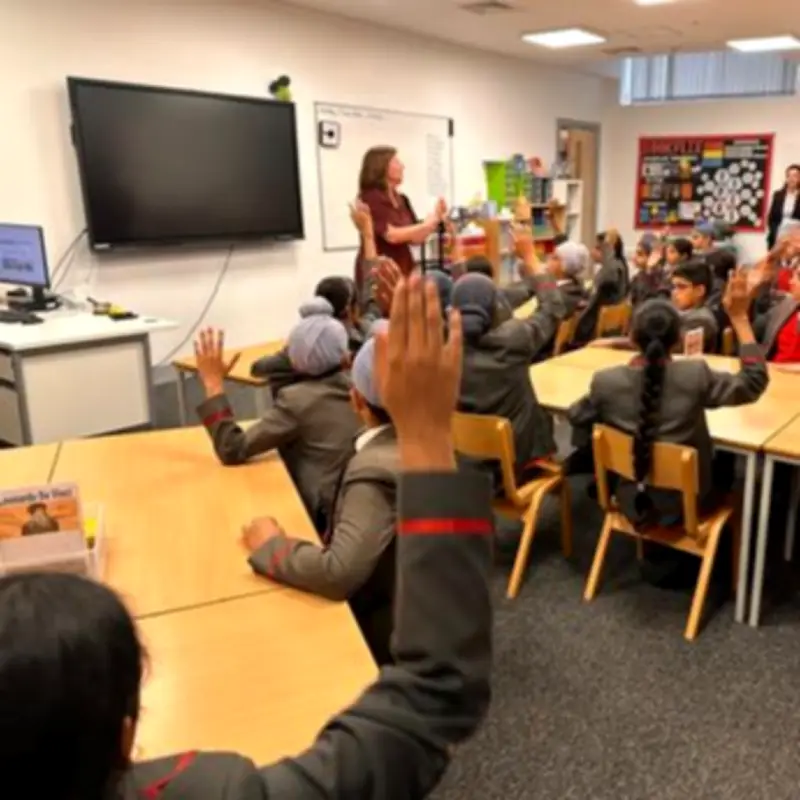
Young people at Nishkam School in Handsworth shared views on whether to ban social media for under 16s with children's commissioner Dame Rachel de Souza. They told her they thought the amount of bullying behaviour, inappropriate content and the prevalence of what one 10 year old called 'judgemental content creators' who wanted to inspire hate for others made the online space increasingly uncomfortable for many of them.
"I sometimes see really disgusting, horrible images," one nine year old told Dame Rachel during her visit in Birmingham. Another said the main problem was that so many people, including politicians, used social media sites to spread hate and lies and to try to 'divide us'. As a result they largely 'did not trust' politicians and felt they were only interested in personal power and money.
The powerful insights came from pupils at Colmore Junior School in Kings Heath and Nishkam Primary and High Schools in Handsworth during the children's commissioner's visit to the city as part of a national tour promoting her 'Big Future' survey, billed as the biggest ever conversation with children.
Dame Rachel, reflecting on their comments, said their contributions had been 'really great'. "When I visit Birmingham I see just how great the young people are, how friendly, positive and open they are. They really nailed the key issues and big themes." She said she 'backed' their views on social media.
"I made it my business to actually ask the young people what do they think about a social media ban...and their answers were really interesting. They are seeing pictures and videos on social media they don't want to see, there is bullying online, and they don't want that. Many of them who do use social media say they have tried to cut down their use but find it really difficult. And frankly we are asking children to do what adults aren't doing - and that's to reduce their use of social media.
"Children tell us that the adults in their lives are scrolling all night and using social media all day, so this is a big national problem. Many say they don't necessarily want a ban, but do want adults running companies and the government to protect them better. The message they want me to give the Prime Minister is 'don't talk about banning children, talk about banning the companies and making them better. Kids haven't done anything wrong. They don't need to be banned, but the problem lies with the adults.'
"I would not allow X/Twitter or any of the big social media companies who have dangerous, addictive algorithms anywhere near our children. I think the children of Birmingham are telling us that too."
Listening in during the commissioner's visit was Nishkam High School head teacher Gurpreet Kaur. She expressed her pride in the young people participating from the faith inspired, virtues led school she leads for their contributions and honest answers.
She personally supports a ban for under 16s, and believes social media has only negative impacts on children. "Through the curriculum we include e-safety, where we encourage pupils to think about how to keep themselves safe online. We know our children are online for gaming, that's a big issue, but social media less so. But we are aware of the risks and we have conversations with parents and pupils to understand what some of those risks are.
"That conversation with parents is a big part of the puzzle. Not many parents are able to enforce rules or restrictions needed to keep children safe online, often because they don't know what those risks are. So we give them the knowledge and empower them to say 'actually this is not okay' and 'they shouldn't be using these apps'. Through workshops and advice we hope we give them the tools to do that, including with non English speaking parents.
"But underlying all of that is our virtues-led ethos, guiding children with what we call 'sparks of the divine'...to guide them to make better choices for oneself but also for the greater good. In the online space, that's about exercising self discipline and showing respect and love for each other."
Ms Kaur added: "There's no doubt about it, in my opinion social media should be banned for children under 16, but the children reminded us they want alternatives. They need youth centres and places to play safely, where they can be outdoors, use social skills and interact with each other - they really don't want to be sat on their phones all the time."