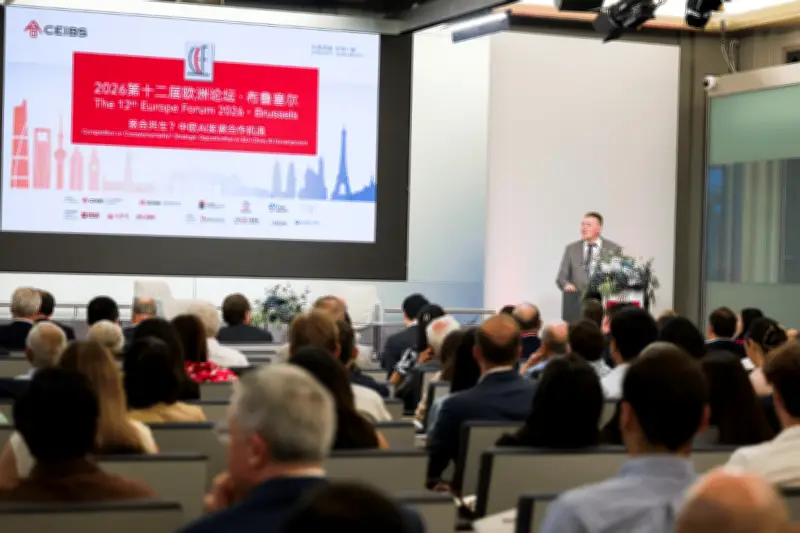
In the rapidly evolving landscape of artificial intelligence, the relationship between Europe and China stands at a critical juncture. Rather than pursuing a path of rivalry, both regions must pivot towards constructive engagement to harness the full potential of AI while mitigating its risks. This call for collaboration comes as AI technologies increasingly shape global economies, security, and societal norms.
The Imperative for Cooperation
According to a recent analysis, the global AI market is projected to reach $1.8 trillion by 2030, with both Europe and China poised to be major players. However, current tensions, including trade disputes and concerns over data security, threaten to fragment the AI landscape. The article emphasizes that a collaborative approach could lead to shared standards in AI ethics, safety, and interoperability, benefiting both regions.
Experts argue that the divide between Europe and China in AI development is not insurmountable. For instance, Europe excels in foundational research and ethical frameworks, while China leads in data availability and rapid deployment. By combining strengths, they can address common challenges such as climate change, healthcare, and sustainable development.
Building Trust Through Shared Governance
One key area for cooperation is the establishment of international AI governance. The European Union has pioneered regulations like the AI Act, which sets rules for high-risk applications. China, meanwhile, has released its own ethical guidelines for AI. A joint effort could create a harmonized regulatory environment that fosters innovation while protecting citizens' rights.
The article quotes a policy expert stating, "If Europe and China can agree on fundamental principles like transparency, accountability, and human oversight, it would set a global benchmark. This is not just about avoiding conflict but about leading the world towards responsible AI."
Economic and Social Benefits
Beyond governance, economic collaboration could yield significant dividends. Joint research initiatives in areas like natural language processing, computer vision, and robotics could accelerate breakthroughs. For example, Europe's strong industrial base combined with China's manufacturing prowess could revolutionize smart manufacturing.
Moreover, addressing AI's societal impacts—such as job displacement and inequality—requires global solutions. By sharing best practices and data, Europe and China can develop inclusive AI policies that ensure benefits are widely distributed.
Challenges to Overcome
Despite the potential, obstacles remain. Differences in political systems, intellectual property protection, and strategic interests pose challenges. The article notes that recent export controls on advanced chips and AI software have heightened tensions. However, it argues that these issues can be managed through dialogue and mutual respect.
A Chinese diplomat commented, "Technology should not be a zero-sum game. We are ready to engage with Europe in a spirit of openness, provided there is reciprocity and respect for each other's development paths."
Path Forward
To move forward, the article suggests several concrete steps: establishing a bilateral AI dialogue mechanism, launching joint research programs, and creating a platform for sharing AI safety research. Additionally, both sides could work together on AI for global good initiatives, such as using AI to combat pandemics or monitor climate change.
In conclusion, the AI era demands unprecedented global cooperation. Europe and China have a unique opportunity to lead by example, turning potential rivalry into a partnership that benefits not only their citizens but the entire world. As the article states, "The choice is clear: compete and risk fragmentation, or collaborate and build a future where AI serves humanity."