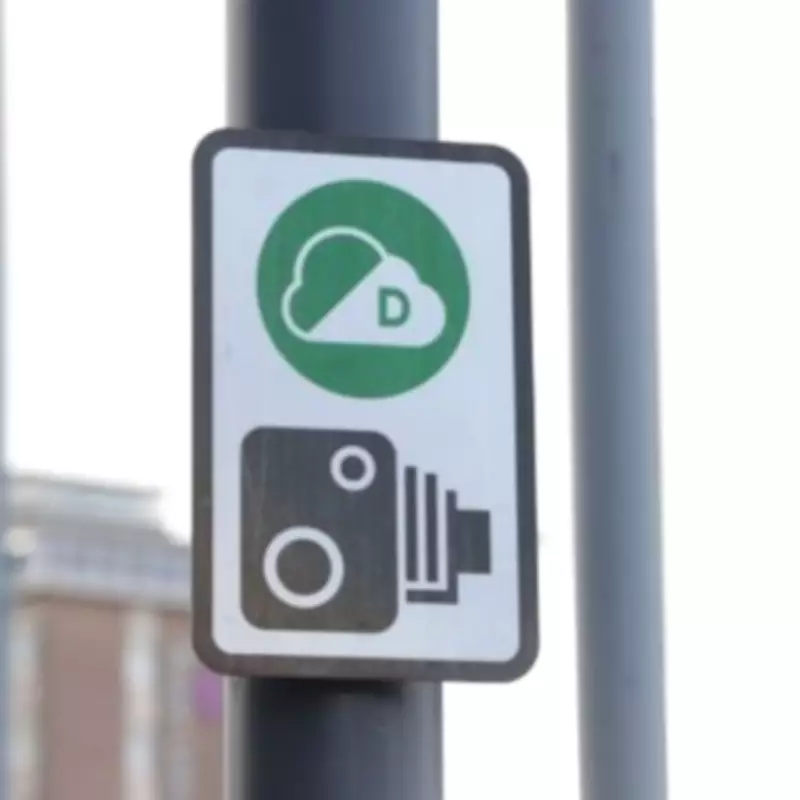
Clean Air Zones Contribute to Early Pollution Victory Across England and Wales
A major new study has revealed that Clean Air Zone charges have helped contribute to an early pollution victory across England and Wales. The comprehensive report shows that 99 per cent of neighbourhoods in these regions now demonstrate lower air pollution figures, marking significant progress in environmental and public health initiatives.
Widespread Improvement in Air Quality Standards
According to data from Believ, an impressive 99 per cent of neighbourhoods currently meet the United Kingdom's legal limit for fine particle pollution, known as PM2.5. This substantial improvement coincides with the operation of Clean Air Zones in numerous cities including Bath, Birmingham, Bristol, Sheffield, Bradford, Portsmouth, and Newcastle upon Tyne.
Professor Stephen Holgate, a leading expert in the field, emphasized that while the UK is clearly making progress, the work is far from complete. "Most local authorities have reached the UK's targets, but that isn't 'job done'," he stated, highlighting the ongoing nature of air quality improvement efforts.

Significant Health Benefits Emerging
The Royal College of Physicians report underscores that there is no safe level of air pollution, noting that even reducing NO2 and PM2.5 particles by just 1 µg/m³ can improve survival rates and reduce morbidity from chronic non-communicable diseases. Many local authorities are now adopting a proactive attitude of 'keep pushing down' to further enhance air quality standards.
Professor Holgate explained the profound health implications: "It accelerates ageing in all organs within the human body, and 700 diseases, from osteoporosis to dementia, are linked to pollution." Cities that have implemented low emission zones—including London, Bradford, Glasgow, Manchester, and Bath—are all demonstrating measurable benefits, with greater reductions in PM2.5 and NO2 than initially anticipated.
Measurable Improvements in Public Health
The health benefits may be occurring at much lower pollution reductions than many people realize. In London's east end, researchers observed improved lung growth in children, while in Bradford, GP visits decreased by 30 per cent and A&E admissions for cardiovascular and respiratory crises fell by an impressive 50 per cent.
"This is no longer just an environmental issue. It is a public health issue," Professor Holgate emphasized. "It is going to be important to educate local authorities and the wider public that this is a problem that impacts the entire life course, so there is even more incentive to make further improvements."
Sustainable Transport as a Key Solution
Matt Croucher, Chief Commercial Officer at Believ, highlighted the crucial role of sustainable transport in achieving cleaner air for all communities. "Sustainable transport is a key part of delivering cleaner air for all," he stated. "Transport planning must always include facilities to help people walk, cycle, and use public transport."
Croucher also noted the practical realities of current transportation patterns: "We must also recognise that car usage still makes up 60 per cent of all UK trips and 78 per cent of distance travelled. The electrification of transport is therefore an important element in reducing airborne pollutants caused by vehicle emissions."
The comprehensive findings demonstrate that Clean Air Zones are delivering tangible results across England and Wales, with measurable improvements in both environmental quality and public health outcomes. As cities continue to implement and refine these initiatives, the potential for further progress remains substantial, creating cleaner, healthier communities for current and future generations.