
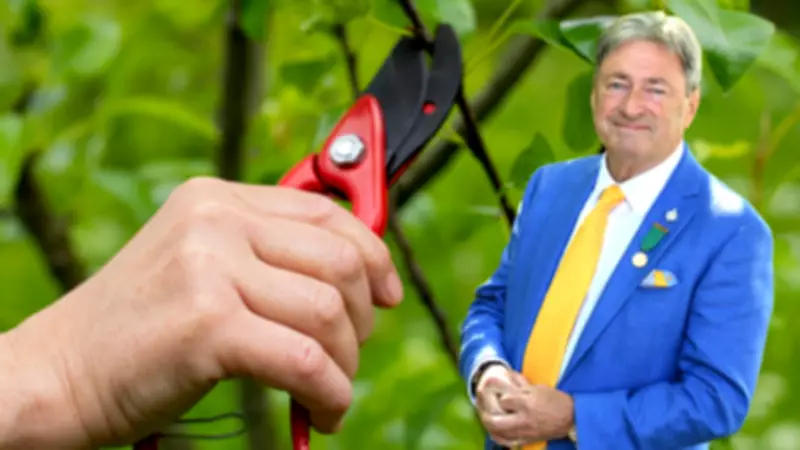
Alan Titchmarsh's Comprehensive Guide to Pruning Trees, Shrubs and Roses
For decades, celebrated gardener and television presenter Alan Titchmarsh has been sharing his extensive horticultural knowledge with enthusiasts across the nation. Through his popular YouTube channel, Gardening with Alan Titchmarsh, he continues to demystify complex gardening tasks, with pruning emerging as a particularly challenging area for many homeowners.
The Fundamental Principles of Pruning
Alan Titchmarsh acknowledges that pruning remains one of the most confusing aspects of gardening for many people. "One of the most confusing things in gardening is the pruning of trees and shrubs," he explained. "So today, I'm going to show you how to prune, when to prune and what to prune."
Before beginning any pruning work, Titchmarsh emphasizes the importance of understanding your objectives for each plant. "The first thing to consider is why you're pruning something," he stated. "There are several reasons. One is to produce an appealing shape. Another is to get rid of pests and diseases. Yet another is to encourage flowering and fruiting, particularly in the case of fruit trees."
Essential Tools for Effective Pruning
To achieve professional results, having the correct equipment is absolutely crucial. According to Titchmarsh, gardeners should prepare three primary tools based on the thickness of the wood they intend to cut:
- Sharp secateurs for smaller stems and branches
- Loppers for slightly thicker branches
- A pruning saw for really thick stems
Pruning Fruit Trees for Maximum Harvest
For those looking to boost their fruit harvest, the winter months represent the optimal time for pruning while apples and pears remain dormant. Titchmarsh offers specific guidance for fruit tree care, warning against overly aggressive approaches.
"Don't be so aggressive with your fruit trees," he cautioned. "Shorten the long ones at the end, but preserve those little stubby bits that go all the way up your branch because they will produce your crop."
When pruning fruit trees, gardeners should:
- Identify fruiting spurs where new growth will eventually emerge
- Remove weak buds that appear as "winy, weeny buds" that won't produce growth
- Take a measured approach to prevent over-pruning
Mastering Shrub and Rose Pruning Techniques
When it comes to ornamental plants, the calendar dictates pruning actions based on flowering times. Titchmarsh provides clear seasonal guidance for shrub maintenance.
"When it comes to shrubs, those that flower in spring are generally pruned immediately after flowering," he explained. "Those that flower later in the year, in summer, you prune in winter."
Special attention is required for roses, which Titchmarsh describes as the nation's favourite garden plant. To ensure roses remain vigorous and healthy, shrub roses should be thinned out between January and March by removing any dark brown or brittle wood that no longer serves the plant.
The Importance of Patience and Observation
Throughout his guidance, Titchmarsh emphasizes the critical importance of taking your time and carefully observing each plant before making cuts. Over-pruning can take years for a plant to recover from, making a cautious approach essential.
"It's always a case of taking your time, seeing where it's coming from, where it's going to, and if there's anything else to replace it," he advised. "Once you've got it off, you can't stick it back on again."
By following this expert-led approach to pruning, gardeners can ensure their outdoor spaces remain vibrant, healthy and productive throughout the changing seasons. Titchmarsh's practical advice transforms what many consider a daunting task into an achievable gardening skill that enhances both plant health and garden aesthetics.