
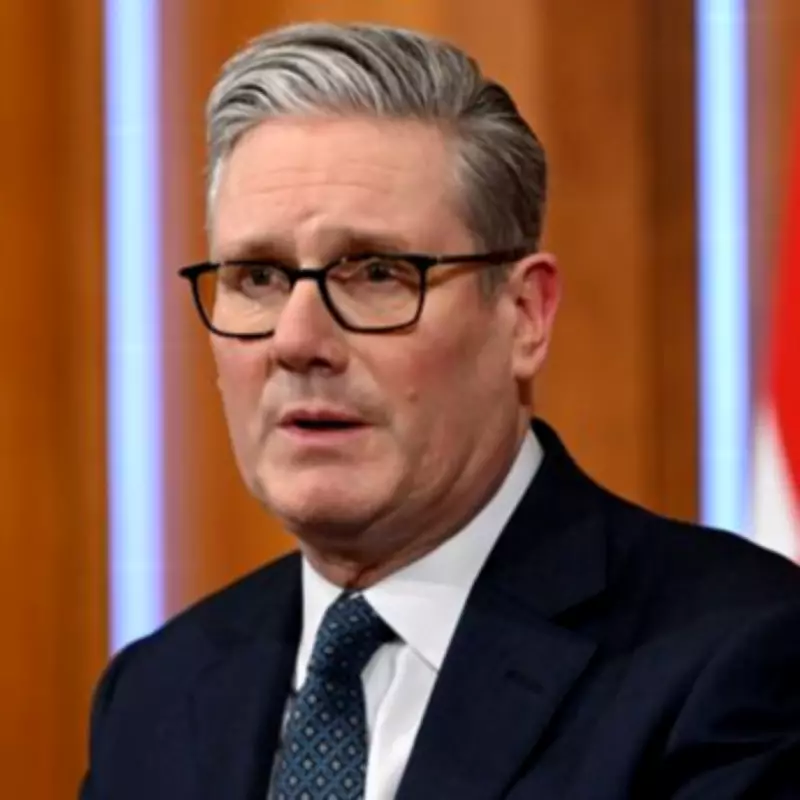
Prime Minister Faces Criticism Over Energy Bill Silence
Sir Keir Starmer has come under fire for having "nothing to say" about energy bills during a recent parliamentary address focused on the conflict in Iran. The Liberal Democrats launched the attack, with their leader Sir Ed Davey intensifying pressure on the Prime Minister to prevent another surge in household energy costs.
Political Pressure Mounts
Sir Ed Davey expressed deep disappointment, stating: “It is deeply disappointing that the Prime Minister had nothing to say to the millions of families and pensioners who now fear that heating costs could rise by hundreds of pounds.” He emphasized that his party would continue demanding a cast-iron guarantee that British citizens would not bear the financial burden of international conflicts through increased energy bills.
On social media platform X, Davey posted a video clip from the Commons where he directly challenged Starmer, linking potential bill increases to "Donald Trump’s illegal war." He highlighted expert warnings that energy bills could jump by £500, noting that pensioners are already struggling due to years of cost-of-living pressures. Despite his public appeal, Davey confirmed that the Labour leader did not provide the requested assurance.
Energy Market Volatility
While energy bills for millions of UK households are set to decrease by 6.7% starting April 1, 2026—lowering the average annual dual fuel bill to £1,641, a reduction of approximately £117—this relief may be short-lived. The cut results from an Ofgem price cap adjustment and government removal of certain green levies.
However, analysts at Cornwall Insight warn that recent Middle East developments could drive bills up by £160 from July, potentially making them more expensive than pre-cut levels. Their latest forecast projects Ofgem's price cap for July to September at £1,801 annually for a typical dual fuel household, marking a 10% increase from April's announced cap.
Expert Analysis and Recommendations
Dr Craig Lowrey, principal consultant at Cornwall Insight, commented: "Looking at the April cap, the role of wholesale prices as a determinant of bills had eased, given the impacts of policy costs and network costs. However, this latest forecast puts the role of wholesale markets firmly back in the spotlight and illustrates how exposed UK households remain to international market movements."
He cautioned that while the projected rise is concerning, the situation remains fluid as the assessment period for the July cap is still early. Lowrey stressed that energy market developments over the next three months will be crucial, rather than this initial spike alone. He reinforced the argument for expanding home-grown renewable generation to reduce the UK's dependence on volatile global gas markets, describing it as the most effective long-term strategy to shield households from future price shocks.
The ongoing political and economic debate underscores the persistent anxiety among consumers regarding energy affordability, with stakeholders calling for more decisive governmental action to stabilize costs amid global uncertainties.