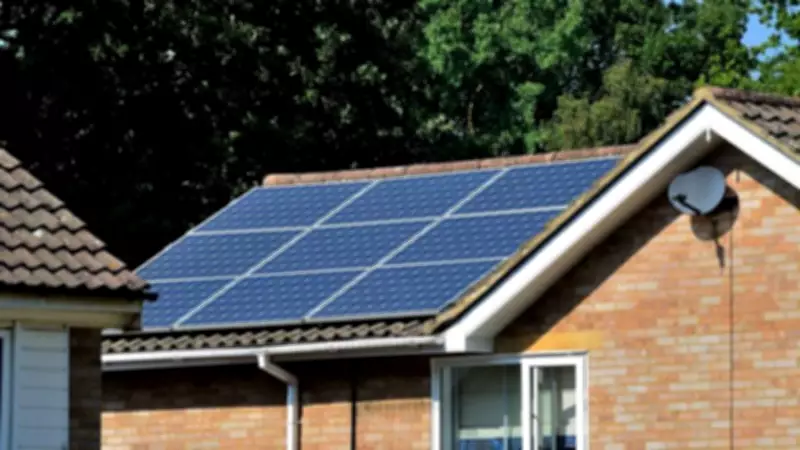
Solar panels are rapidly shifting from a niche, eco-friendly upgrade to a mainstream way for households to cut energy costs, as rising bills and global uncertainty drive renewed interest in home-generated power. Recent data shared by energy firms suggests that demand is climbing significantly.
Surge in Demand
Greg Jackson from Octopus Energy told the BBC that sales of solar panels jumped by around 50% in March compared with February, describing a 'huge jolt' in interest. Industry experts say the trend is being fuelled not just by environmental awareness but by financial pressures and geopolitical instability.
Mark Sait from SaveMoneyCutCarbon said many households are seeking greater control over their energy use. “We’re seeing real unpredictability in global energy markets. That shock of oil going up on such short notice and as the markets move so rapidly, people like that bit of comfort of, ‘I’m in control of my own little (energy) empire’ - it’s like having your own little power station that you own, on your roof,” he said. He added that distrust in traditional energy providers also plays a role, with some consumers feeling frustrated by rising bills and profit margins in the sector.

From Green Investment to Financial Decision
Once primarily seen as a green investment, solar panels are increasingly being treated as a cost-saving measure. Sait said the focus has shifted: “It’s no longer just about sustainability - it’s becoming a core financial decision. Saving money is now the main driver, with the environmental benefits seen as an added bonus.”
Earlier government-backed incentives, such as feed-in tariffs, helped encourage adoption by paying households for excess energy exported to the grid. However, these schemes have largely been scaled back. Some support is still available in certain cases through programmes such as the Warm Homes support programmes via Gov.uk, particularly for lower-income households or those in fuel poverty.
Falling Costs Make Solar More Accessible
The falling cost of technology has made solar more accessible. Industry estimates suggest a typical home installation may cost around £6,000, depending on system size and complexity. However, many households can expect to recoup that investment in around four to six years through reduced energy bills, compared with 10-12 years previously.
Sait said: “We’re moving into a new cycle where the technology has come down to a level where people can invest without necessarily needing government subsidies.”
Lower-cost alternatives are also entering the market. Retailers are beginning to offer plug-in solar panels for a few hundred pounds, which can be used without professional installation. Retailers, including Lidl and Amazon, are among those offering portable systems for around £400. Although these smaller systems are unlikely to power an entire home, they can still make a dent in energy bills. Government estimates suggest typical savings of between £70 and £110 per year.
Caution Advised for Buyers
Despite the potential savings, experts warn buyers to be cautious and ensure products meet safety standards. They also caution that solar is not a one-size-fits-all solution. The effectiveness of a system depends on factors such as roof size, orientation and household energy consumption.
Avoiding the Cowboy Element
Specialists say careful research is essential before investing in rooftop solar systems. Sait advised choosing reputable installers and high-quality equipment, warning that poorly fitted systems can carry fire risks. He said: “Make sure you’ve got tier one quality panels, and that your inverter and electrics are efficient and properly installed.” He also warned against opportunistic firms entering the market during periods of high demand. “There can be a cowboy element when demand spikes. Do your homework and choose a trusted supplier,” he added.
While solar panels are unlikely to eliminate energy bills entirely, they are increasingly seen as a practical way to reduce costs and reliance on external suppliers, while also cutting carbon emissions.