
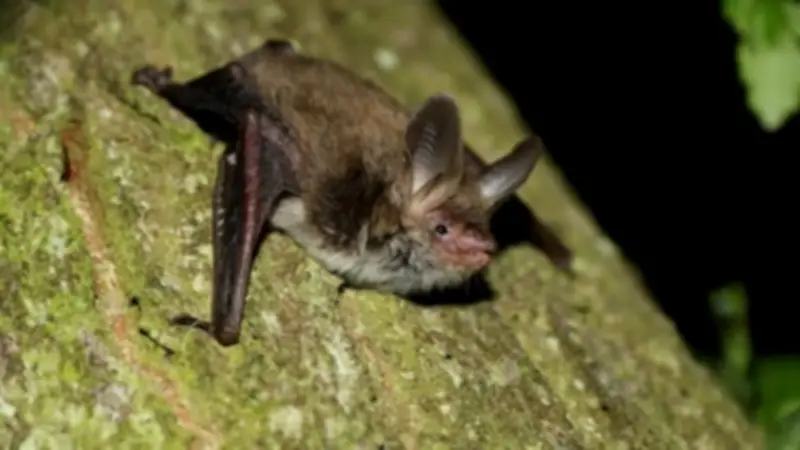
Few creatures carry a reputation as heavy as the bat. Decades of album covers and gothic imagery have turned them into mascots of distorted riffs and dark rock aesthetics. But in Bury, a growing number of wildlife enthusiasts are discovering that these winged mammals are less horror show and more summer headliner.
Heather Harris, an unapologetic bat enthusiast, set out to change one sceptic's mind. She persuaded a friend to join her at the Bat Conservation Trust's Using Your Ears workshop, led by the South Lancashire Bat Group. The evening took place in Kirklees Valley, where participants used heterodyne bat detectors to listen to the ultrasonic world above them.
A Convert Made in One Evening
The session began indoors, where the group learned that every bat species has its own distinctive voice. Repetition rate, rhythm, pitch, and tonal quality are all clues used to identify the four species commonly found in Bury: Daubenton's bats, common pipistrelles, noctules, and serotines. Some produce rapid-fire bursts, while others create slower, measured calls. By the time the group headed outside, participants could tell them apart as easily as an Oasis fan recognises the first chord of Wonderwall.
Watching her reluctant companion transform from politely sceptical to enthusiastic convert was almost as satisfying as the workshop itself. The participant arrived with doubts, but left with a new appreciation for the nocturnal world.
An Evening in Kirklees Valley
As the light faded over Kirklees Valley, the ordinary evening began to shift. With heterodyne detectors in hand, the group listened as the first common pipistrelles appeared overhead. Their echolocation calls became clicks and pulses, turning an unremarkable walk into something extraordinary.
Each species added a different layer to the soundscape. Some bats swept high above the trees, while others skimmed low across the river. Hidden moments earlier, they suddenly became impossible to ignore. For Harris, it felt like nature had been staging one of its greatest gigs every summer evening, while most people walked by without hearing the opening note.
More Than a Halloween Caricature
Bats have long suffered from a Halloween image, but their summer activity tells a different story. During warm evenings, they consume crop-damaging insects and help keep ecosystems healthy. Their echolocation calls are not just fascinating to hear; they represent a vital natural service that supports agriculture and biodiversity.
The more the group listened, the more it felt as though bats had been waiting for a broader audience all along. Whether your playlist is filled with heavy metal, indie anthems, rave classics, or smooth jazz, there is something universal about standing beneath a summer sky and listening quietly. Music brings people together, and it turns out bats do too.
Find Your Own Bat Walk
You need not be a bat expert to experience it for yourself. Across Greater Manchester and surrounding areas, wildlife organisations and bat groups run walks, workshops, and events for anyone curious enough to spend an evening doing something a little different. The Lancashire Wildlife Trust invites you to discover the world of bats at its September bat walk around Mere Sands Wood, with further details available on its website.
Bats have been headlining one of nature's finest concerts all along, just don't expect to find them on Ticketmaster. For membership information, contact the Lancashire Wildlife Trust on 01772 324129 or visit the website. For details about Cheshire Wildlife Trust, call 01948 820728 or visit its website.