
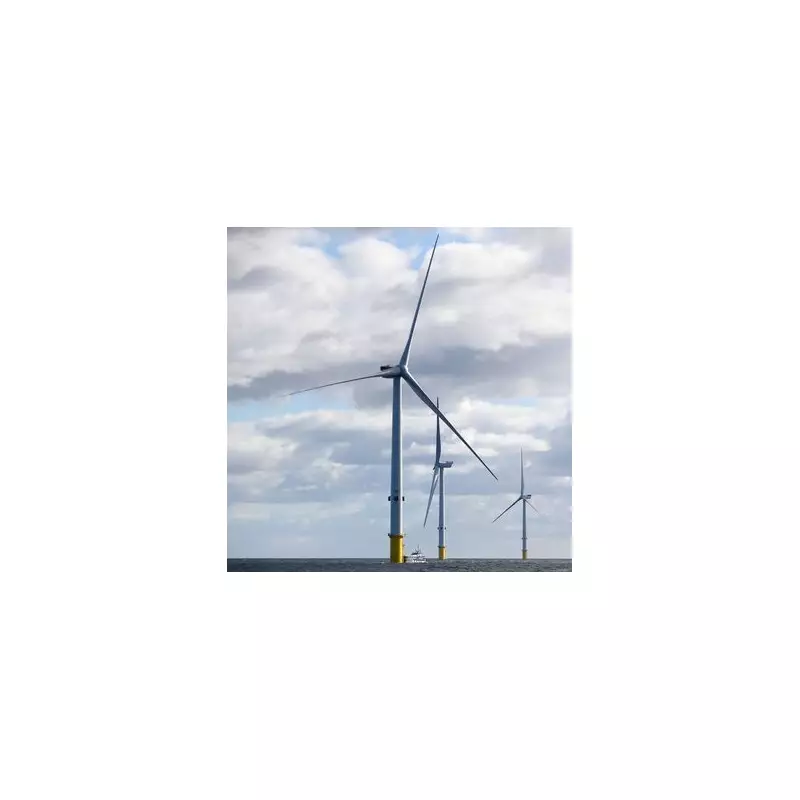
Plans to build a pioneering floating offshore wind farm off the Northumberland coast have been officially shelved by the developer. EDF Renewables UK has confirmed it will not proceed with the Blyth 2 project, which was set to be a first for English waters.
The Project's Ambition and Technology
The proposed expansion, known as Blyth 2, was designed to add 58.4 megawatts (MW) of capacity to the existing 41.5MW Blyth Offshore Demonstrator wind farm. The original five-turbine site, operational since 2017, remains unaffected and continues to generate power.
The key innovation for the second phase was the use of float and submerge gravity base foundation technology. This involved constructing turbines on floating substructures before submerging them onto the seabed. The project, announced in 2021, was located roughly 14km from shore in waters about 55 metres deep.
EDF had been collaborating with research bodies like the Offshore Renewable Energy Catapult to design a system aimed at demonstrating the potential for lower-cost offshore wind development. In 2021, Malaysian utility Tenaga Nasional Berhad acquired a 49% stake in the project via its subsidiary Vantage RE.
A Difficult Decision in a Competitive Market
The announcement follows the UK Government's latest Contracts for Difference (CfD) auction, known as AR7. This round secured a record 8.4 gigawatts of capacity across eight projects, including the floating wind farms Erebus in the Celtic Sea and Pentland in Scotland.
Other successful projects in the auction included Berwick Bank in the North Sea, Dogger Bank South off Yorkshire, and Norfolk Vanguard off the East Anglian coast. The government nearly doubled its budget for fixed-bottom offshore wind to £1.8 billion, stating the new projects would help achieve 2030 clean power targets.
EDF's Commitment and Future Pipeline
An EDF spokesperson stated: "After careful consideration, EDF Renewables UK has made the difficult decision to not progress the Blyth 2 Offshore Wind Farm project." They emphasised the company's ongoing dedication to the UK's renewable sector.
"EDF Renewables UK remains dedicated to contributing to the development and growth of offshore wind through other projects," the spokesperson added. "We continue to develop a pipeline of projects across onshore wind, offshore wind, solar and battery, and we are committed to playing our part in accelerating the UK to net zero and enhancing our energy security."
The decision marks the end of a significant chapter for advanced wind technology testing in North East England, highlighting the competitive and evolving nature of the UK's renewable energy landscape.