A man diagnosed with a punishing spinal condition as a teenager has revealed how a surprising treatment helped him reclaim his life. Despite experiencing agony so severe it leaves him "on the floor crying like a baby," incredibly, he considers the illness a 'blessing' in disguise.
Diagnosis and early struggles
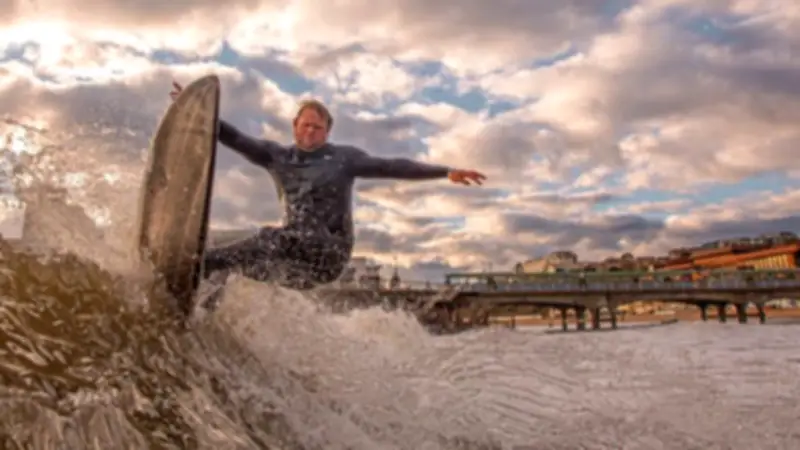
Now in his late 40s, Richard Inskip refuses to let his physical limitations hold him back from his passions. By sharing his journey of staying on his skateboard and surfboard, he hopes to show young people facing the same diagnosis that an active lifestyle is still within reach. Richard, from Bournemouth, battles ankylosing spondylitis (AS). According to official NHS guidance, this chronic condition triggers severe inflammation throughout the spine and other areas of the body.
"I'm 48 years old, and the bad flare-ups can literally have me on the floor crying like a baby. I'll go from touching my toes to hardly being able to touch my knees, and that can last from anything from three weeks to three months. But on the other side, it's almost been a blessing because would I be so conscious about my own health and fitness if I didn't have this (condition) as a constant reminder? It's the reason I get up and train on days where I don't want to train," said Richard.
Impact on youth and military dreams
The active coastal resident admits he found it incredibly difficult to maintain such an optimistic outlook when the illness first struck during his youth. "As a young lad, it was put down to aches and growing pains. I played a lot of rugby at the time, and then it just got worse and worse and it got to the point where I lost a lot of mobility. It can affect your skin, causes eye problems, but the worst thing for me was I got a lot of pain in my knees and my lower back," said Richard. Devastatingly, the medical verdict shattered his childhood aspirations of following his father into military service. He was forced to turn down a college scholarship because the condition meant he would automatically fail the strict army medical examination.
The emotional burden of the disease weighed just as heavily on the teenager as the physical restrictions. Struggling with a severe illness during such formative years caused his self-esteem to plummet and left him feeling isolated. "You're going through enough as it is anyway at that age, and then having to deal with all this too was quite a shock. It hit my mental health quite badly at the time. Between the ages of 15 and 18 it was really bad. I lost all my confidence and wasn't able to kind of do the things that I loved, like playing rugby," said Richard.
A turning point: exercise and education
Although he was pumped full of traditional painkillers, anti-inflammatories and therapies, a forward-thinking doctor changed everything by telling him to keep moving. "He was a guardian angel for me. He told me to get in the gym and keep moving, which was against a lot of the recommendations at the time. That really saved me. I ended up going to university and studying sport exercise science. I tried to learn as much as I could about the human anatomy and performance, which I have applied throughout my life to maintain an active lifestyle."
Richard's career choice allowed him to combine work with travel, securing marketing and sports therapy roles within the global board sports industry. This path enabled him to pursue his love for catching waves and skating across multiple continents. "I try to travel to as many places as I can to surf and skate in different sports around the world. I know my time is limited to continue skating and surfing at quite a good level with this condition progressing, so I try to pack in as much as possible."
Covid-19 triggers worst flare-up
Regrettably, his steady health journey faced a massive obstacle when he contracted coronavirus five years ago. The virus triggered an aggressive immune response, causing the most agonising flare-up of his entire life. "I was almost in the stage of remission where it wasn't progressing or getting any worse, but then I caught Covid in 2021. Unfortunately, Covid attacked the autoimmune disease, and it flared up to the worst flare I'd ever experienced in my life."
Medical cannabis as a solution
Following a thorough personal investigation into alternative relief, Richard secured a legal prescription for medical cannabis via a specialist clinic. The treatment has dramatically reduced his standard peak pain levels, which generally strike during the mornings and evenings. "It gives me an opportunity to get a better quality of sleep, so my body is naturally going through its recovery process a lot more efficiently. I use cannabis in its original form, in the flower bud. I have a combination of one that energises you and one that relaxes you. I use a vaporiser, so there's no combustion or smoke or anything like that. You put the medication in this oven, I heat it up to a certain temperature, which releases the THC (tetrahydrocannabinol), and then you consume it through there," said Richard.
While recreational use of the Class B drug remains strictly prohibited in the UK, specialist doctors can legally prescribe medicinal cannabis products. Richard explains that views on the treatment vary widely, even within his own family. "My dad still views it as an illegal drug, but my mum's a nurse and thinks it's great. I think education is a really important element now, because you shouldn't feel any anxiety or worry or concern if you are using medical cannabis as part of a strategy to manage pain or whatever it might be prescribed to somebody for."
Message of hope for others
Ultimately, Richard wants his story to offer comfort and motivation to young people receiving a daunting AS diagnosis today. He stands as living proof that a fulfilling, highly active future is entirely achievable with the right management strategy. "I think it's important that people know that there is a future for them, and that it can be managed."