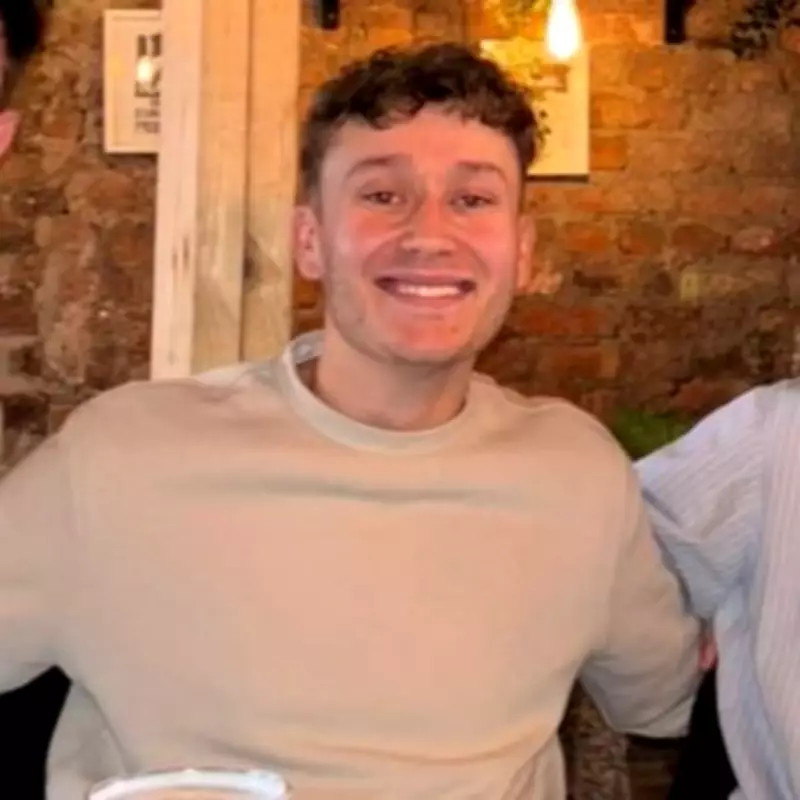
A Birmingham man has shared how he initially believed he was suffering from the 'worst hangover' of his life, only to receive a devastating brain tumour diagnosis.
Ben Cornforth, now 24, was just 21 years old and a student at the University of Nottingham in February 2023 when he experienced a sudden seizure at his university home.
'I was just at home watching TV with my uni housemates one Friday night when suddenly I couldn't follow what was happening on the show and couldn't speak,' Ben recalled. 'I felt totally out of it and dizzy. When I went to the toilet, the room felt like it was spinning and I fell over.'

Ben, who worked in hospitality, initially tried to hide his symptoms, attributing them to a hangover from the previous night. However, his friends noticed his speech difficulties and feared he was having a stroke, prompting them to call 111. He was taken to hospital by ambulance, where a CT scan revealed something unusual in his brain.
Diagnosis and Surgery
Two weeks later, doctors informed Ben that he had a benign tumour located on his language centre, which had likely been present for most of his life. The recommended course of action was to leave it undisturbed. Ben was prescribed anti-seizure medication and attempted to resume his normal life at university. However, after suffering two more seizures, a follow-up MRI showed increased activity in the tumour, necessitating brain surgery.
In May 2023, Ben underwent a six-hour craniotomy, a procedure in which a portion of the skull is temporarily removed to access the brain. Remarkably, he remained awake for part of the surgery. 'They said they'd take as much of the tumour as possible, but they couldn't take anything off my brain, so they got as close to the brain as they could,' he explained. 'They would prod a piece of the tumour with the logic that if I stopped talking, they couldn't cut that.'
Following the surgery, Ben experienced side effects including difficulty reading, watching TV, and following conversations. These issues subsided after about a week.
Stage 4 Cancer Diagnosis
Two weeks after the operation, biopsy results revealed that Ben had stage 4 brain cancer. He required six weeks of combined radiotherapy and chemotherapy, followed by a year of daily chemotherapy tablets. It was only after transferring to Queen Elizabeth Hospital in Birmingham, closer to his family, that Ben fully grasped the severity of his condition.
'I was told I was in grade four, but I didn't really understand what that meant until my meeting at QE,' he said.
Throughout his treatment, Ben maintained a positive outlook. 'My whole process going through treatment and with recovery was to always have things as normal as possible,' he stated. 'I know I'll need more treatment in future, but for now I am off treatment and feeling happy and healthy. I try to make the most of every day.'
Giving Back
Ben has since joined the Teenage Cancer Trust's Youth Advisory Group, helping to shape support for young people affected by cancer. He also completed the London Marathon, raising over £10,000 for the charity that supported him during and after treatment.
'After being diagnosed, I would have never imagined I could have done it, but it felt incredible at the end,' Ben said. 'I think the reaction from my friends and family made me feel proud I'd been able to finish. It felt like a celebration day of the whole last three years with all of my friends and family.'
He added: 'I wanted to run and fundraise for Teenage Cancer Trust because of my own experiences but also because being a part of the Youth Advisory Group has reinforced to me how important the charity is and the value in the work they do.'