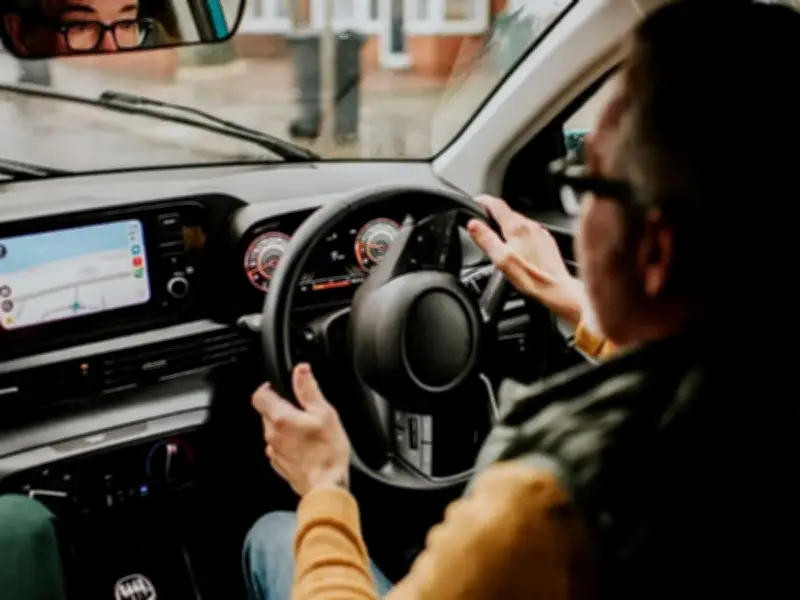
The Driver and Vehicle Licensing Agency (DVLA) has confirmed that drivers with diabetes treated with insulin may face a fine of up to £1,000 if they fail to notify the agency about their condition. The warning applies to all licence holders, but the rules differ depending on whether you drive a car, motorbike, bus, coach or lorry.
Under the Labour Party government's guidance, motorists must inform the DVLA if their insulin treatment lasts or will last for more than three months. The same obligation applies to women who had gestational diabetes and whose insulin treatment continues beyond three months after giving birth. Drivers who experience disabling hypoglycaemia (low blood glucose) — or who have been told by a medical professional that they are at risk of developing it — must also report this to the DVLA.
What the DVLA warns
Officials state: "You can be fined up to £1,000 if you do not tell DVLA about a medical condition that affects your driving. You may be prosecuted if you're involved in an accident as a result." This means that failing to disclose insulin-treated diabetes is not just a paperwork issue but a legal one with financial and criminal consequences.
For holders of bus, coach or lorry licences, the rules are stricter. The DVLA states: "You must stop driving and tell DVLA when you start insulin treatment. DVLA will tell you when you can start driving again." This is a mandatory requirement, not a recommendation, and applies from the moment insulin treatment begins.
How to notify the DVLA
Drivers with a car or motorbike licence are advised to check with their doctor or nurse to determine whether their treatment means they need to inform the DVLA. If notification is required, they must fill in form DIAB1 and send it to the address listed on the form. The DVLA also recommends reading leaflet INF188/2, which provides more information about driving with diabetes treated with non-insulin medication, diet, or both.
For those holding a bus, coach or lorry licence, the process involves filling in form VDIAB1I and sending it to the DVLA. The address is provided on the form. Drivers can also read leaflet INS186, which explains how to obtain a licence for larger vehicles when diabetes is treated with insulin.
When you do not need to tell the DVLA
Not all diabetic drivers are required to notify the DVLA. If a car or motorbike licence holder's diabetes is treated by changes in diet alone, Gov.uk confirms: "You do not need to tell DVLA." The same applies to bus, coach and lorry licence holders whose diabetes is managed through diet. However, the DVLA advises reading leaflet INF188/2 for further information.
For bus, coach and lorry licence holders whose diabetes is treated by tablets or non-insulin injections, the DVLA states they "must tell DVLA" about their condition. This is a specific requirement for professional licence holders, even if the treatment does not involve insulin.
The DVLA also reminds all drivers: "You must still inform DVLA about any medical condition that affects your driving. DVLA will carry out medical checks to decide if you can continue to hold a driving licence." During this process, as long as your licence is valid, you can continue driving unless your doctor has told you not to. If the DVLA decides it is not safe for you to drive, your licence will be revoked.
Drivers who are unsure about what type of medication they are taking are advised to "check with your nurse or doctor" before deciding whether to notify the DVLA. The agency stresses that any uncertainty should be resolved by speaking to a medical professional or contacting the DVLA directly.