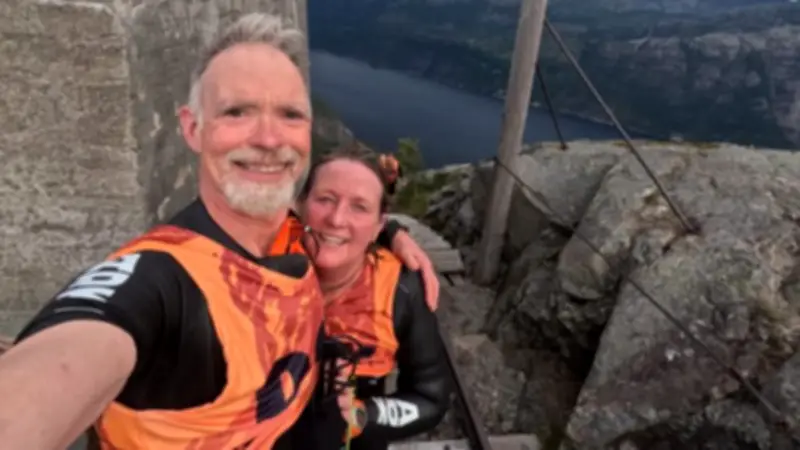
Bill Lankford, a 62-year-old retired scientist from Cambridge, endured excruciating brain inflammation so severe that he likened the sensation to having 'an alien trying to get out' of his head. He was ultimately diagnosed with tick-borne encephalitis (TBE), a rare condition in the UK, after participating in an ultra-distance swim-run event in Sweden.
Event and Initial Symptoms
In August 2025, Lankford and his wife Christina, 60, travelled to Stockholm to compete in a 50km swim-run across the Åland archipelago, which lies between Sweden and Finland. The event involved approximately 10km of swimming and 40km of running through forests, cliffs, and beaches. After finishing in under 11 hours, the couple relaxed with hot tubs, saunas, camping, and sightseeing. During this time, Lankford noticed what he believed were red midge and mosquito bites.
Onset of Illness
On the journey back to the UK, Lankford began experiencing cold-like symptoms including fatigue, muscle aches, and fever. He rationalised this as a common cold due to his immune system being suppressed from the strenuous event. However, after about a week, his symptoms temporarily eased before a persistent headache and flu-like symptoms emerged. Two and a half weeks after first falling ill, he consulted a GP, but the cause remained unidentified. He was advised to monitor his symptoms and seek hospital care if they worsened.

Misdiagnosis and Worsening Condition
Lankford was initially prescribed antibiotics for suspected Lyme disease. After just three days, his headaches intensified dramatically. 'Now my headache is like an alien trying to get out of my head. There's no words in the English language to describe how painful it is,' he said. Over-the-counter painkillers provided little relief, and he could only sleep in 20-minute intervals. He also experienced balance and coordination problems, difficulty lifting his feet, sensitivity to bright lights and moving images, and momentary blackouts.
Diagnosis and Treatment
Lankford took a taxi to A&E, where he was admitted and placed on an IV drip. Over three days, doctors conducted multiple tests but initially struggled to identify the cause, as TBE is rare in the UK, according to Encephalitis International. Given his recent travel to Scandinavia, cerebrospinal fluid sampling confirmed TBE, and appropriate drugs were administered.
Recovery and Vaccination Advocacy
According to the UK Government, there is no specific treatment for TBE, but a preventive vaccine exists. Lankford now urges anyone active in tick-prone areas to consider vaccination. Nine months after diagnosis, he has gradually rebuilt his fitness through extended dog walks, short bicycle rides, and Pilates. He recently completed his first post-illness swim-run event, covering 22km in Dorset. Reflecting on his progress, he said: 'In terms of physical fortitude, I'm pretty proud. I would never be able to do the long-distance events that we did, but I'm able to do much shorter events. It's not perfect, but I'm really pleased with that.'