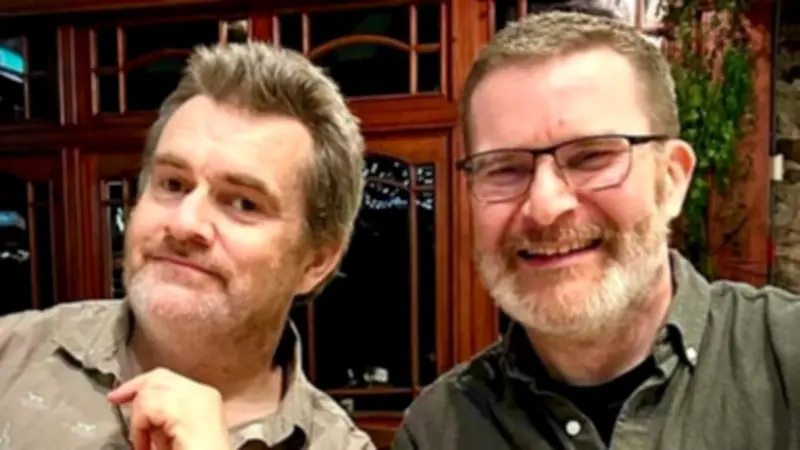
Dave Webb, a 53-year-old man who received a heart transplant after a grim prognosis, is urging families to have open conversations about organ donation. He wants more people to join the NHS Organ Donor Register so that others can access life-saving medical care.
A Sudden Decline in Health
Dave spent years managing a serious genetic heart condition with routine medication and several hospital procedures. His condition suddenly worsened after he admitted to ignoring his declining health for a long time. In 2018, severe breathlessness and swelling in his legs made it impossible to overlook his failing health. Doctors soon discovered high blood pressure in his lungs, leaving him with very little time to find a solution.
His medical team warned that he had little time left without an immediate transplant. Fortunately, a matching organ became available within weeks, and he underwent surgery in March 2019 at Harefield Hospital.

Living with Gratitude
Dave frequently thinks of the donor whose heart saved his life. He said: "I feel very humble, incredibly humble, (and) forever grateful. There's a physical exchange of an organ, and for a family to do that is a very altruistic thing, and I never lose sight of that. I don't think any transplant patient does."
Dave and his older brother Stuart were both diagnosed with hypertrophic cardiomyopathy as young adults. This condition causes the heart muscle walls to thicken over time, restricting normal blood flow. It remains a primary cause of sudden death among young adults, though some patients show no obvious symptoms. While Stuart needed a new heart in 2016, Dave tried to manage his own health while caring for his family.
The Wait and the Recovery
Dave spent a month in hospital waiting for a donor heart. He described the emotional challenge: "I think when you're sitting in a hospital room, and you know that your only chance of a better future is for someone else's life essentially to come to an end, that's part of the equation you have to come to terms with, and you have to understand it, and you have to negotiate it."
After the operation, he went through months of physical rehabilitation to learn to walk again. Despite the long journey, he feels vastly improved and remains positive about the future. "I'm much more positive about the future because there is one, and I'm living it. There is the idea that transplant is a cure – it is not a cure. It's a different set of better circumstances, I would call it. So you have to be mindful. It's something that you have to learn to live alongside," he said.
Raising Awareness
Dave left his career in education data to launch a public-speaking platform focused on organ donation. He also turned to music, composing a piece for the 2024 British Transplant Games. He said: "I was overwhelmed by the camaraderie and the community feel, and the fact you've got transplant patients in their 70s, you've got transplant patients who are under 10... they're now living a much better life through that gift."
Dave insists that every family should discuss organ donation choices before an emergency. Family members can still block a decision if they are unsure of the loved one's wishes. He expressed feeling "incredibly humble (and) forever grateful", acknowledging that he, his brother, and thousands of others are alive thanks to the "altruistic" act of organ donation. For more details on signing the NHS Organ Donor Register, visit organdonation.nhs.uk/register-your-decision.