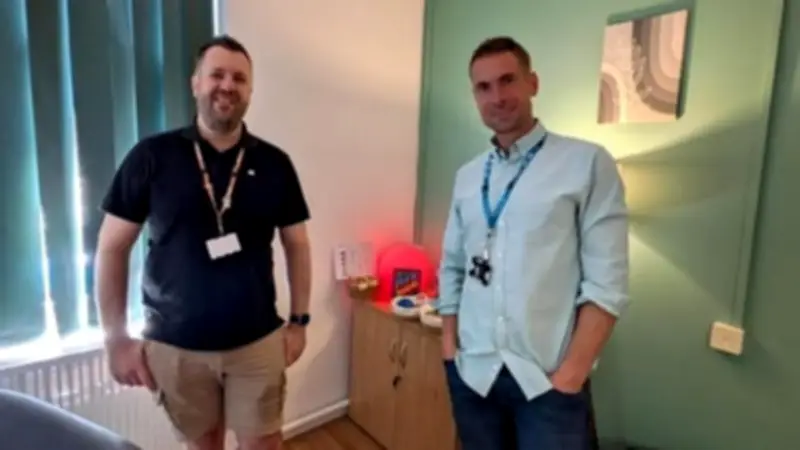
A newly opened sensory-adapted room at the Chelmsford and Essex Centre is set to make mental health appointments calmer and less overwhelming for neurodiverse patients in Essex. The peaceful space was created directly in response to patient feedback, after many shared that busy waiting areas and standard clinical environments made it difficult to engage with their care.
Designed with lived experience input
The room was designed by occupational therapist and mental health practitioner Dean Cox alongside the EPUT Charity, offering a safe haven where people can wait quietly, meet clinicians, or take time to regulate their emotions after an appointment. Input from people with lived experience shaped the design, which includes a choice of seating—a beanbag, rocking chair, and standard chair—alongside adjustable lighting, blackout blinds, calming sounds, aromatherapy, projector lights, fidget toys, and scented bean bags.
Every feature was chosen to reduce anxiety and help people feel more comfortable and able to engage in their care. Dean said: "People told us they found the busy waiting area overwhelming, which could affect how they felt before they even got into their appointment. We wanted to create a space that better meets their needs and gives people the choice to regulate in a way that works for them."

Positive feedback from patients
The feedback has been incredibly positive, with patients using the room before appointments to reduce anxiety and afterwards to help them regulate before leaving the building. Dean added: "It's making a real difference to how people engage with us and ultimately supports them to get the most from their care."
One person involved in designing the space through lived experience said: "This is great and really feels like somewhere safe I could go to relax." Another added: "When I became overwhelmed, being able to look at a calm space allowed me to work on my breathing and just exist in the moment."
Team effort and funding
The project was made more cost-effective thanks to Dean and community psychiatric nurse and clinical lead Dan Dexter, who both volunteered two days to paint the room themselves, allowing more charitable funding to be spent on specialist sensory equipment. Dan said: "This has been a real team effort. By decorating the room ourselves, we were able to make the most of the funding available. It's incredibly rewarding to see how much patients appreciate the space and the difference it can make."
Stuart Scrivener, EPUT Governor for mid and south Essex, recently visited the space and said: "As a Governor, it was encouraging to see how a relatively small investment, combined with staff creativity and dedication, has created such a valuable resource for neurodiverse patients. This room is a fantastic example of person-centred care and the impact that thoughtful changes can have on people's wellbeing."
Every donation, whether a one-off gift or a regular contribution, helps fund projects that make services more welcoming, inclusive, and personalised. The sensory room is one of many projects supported by EPUT Charitable Funds, which funds initiatives that enhance the care and experience of patients, families, and colleagues across Essex. Anyone wishing to support projects like this can donate via the EPUT website, and every donation, no matter how big or small, helps turn ideas into reality and improve care for local communities.